10 Clay Alternatives for Every Sculpting Project

Outrank AI

One material can't replace every other modeling medium. The right choice depends on the job the finished part must do, not on which clay is most popular. A figurine that stays on a shelf has different requirements from a flexible prop, a reusable maquette, a product prototype, or an outdoor form exposed to weather.
Start with the constraints. Curing method determines whether you need an oven, kiln, room-temperature drying, hot water, or a chemical cure. Flexibility affects thin fingers, petals, hinges, and costume parts. Detail matters for faces and small brand elements. Weight becomes critical in large forms and wearable props. Rework determines whether you can keep iterating or must commit to each mixed batch. Finishing decides whether the material can be sanded, drilled, primed, painted, sealed, or cast.
The category is broader than traditional ceramic clay. Plasticine was formulated in England in 1897 by William Harbutt as a non-drying material that sculpture students could reshape repeatedly, with commercial production beginning in 1900. It later found uses in wartime topographical models and stop-motion animation, including Wallace & Gromit, while polymer clays expanded the category with PVC-based materials that harden in domestic ovens. This material history explains why clay alternatives exist in several families, each built around a different constraint.
For a quick filter, choose polymer clay for oven-bake detail, flexible polymer for thin moving parts, epoxy for adhesion and durability, oil-based plasteline for unlimited rework, air-dry clay for accessible builds, thermoplastic for reusable functional parts, and cementitious mixes for heavy outdoor work. The comparison matrix after the reviews will make those trade-offs easier to scan.
Table of Contents
1. Sculpey Super Sculpey
Best for figurative maquettes and controlled detail
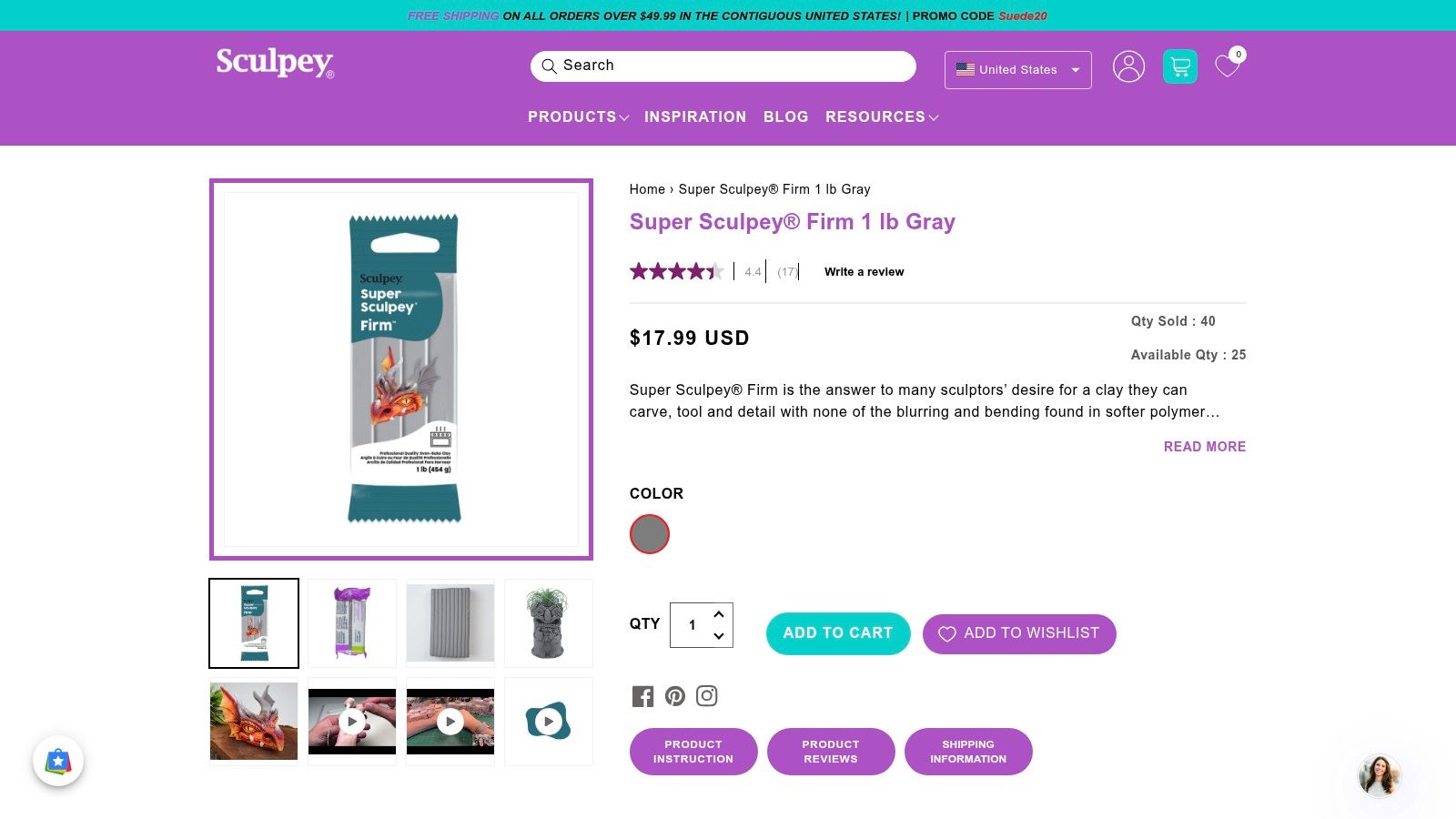
Super Sculpey is the dependable starting point for makers who want a material that stays workable until they decide to cure it. The line includes Original, Medium, and Firm grades, so the same general workflow can support softer blocking, controlled refinement, or sharper edges. Firm gray is especially useful when you need to read surface planes clearly while sculpting or photographing a maquette.
It cures in a home oven at 275°F, or 130°C, according to the Super Sculpey product information. Once cured, it can be sanded, drilled, carved, primed, and painted much like a hard plastic surface. That makes it practical for figurative work, concept models, character studies, and studio pieces that need more than a soft, temporary form.
Practical rule: Use an armature under thin or projecting areas, and control the oven temperature carefully. Overheating can scorch polymer clay, while unsupported projections can become brittle after curing.
Super Sculpey works best when the final outcome is a hard, paint-ready model. It isn't the right choice for parts that need repeated flexing, and very fine projections can break more easily than they would with a flexible polymer. You also need access to a suitable oven and a disciplined baking process.
For founders and product teams, the useful comparison is not only sculptural. A physical form can help a team test the visual language of a mascot, display object, or packaging concept before translating that thinking into landscape design decisions. Choose Super Sculpey when detail, repeatable handling, and clean finishing matter more than flexibility.
2. Cosclay
Best for flexible thin parts
Cosclay solves the main weakness of standard oven-bake polymer clay. It cures flexible and resilient, particularly in thin sections, so small appendages, costume details, doll parts, and articulated elements are less likely to snap during handling. The material stays within a familiar polymer-clay workflow, which means you can condition it, shape it, detail it, and bake it rather than learning an entirely different medium.
The SCULPT range comes in Soft, Medium-Firm, and Extra-Firm grades, with gray options suited to sculptural work. DOLL focuses on skin tones, DECO provides colors, and Liquid Cosclay, including Flexflo, supports flexible castings and surface effects. The Cosclay product range is therefore broader than a single replacement for ordinary polymer clay.
The trade-off is that flexibility changes with thickness. A thick cured section won't behave like a thin flexible one, and an armature is still useful when a part needs structural support. The material may also require more conditioning than an especially soft clay, which adds time during the blocking stage.
Use Cosclay when the finished object will be picked up, posed, bent, or transported. It makes less sense for a rigid architectural maquette where crisp hardness and aggressive post-cure machining are the main priorities. For dollmakers and prop builders, however, reducing breakage at fragile points can save repeated repair work and preserve details that standard polymer might lose.

3. Aves Apoxie Sculpt
Best for durable adhesion and repairs
Apoxie Sculpt is a two-part epoxy clay for builds that need to stick to something else and stay put. You combine equal parts by volume, work the mixture while it remains pliable, then allow it to harden without an oven. It bonds to wood, foam, plastics, and metals, which makes it particularly useful for kitbashing, miniature repairs, mixed-media props, and filling gaps around an armature.
The material can be tooled while wet, then sanded, drilled, and painted after it cures. Its manufacturer information describes a long working window and a hard cured surface, but the practical learning curve is in the first phase. Fresh epoxy can feel tacky, and smoothing it takes a different touch from smoothing oil-based or polymer clay.
Work in small batches. Once the two components are mixed, you can't return the unused material to the package for later sculpting. Water cleanup before cure is helpful, but it doesn't remove the need for gloves, clean tools, and a plan for where the compound will go.
Apoxie Sculpt is stronger than an air-dry craft clay for parts that must withstand handling, but that strength comes with less reversibility. It isn't a good medium for endless form changes. It is a strong choice when the question is, “How do I attach, reinforce, or rebuild this part so it survives?”
4. Smooth-On Free Form AIR
Best for large lightweight forms
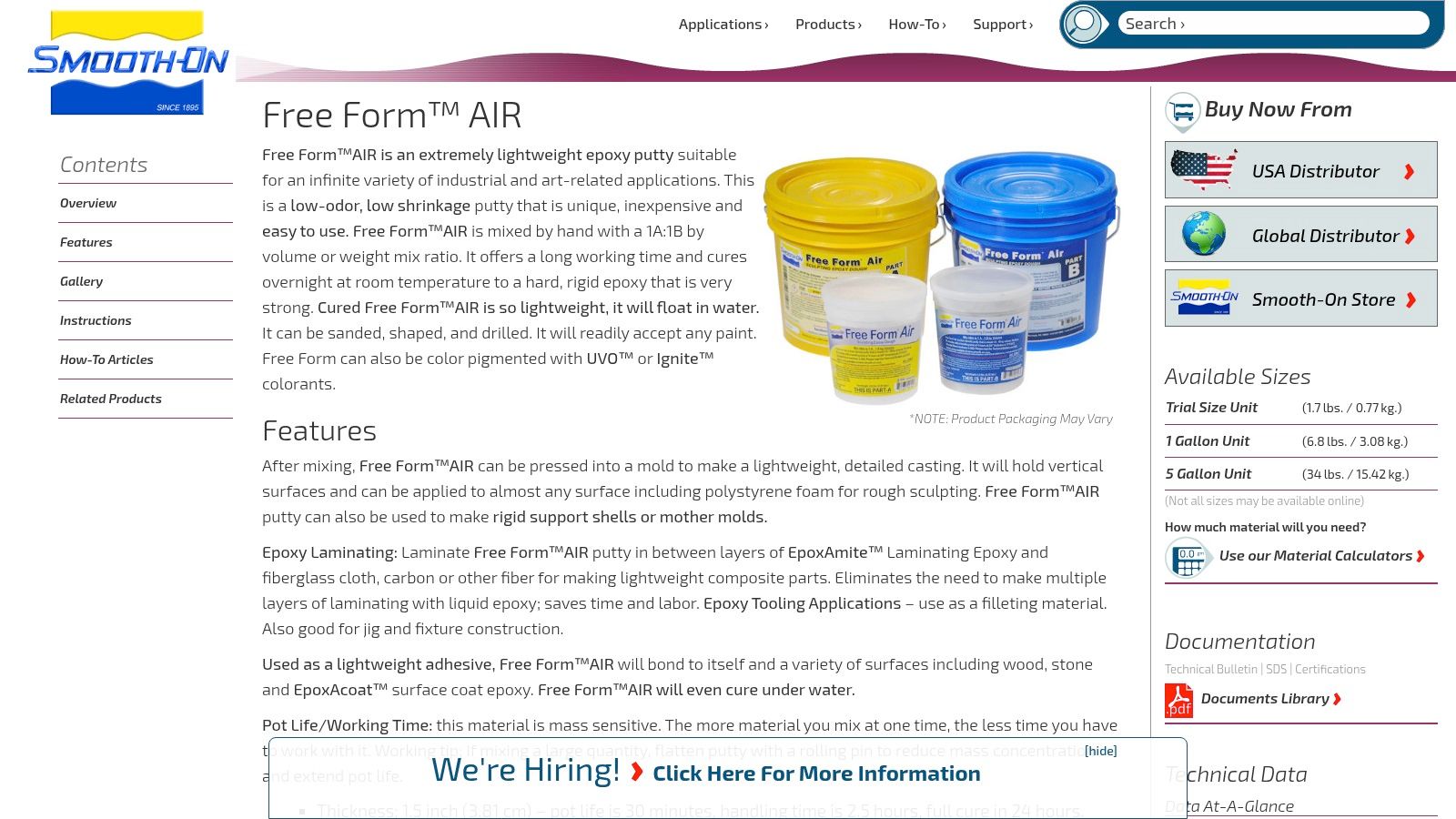
Large props become tiring when the clay or putty adds unnecessary mass. Smooth-On Free Form AIR solves that workflow problem with an ultra-light, two-part epoxy putty that cures into a rigid, paint-ready surface. It adheres well to EPS and XPS foam, making it useful as a skin, support layer, mother mold element, or sculptural coating over a lightweight core.
The 1:1 mix offers a long working time and cures rigid in about 24 hours, according to details listed by Smooth-On's Free Form AIR page. Once cured, it can be sanded, drilled, and painted. That combination suits wearable props, oversized maquettes, display pieces, and other forms that need regular handling or transport.
Free Form AIR gives up some surface precision to achieve its low weight. It is less comfortable for tiny facial features and micro-detail than a denser epoxy clay. Under fine sculpting pressure, the lighter material also feels different beneath the tool, so miniature work can require more surface refinement afterward.
Build around a rigid core instead of asking the putty to provide every structural function. Apply it where you need shape, adhesion, and a finishable shell, then refine the cured surface with abrasives and primer. Confirm handling and cure guidance with the manufacturer before a large project. Choose it when weight savings matter more than miniature-level detail.
5. Chavant NSP Plasteline
Best for reusable iteration and maquettes
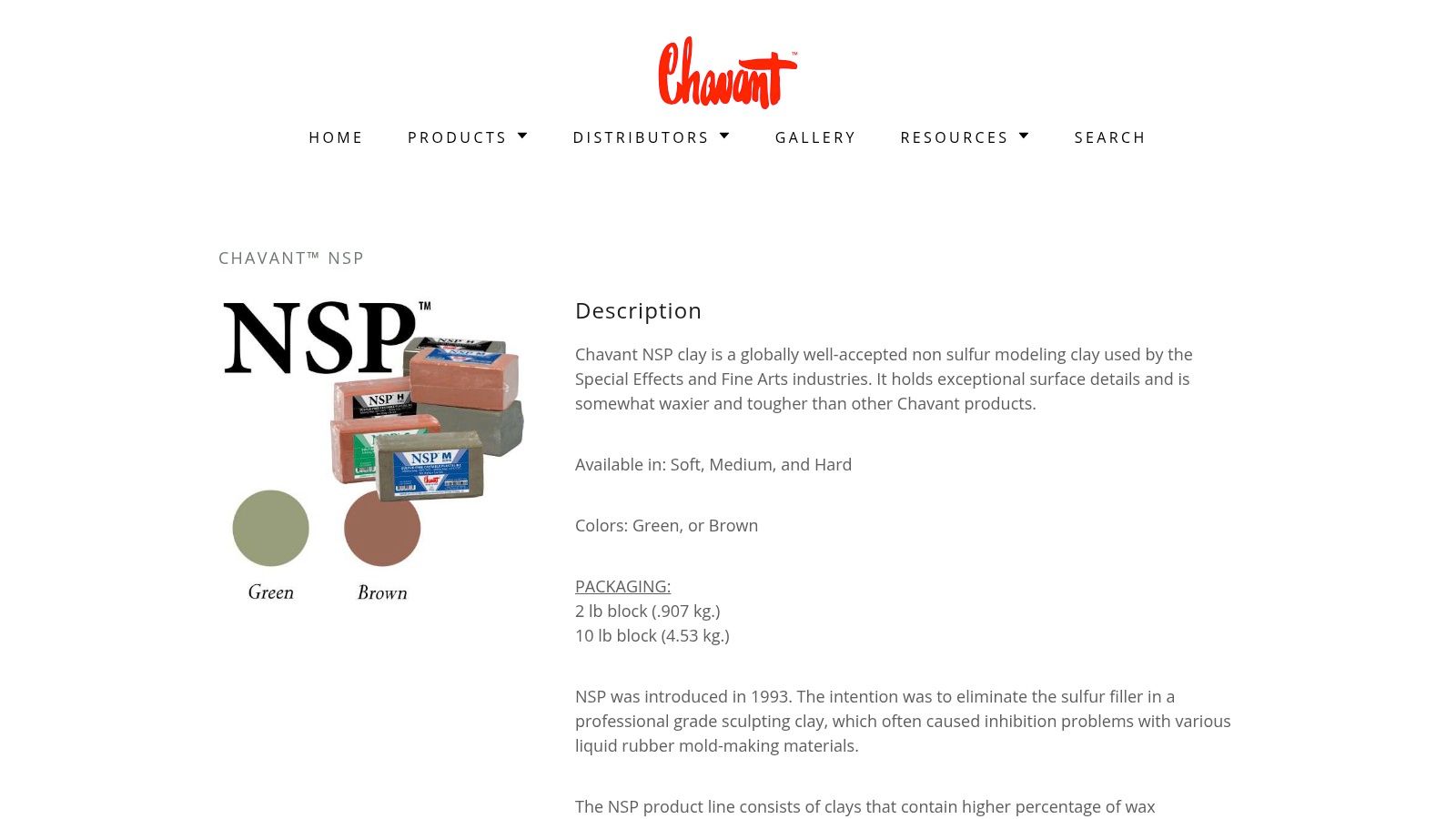
Chavant NSP Plasteline is the opposite of a committing material. It is a sulfur-free, oil-and-wax-based plasteline that doesn't dry or cure, so you can reshape the same form repeatedly. That makes it valuable for maquettes, special-effects sculpting, product-design bucks, and any process where the surface will change many times before a mold or cast is made.
NSP comes in Soft, Medium, and Hard grades, with Green and Brown options. The material softens with heat and can be worked by brushing, troweling, or liquefying, while firmer grades hold crisp cuts and edges for controlled design work. Because the formulation is sulfur-free, it is suitable for use with most platinum silicones, as described on the Chavant NSP product page.
The limitation is also the defining feature. Chavant never becomes the durable finished part. You need to mold or cast it if the object must survive outside the studio. Temperature matters too, since the material can become harder in cool conditions and softer when warmed.
Use it when the process is still asking questions. A founder exploring a physical brand object, a prop team refining a silhouette, or a product designer testing volume can make changes without throwing away a cured model. It rewards patience and repeated observation, not quick one-pass production.
Use Chavant when rework has more value than permanence. If you already know the form and need a final part, move to a curing material or a casting process.
6. Creative Paperclay
Best for accessible air-dry builds
Creative Paperclay gives makers a lightweight route to props, reliefs, armature skins, and craft sculpture without an oven or kiln. Its cellulose-reinforced formulation adheres well to porous bases and armatures, and it can be joined with water while the material is workable. Once fully dry, it can be carved and sanded into a surface that accepts acrylic paint.
The attraction is workflow simplicity. You can build over foam or another support, let the material dry at room temperature, refine the surface, and finish it with familiar paint and primer products. The Creative Paperclay website provides the product reference point for makers who want an air-dry material rather than an oven-bake or chemical cure.
Layering matters. A thick single mass can warp or take longer to harden fully, while thoughtful layers over a stable armature are easier to control. The finished material isn't waterproof without sealing, so outdoor use, washability, and damp environments require a separate protective finish and a realistic assessment of the base.
Creative Paperclay is a strong beginner choice because it doesn't demand specialized equipment. It also works for experienced makers who value a light build and straightforward paint response over maximum mechanical strength. For a brand team, the broader lesson is similar to designing for branding. The material should support the way the object will be seen, handled, and finished, not just the way it feels during the first modeling session.
7. Padico La Doll Premier
Best for smooth fine detail
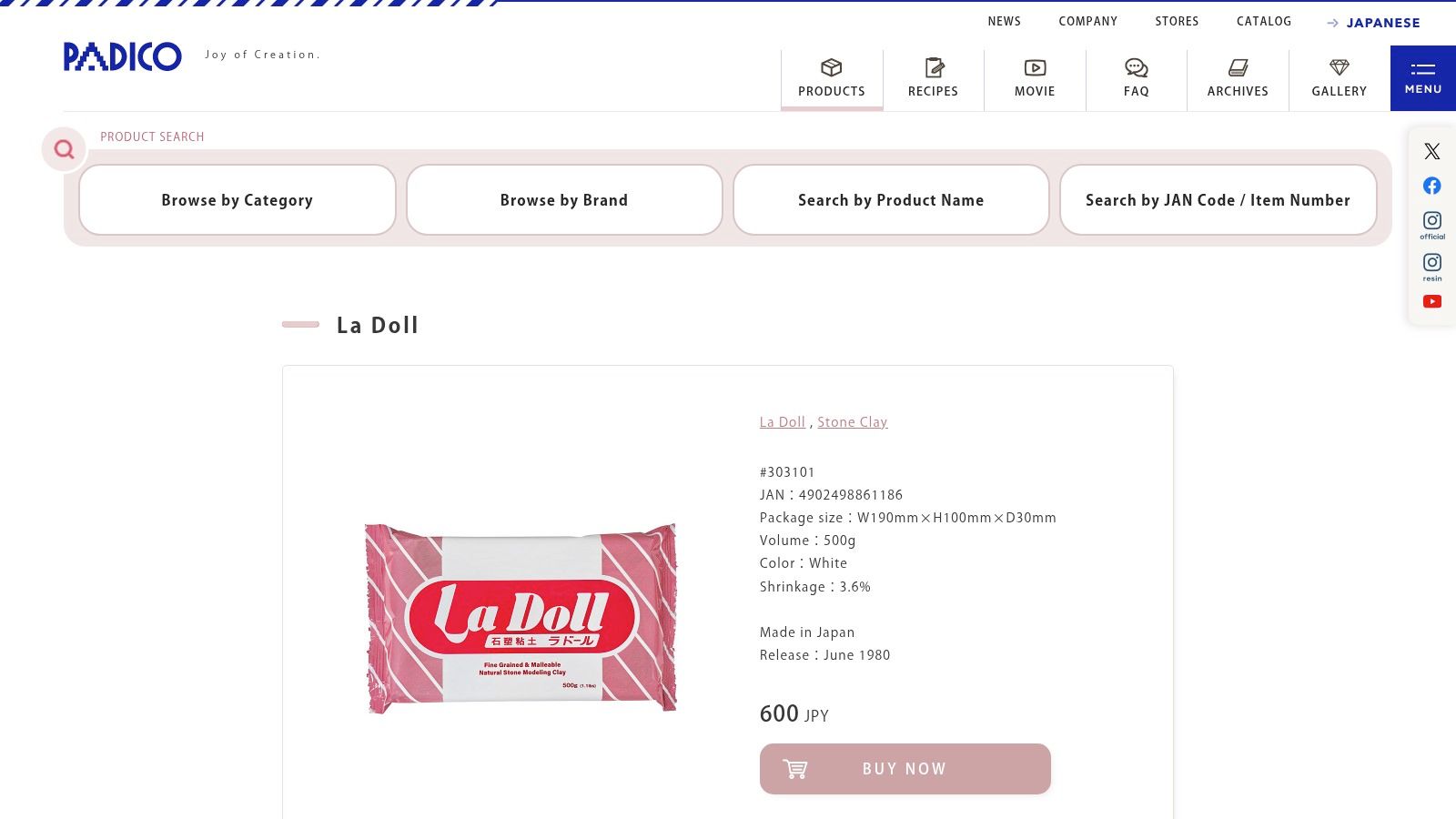
La Doll Premier is an air-dry stone clay for makers who need a refined surface without moving to kiln-fired ceramic work. Its fine texture supports facial features, garment details, doll work, and other small forms where rough particles would make cleanup difficult. Once fully dry, the material can be carved and sanded toward a smooth, porcelain-like finish.
The clay is lightweight and has minimal shrink when used properly. Padico also offers Premier and Premix variants, giving makers a choice of handling feel and strength. The La Doll product information is useful for confirming the specific formulation before purchase, especially if the final piece depends on surface quality.
La Doll Premier costs more per ounce than basic craft air-dry clay, so it isn't the economical choice for filling a large rough armature. Its value appears at the surface, where fine grain, controlled carving, and smooth priming can reduce the amount of corrective finishing.
Don't attack the piece aggressively while it still contains moisture. Let it dry fully before heavy carving or wet sanding, and build thin sections with enough support to avoid accidental breaks. For a doll face, small figurine, or presentation maquette, the material rewards a slower finish because it can carry subtle transitions that a coarse air-dry clay makes difficult.
8. Padico Modena
Best for durable delicate forms
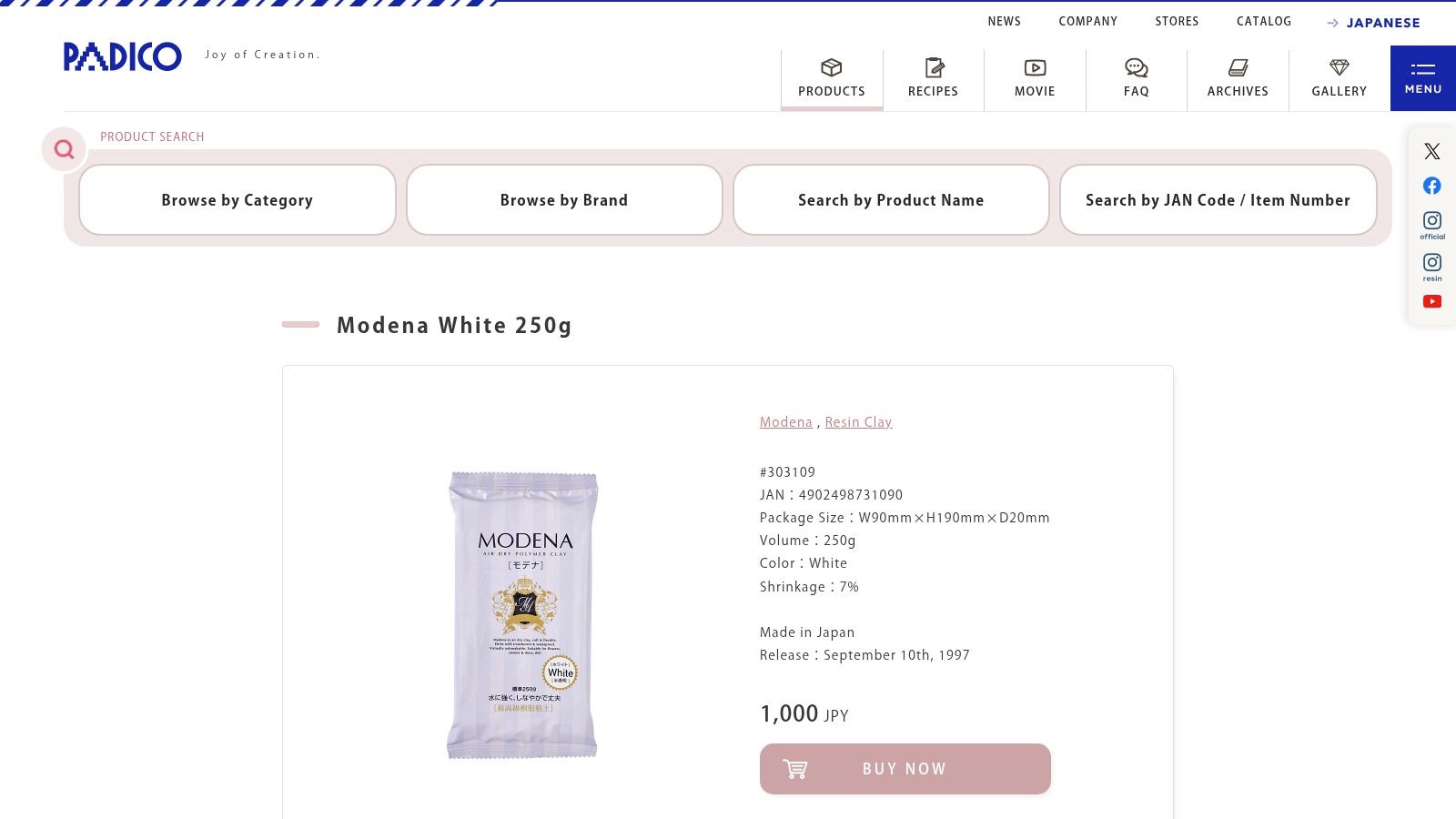
Modena is a cold-porcelain-style air-dry resin clay for flowers, jewelry, figurines, and thin forms that need more toughness than ordinary paper clay. It cures at room temperature to a flexible, durable finish and becomes water-resistant when fully dry. That combination makes it useful for petals, leaves, small ornaments, and other elements that may be handled frequently.
Padico offers Modena and Modena Soft variants for different handling preferences. The material accepts most paints and holds thin edges well, while the Modena product page provides the direct product reference for the formulation.
Modena has a different feel from paper clay. It can be tackier and may need more conditioning, so clean tools and a controlled work surface matter. Oil contamination can interfere with finishing, especially when you want paint or coatings to adhere evenly.
Choose Modena when the part is delicate but can't be treated as disposable. It is a better fit for a thin decorative element that will be touched than for a large rough form where its fine handling advantages would be wasted. Since it doesn't require an oven or kiln, it also suits small studios, classrooms, and teams prototyping physical details with limited equipment.
The finish still depends on preparation. Let the piece dry thoroughly, remove surface residue, and test paint or sealer on a small offcut before committing to the final object.
9. InstaMorph
Best for reusable functional prototypes
InstaMorph isn't a traditional sculpting clay. It is a thermoplastic pellet material that becomes moldable in hot water at about 140 to 160°F, then hardens as it cools, according to the InstaMorph product information. You can reheat it, reshape it, and reuse it, which makes it especially useful for jigs, grips, fixtures, costume parts, quick repairs, and rough functional prototypes.
The workflow is immediate. Press the softened material over a form, join it to itself, let it cool, then drill or carve the hardened plastic. It can also be dyed or painted. Unlike an air-dry or epoxy medium, it doesn't ask you to wait for a chemical cure before testing the basic function of a part.
That speed comes with clear limits. InstaMorph is not the best choice for ultra-fine artistic detail, and it softens again under high heat. A part used near heat, in a hot vehicle, or in another high-temperature environment needs a different material strategy.
Prototype the behavior first, then choose the final material. InstaMorph is excellent for testing grip, fit, clearance, and shape, but a working mockup isn't automatically a production-ready part.
For startup teams, that distinction is central to what prototyping means in practice. Use InstaMorph when the question is whether a physical interaction works. Move to a more stable polymer, epoxy, molded plastic, or fabricated part when the design has to survive its actual operating conditions.
10. Sakrete ShapeCrete
Best for heavy outdoor and structural work
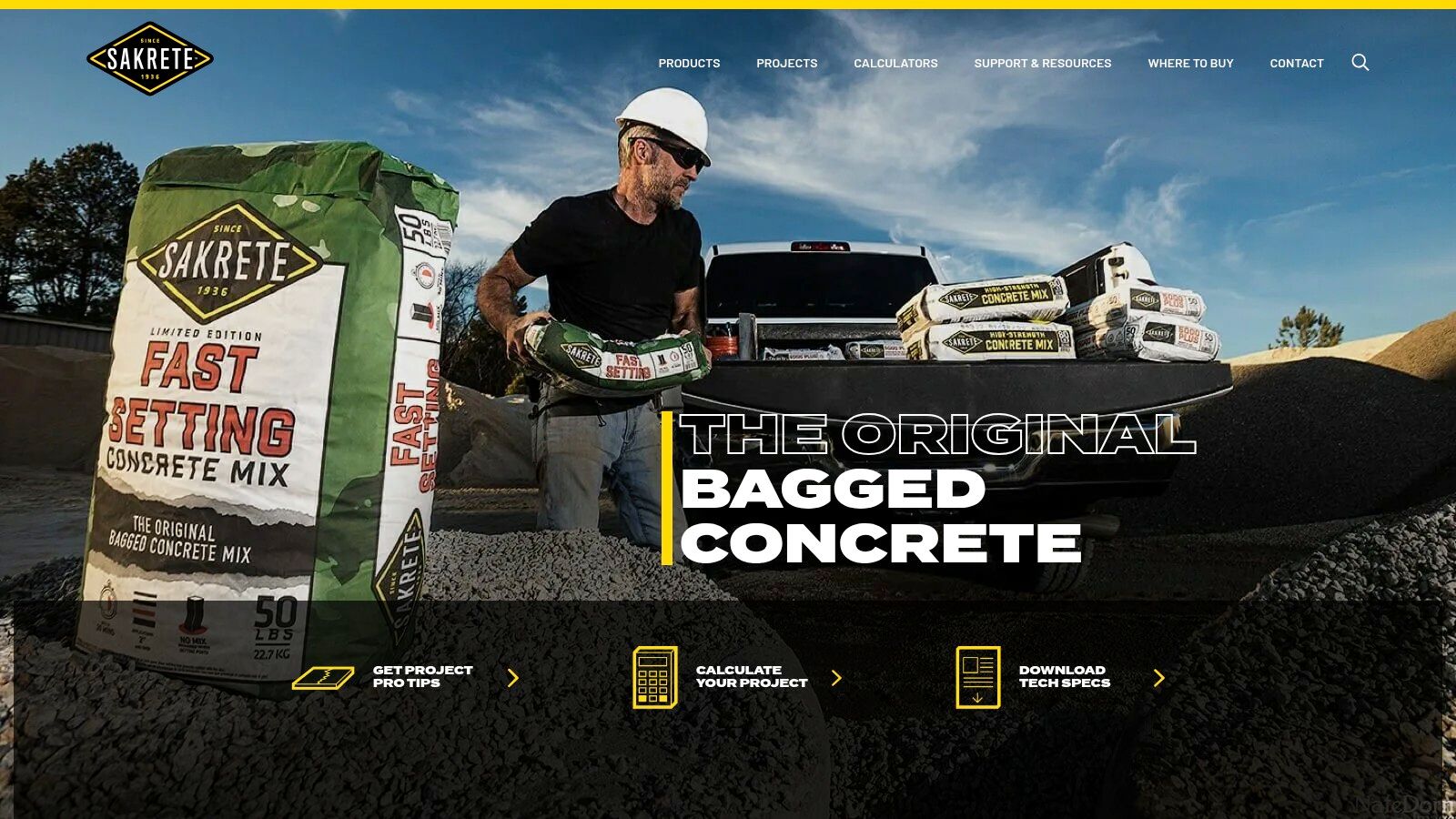
ShapeCrete is the choice for projects where lightweight craft clay isn't appropriate. It is a cementitious mix that can be hand-formed, packed, troweled, or cast, making it suitable for planters, architectural details, decor, and outdoor forms. Once set, it provides a weatherable and structural surface rather than a delicate studio model.
The material mixes with water and accepts pigments and aggregates for changes in color and texture. The Sakrete ShapeCrete resource is the direct reference for handling and application information. Its retail availability also makes it practical for larger builds where specialist sculpting materials would be difficult to source.
ShapeCrete is heavy, and it doesn't hold tiny detail as cleanly as polymer or epoxy clay. Portland cement content also means dust and alkaline handling require appropriate PPE, including protection for skin and eyes and careful control of airborne powder. Don't approach it like a casual craft medium.
Build the form around the environment. Use a stable mold or armature, plan drainage where relevant, and decide whether the surface should expose aggregate, receive pigment, or take a later coating. ShapeCrete makes sense when outdoor durability and structural presence matter more than low weight or delicate refinement.
It is a poor substitute for a small figurine and a strong alternative for a garden form, architectural accent, or substantial display piece. The finished part determines the right medium.
Top 10 Clay Alternatives, Comparison
Product | Material & Cure | Strength & Detail | Best for / Target audience | Unique selling point | Limitations / Notes |
|---|---|---|---|---|---|
Sculpey – Super Sculpey | Oven-bake polymer (275°F), multiple firmnesses | Good fine detail; sands & paints well; medium strength | Figurative sculpture, maquettes, modelers | Reliable, consistent studio finish; photo-friendly surfaces | Can be brittle on thin projections; needs controlled baking |
Cosclay | Oven-bake flexible polymer (SCULPT/DOLL/DECO + liquids) | Retains flexibility in thin sections; good detail on thin parts | Dollmakers, sculptors needing flexible appendages | Cures flexible; special liquids (Flexflo) for castings | Conditioning effort; flexibility reduces with thickness |
Aves Apoxie Sculpt | Two-part epoxy clay (1:1), cures rock-hard overnight | Very durable; holds fine detail; machinable after cure | Durable props, repairs, miniatures, outdoor parts | Industrial-strength adhesion and durability | Tacky when fresh; non-reusable, batch planning needed |
Smooth-On Free Form AIR | Lightweight 1:1 epoxy putty, cures ~24h | Rigid, paint-ready; less micro-detail than dense epoxies | Large forms, wearable props, mother molds, foam armatures | Extremely lightweight with strong foam adhesion | Less suited for ultra-fine detail; distributor channels |
Chavant NSP Plasteline | Oil/wax plastilina, non-drying (reusable) | Holds crisp edges; excellent for iteration but never cures | Maquettes, iterative sculpting, silicone mold prep | Reworkable studio standard; platinum-silicone safe | Never hardens, must mold/cast for permanent parts; temp sensitive |
Creative Paperclay | Cellulose-reinforced air-dry clay | Lightweight, sands/carves well when dry | Props, reliefs, craft sculpture, armature skins | No oven/kiln; easy finishing with acrylics; cost-effective | Not waterproof without seal; can warp if thick |
Padico La Doll Premier | Fine-grained air-dry stone clay | Porcelain-like finish; excellent crisp facial detail | Dollmaking, ultra-smooth finishes, collectible figures | Ultra-smooth, strong & lightweight when dry | Higher cost per oz; must fully dry before aggressive work |
Padico Modena | Air-dry resin (cold-porcelain style) | Durable, slightly flexible finish; holds thin edges | Flowers, jewelry, thin delicate figurines | Water-resistant when dry; strong thin sections without baking | Tack/conditioning learning curve; avoid oil contamination |
InstaMorph | Thermoplastic pellets (polycaprolactone), reheatable | Tough and machinable when cooled; limited micro-detail | Rapid prototypes, jigs, grips, costume/fix-it parts | Reheatable/reusable; very fast idea-to-part workflow | Softens with heat; not ideal for fine artistic sculpture |
Sakrete ShapeCrete | Sculptable cementitious mix, sets ~24h | Structural, weatherable, low fine-detail fidelity | Architectural elements, outdoor decor, planters | Outdoor durability and structural strength; retail-available | Heavy; requires PPE for cement dust/alkalinity; less detail-friendly |
Choose the Material That Fits the Workflow
The best clay alternative is the one that supports the finished part from the first pass through final use. Super Sculpey is the clearest choice for oven-bake figurative work, maquettes, and hard paintable detail. Cosclay is better when thin parts need to flex rather than snap. Apoxie Sculpt earns its place when adhesion, repairs, and a durable cured surface matter more than unlimited rework.
For large forms, Free Form AIR keeps a rigid build manageable without adding unnecessary weight. For constant iteration, Chavant NSP Plasteline remains the practical choice because you can reshape it until the form is ready for molding or casting. Creative Paperclay suits accessible air-dry builds, props, and armature skins, while La Doll Premier is the better air-dry option when smooth fine detail and a refined surface justify the higher material cost.
The delicate-form decision is different again. Modena works well for durable petals, jewelry, figurines, and thin decorative parts that need room-temperature curing and better handling resilience. InstaMorph is the useful option for reusable functional prototypes, grips, fixtures, and fast fit tests. ShapeCrete belongs on heavy outdoor or structural work where weatherability and mass matter more than easy handling.
If you're switching materials, don't move an entire project at once. Start with a small sample that includes the thinnest section, the deepest detail, the planned armature, and a representative surface. Test the material under the actual curing or drying conditions, because an oven-bake clay, air-dry clay, epoxy, thermoplastic, and cement mix each create different timing and support requirements.
Check armature compatibility before building the full form. Some materials adhere well to foam, metal, wood, or plastic, while others need a specific surface preparation. Confirm whether the material can be sanded, drilled, painted, sealed, molded, or exposed to moisture after it cures. A material that feels excellent in your hand can still fail when the finished part needs to flex, bear weight, tolerate heat, or sit outdoors.
Plan the finishing stage before you sculpt. If the piece will be painted, leave enough access for primer and sanding. If it will be cast, confirm that the modeling material won't interfere with the mold system. If it will touch food or drink, don't assume polymer clay is suitable. Polymer clay is synthetic, typically combining plastic with resins, fillers, and coloring agents, as explained by the Missouri Poison Center's polymer clay guidance. Common polymer clays may carry an ASTM D-4236 label for use as directed, but polymer clay shouldn't be treated as food-safe. Food-contact guidance for polymer clay points to kiln-fired ceramic with an appropriate food-safe glaze for that use.
Finally, choose PPE that matches the material. Wear appropriate protection when handling epoxy components, cement dust, sanding debris, or heated materials, and follow the product's own instructions rather than relying on a generic craft habit. Browse sculpture display ideas only after you've decided what the part needs to survive. The best alternative isn't merely the easiest material to shape. It's the one that matches the finished object's flexibility, weight, durability, rework needs, environment, and final surface.
925 Studios helps AI SaaS, Web3, and Fintech teams turn complex products into clear interfaces, brand systems, websites, and shipped frontend experiences with one creative partner instead of three separate hires. If your physical or digital concept needs the same practical fit between structure, detail, and finish, visit 925 studios to discuss the work.

Let’s keep in touch.
Discover more about high-performance web design. Follow us on Twitter and Instagram.