7 Product Redesign Examples Founders Can Learn From

Outrank AI

A product redesign isn't a color exercise. Changing spacing, typography, and buttons can make an interface look newer while leaving the problems untouched, including confusing workflows, weak brand expression, inconsistent screens, and an implementation team that can't ship the new experience. The strongest product redesign examples connect design decisions to outcomes founders can evaluate, such as clearer task completion, stronger conversion, better retention, lower support pressure, and a product that can scale without adding visual debt. Research summarized by design-led product performance findings links stronger design capability with materially better long-term business performance, while digital product design for outcomes frames redesign around business results rather than surface polish.
The seven studios below aren't interchangeable portfolio entries. Each solves a different problem, publishes different evidence, implies a different delivery model, and fits a different startup situation. 925 Studios is built for funded AI SaaS, Web3, and fintech teams that need product, brand, and frontend capability through one partner.
Table of Contents
1. 925 Studios
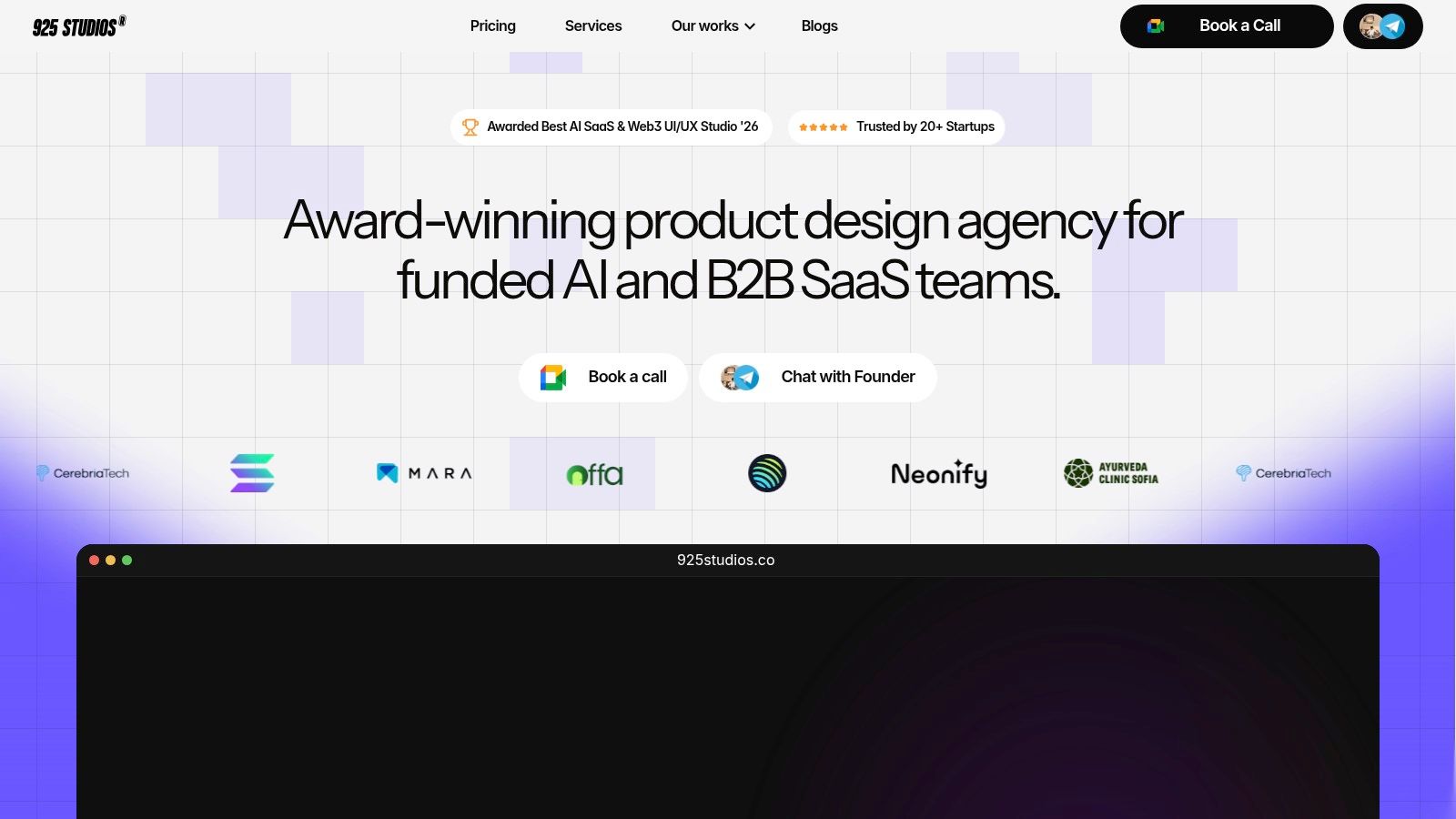
925 Studios is the strongest fit when a funded startup doesn't need another presentation deck. It needs one team to clarify the product, express the brand, and ship the interface. The studio positions itself as a single creative partner that can replace three separate hires, a product designer, a brand designer, and a frontend developer, for Seed to Series B AI SaaS, Web3, and fintech companies.
That scope matters because redesign work often fails at the handoff. A product team receives polished screens, marketing receives a separate visual identity, and engineering inherits components that don't match either. 925 Studios brings UX and UI design, conversion-focused website design and development, brand identity, motion and explainer videos, and modular design systems into one engagement. Its embedded squad includes two senior and two mid-level designers, with founders actively involved in the work.
What the delivery model signals
The studio publishes fixed-scope pricing models, offers retainer and one-time project options, and provides a risk-free seven-day trial. Retainer clients receive 40 hours per week of availability, unlimited requests, and daily or 48-hour Loom updates, with collaboration through Slack, Discord, and Google Meet. Those details suggest a hands-on operating model rather than a loose strategy engagement.
The evidence is unusually close to shipped outcomes. Published case-study claims include a platform scaling to 114k active users, a healthcare redesign increasing bookings by 66% in three months, a conversion example moving from 4.2% to 5.9%, and page-speed improvement of 48% alongside a 23% bounce reduction. Each quantitative claim comes from the studio's provided case-study material and should be examined directly during sales conversations, because the useful question isn't whether a redesign looks impressive. It's which product changes produced which result.
Practical rule: Ask the partner to connect every major screen change to a user problem, an implementation owner, and a success metric.
925 Studios has also been recognized as “Best AI SaaS & Web3 UI/UX Studio ’26,” reports work with 20+ startups and 50+ completed projects, and publishes founder and CTO testimonials focused on responsiveness, strategy, and delivery. The trade-off is fit. Public pricing specifics aren't listed, so larger companies will need a scoped quote, while solo founders or small consumer projects may find the engagement model more than they need. For funded product-led teams, however, the value is coordination: one accountable partner from strategy through shipped pixels.
2. Clay
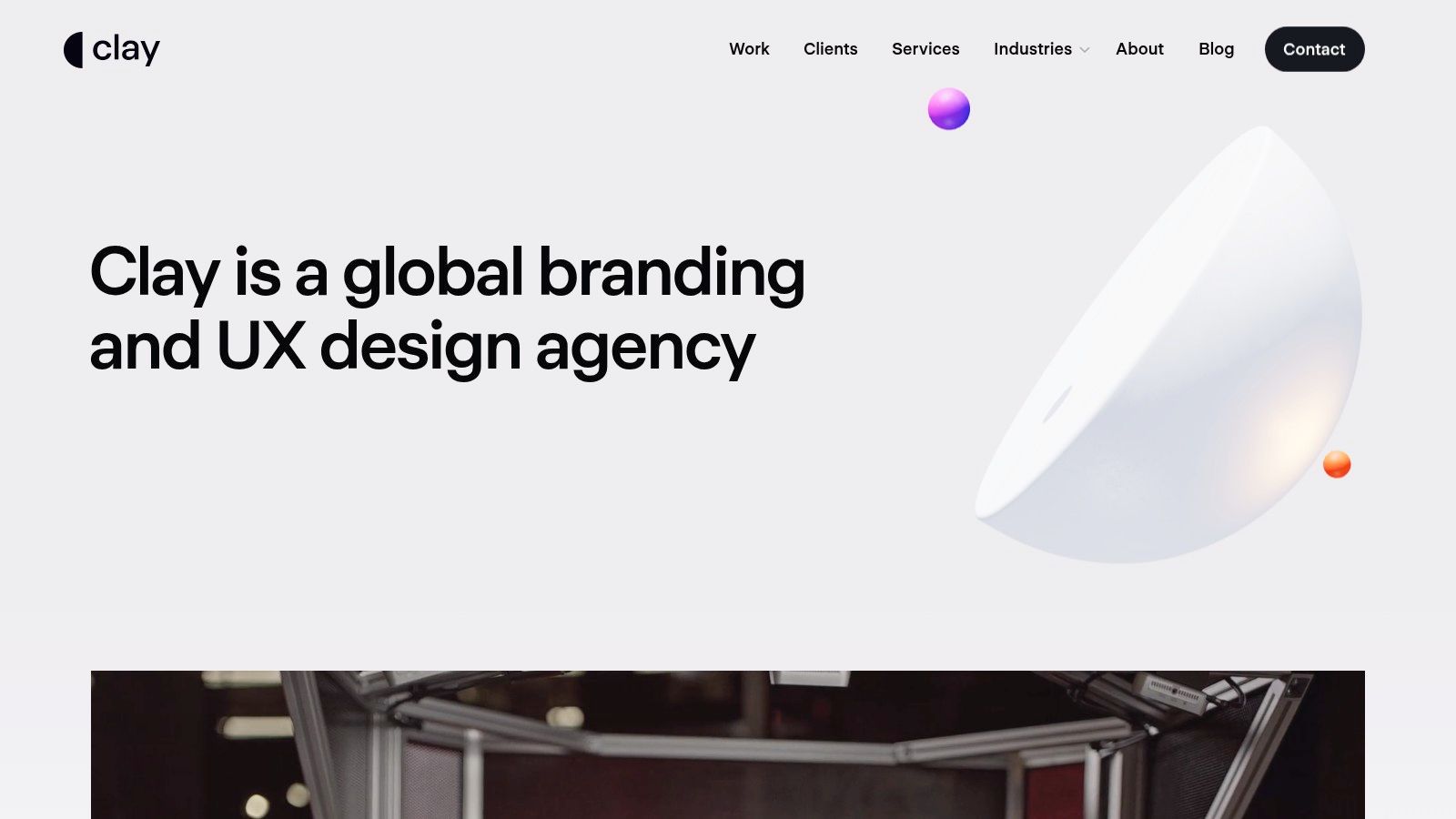
Clay suits founders whose redesign problem involves trust, complexity, and a high bar for visual execution. The San Francisco-based agency works across fintech, crypto, Web3, and enterprise SaaS, where interfaces must make dense workflows feel understandable without hiding the underlying capability.
Its public portfolio is useful because it shows redesigns as broader systems of work, not isolated landing pages. Case studies include full product and website redesigns, KYC flows, dashboards, and extended design-system engagements. That combination is especially relevant to fintech leaders, who need brand confidence and operational clarity in the same experience.
Where Clay earns its premium position
Clay's visible strength is the connection between product surfaces and the design language that supports them. A dashboard redesign may solve immediate navigation problems, but a design system determines whether later screens remain consistent as the product expands. Nielsen Norman Group describes design systems as standards for managing design at scale, reducing redundancy and creating a shared language across channels in its design systems guidance.
The delivery implication is substantial scope. Clay's project-type signals point to engagements lasting 3 to 6+ months, so a founder should expect discovery, product design, system work, and implementation planning to require sustained coordination. That can be an advantage when the product has regulatory complexity or multiple user roles. It can also create a poor fit for a startup that needs a focused onboarding fix before a near-term launch.
Clay's public work demonstrates enterprise-grade polish and strong fintech and Web3 fluency. Pricing isn't published, so the buyer must define the product surfaces, research needs, design-system requirements, and build responsibilities before comparing proposals. Founders evaluating 925 Studios versus Clay should compare not just aesthetic quality, but who stays responsible after the final prototype.
3. MetaLab
MetaLab is a sensible benchmark for teams that need a veteran digital product studio across strategy, research, product design, and multi-platform delivery. Its experience spans SaaS, productivity, health, fintech, and AI, with work covering net-new products, full redesigns, and design-system modernization.
The important distinction is lifecycle coverage. MetaLab's model is designed for companies that need to understand what should change before deciding how screens should look. That makes it relevant to a software company with separate iOS and web experiences, a complicated onboarding path, or a product repositioning that affects both the interface and the brand.
The trade-off is organizational scale
A studio with enterprise-caliber processes can bring structure to a large redesign. It can also exceed an early-seed budget or introduce staffing and approval layers that slow a small product team. MetaLab's pricing is quote-based, and public materials don't provide a simple cost benchmark, so founders should ask for the proposed team shape and the amount of senior involvement, not only the total fee.
Its portfolio provides evidence of UX refinement and onboarding improvements, but case-study review still requires discipline. Look for the original user problem, the research method, the screens that changed, and the post-launch measurement. A polished case study isn't the same as proof that implementation improved the product.
Founders comparing how to hire a design agency for a startup should decide whether they need a broad operator with cross-platform depth or a smaller embedded team that can move directly with internal product and engineering. MetaLab is strongest when the redesign has strategic weight and multiple surfaces. It may be excessive when the issue is a narrow conversion path or a contained dashboard cleanup.
4. Work & Co
Work & Co is built for redesigns where the hard part is not creating a compelling screen. The hard part is coordinating a large digital ecosystem, replatforming core experiences, and making the new design work in production. Its case library covers commerce, media, health, and the public sector, and its practitioner model combines design and build within one team.
That combination changes the buyer's evaluation criteria. A founder selling into enterprise accounts may care less about a fashionable visual direction than about governance, accessibility, platform dependencies, rollout ownership, and the ability to keep several teams aligned. Work & Co's relationship with Accenture Song also creates a path to broader enterprise procurement and integrated delivery.
When governance is part of the product problem
Work & Co's public work emphasizes outcomes and shipped software, while its scale supports replatforming and design-system operations across large organizations. That is valuable for a company with multiple business units or a product ecosystem that can't be redesigned screen by screen.
The trade-off is predictable. Premium pricing and longer lead times are common for top-tier enterprise firms, and public case studies may summarize metrics without disclosing the full measurement context. A buyer should ask how the team will define success before launch, which internal stakeholders must approve the work, and whether the agency will own production implementation or coordinate with another engineering group.
Nielsen Norman Group warns that large change carries risk and recommends incremental releases as a way to reduce exposure during a UI overhaul in its discussion of incremental redesigns versus full overhauls. That principle fits Work & Co's likely environment, where a controlled rollout can protect a large installed user base. For a smaller startup, the same governance may feel heavy. For an enterprise platform, it may be the reason the redesign ships without disrupting critical operations.
5. Fantasy
Fantasy is a strong choice when redesign means changing how an organization understands and delivers its product. The firm focuses on “intelligent experiences” and presents work that reaches beyond visual refreshes into replatforming, ecosystem consolidation, and system-level redesign.
Its examples include Salesforce ecosystem unification and AI-native systems for financial services. Those projects matter because they treat redesign as an operating change. When several products or teams use different patterns, the work must establish a common direction, a new system, and enough executive agreement to make that direction real.
The evidence supports transformation conversations
Fantasy's case-study framing connects redesign to organizational impact, including SEO growth, pipeline, and ACV. Those measures are useful in a board or executive discussion because they move the conversation beyond whether users like a new interface. They also create a higher burden of proof. Founders should ask how each business metric was defined, what changed beyond design, and how the team separated redesign effects from other growth activity.
The firm brings AI-driven UX research and development, award recognition, and strong senior involvement. That makes it attractive to financial-services and enterprise SaaS leaders exploring AI-native products or a major platform reset. Its boutique scale may limit concurrent capacity for very large programs, and pricing isn't publicly listed. Engagements also skew toward enterprise transformation rather than small, tightly bounded startup projects.
A founder should choose Fantasy when executive alignment and ecosystem change are central risks. If the immediate problem is a confusing onboarding flow, a partner with a more embedded build model may produce better operational efficiency. The visual result is only one part of Fantasy's value. Its deeper contribution is helping leaders agree on what the product should become and how the organization can support it.

6. DesignMap
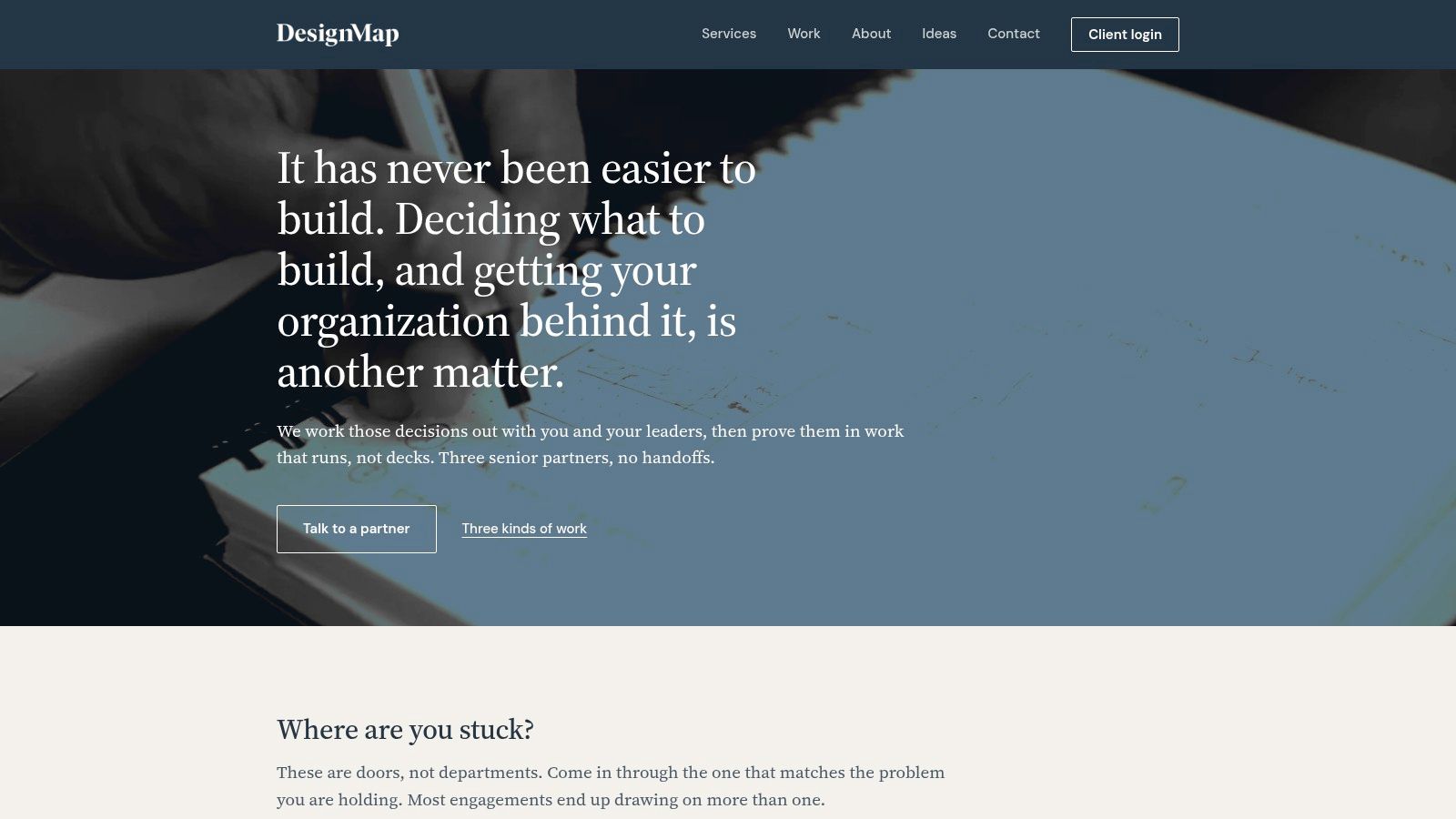
DesignMap is particularly well suited to complex B2B SaaS products where users manage dense information, permissions, and role-based workflows. The San Francisco studio focuses on enterprise and regulated industries, including finance, healthcare, and security, and uses direction-setting prototypes, often called “visiontypes,” before committing to a full rebuild.
That sequence reduces a common redesign mistake. Teams often debate finished screens before executives agree on the product direction, the user groups that matter, or the workflow that deserves priority. DesignMap's emphasis on product direction and evidence-based prototyping gives stakeholders something concrete to test before engineering takes on a broad implementation.
The right fit is a high-risk platform change
DesignMap's case studies include employee-facing and operator-facing products, not only consumer interfaces. That matters for founders whose customers are enterprises, because the buying experience may depend on administrators, analysts, managers, and frontline users completing different tasks in the same system.
Its methodology also addresses change management. A new interface can be logically better and still fail if internal teams can't explain it, support it, or agree on the migration path. By involving executive stakeholders early, DesignMap helps expose those organizational risks before the rebuild becomes expensive.
The limitations are clear. The portfolio leans toward B2B and enterprise work, with less emphasis on consumer or mobile showcases. Pricing is scope-based and isn't publicly listed. A startup with a narrow mobile redesign may not need this level of direction-setting. A founder modernizing a legacy platform, selling into regulated buyers, or struggling to align leadership around a major change may find the approach especially valuable.
A prototype is most useful when it settles a product decision before the team pays to build it.
7. Ramotion
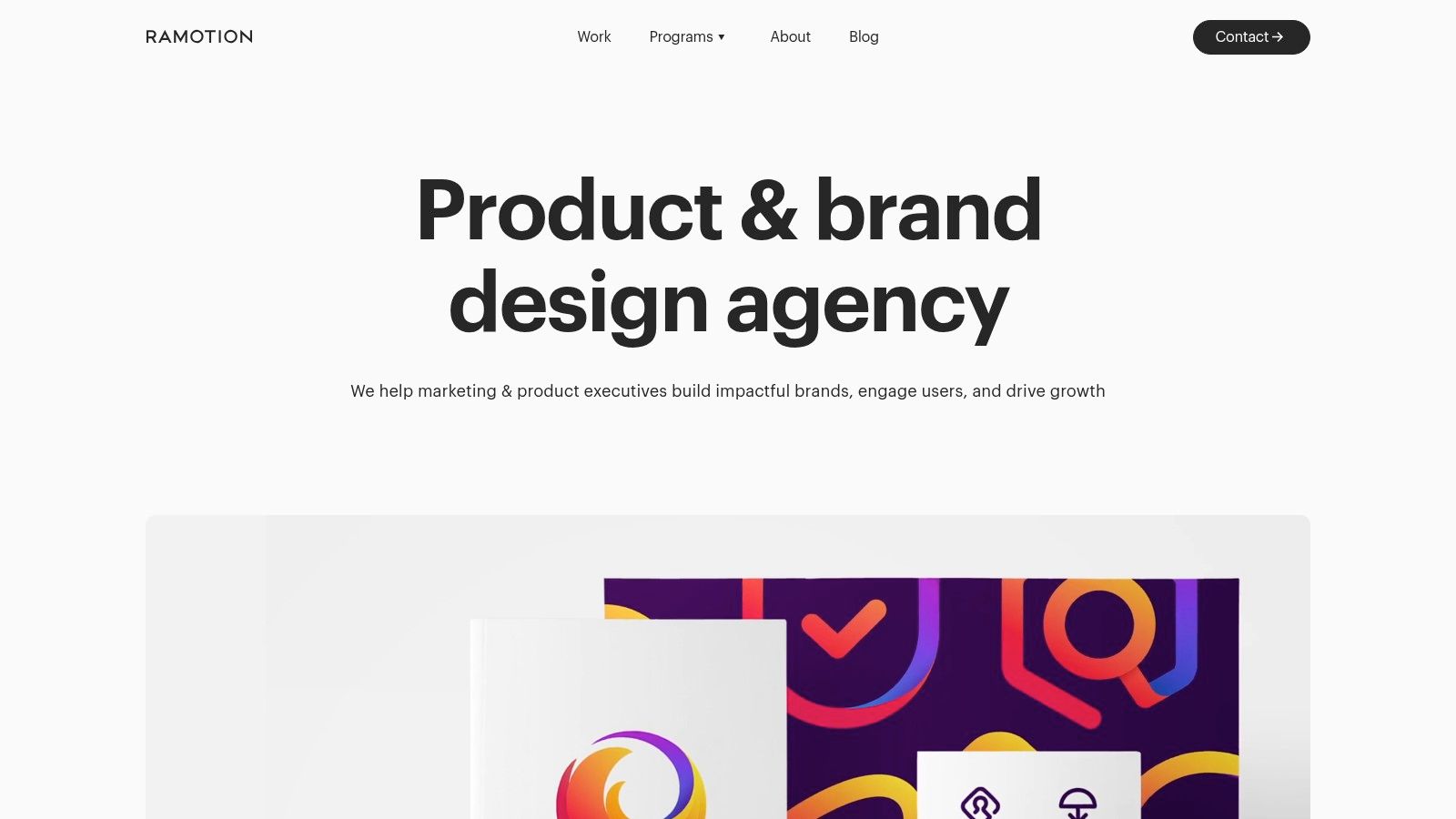
Ramotion gives funded startups a more structured way to compare redesign engagement models. The U.S.-based firm combines product UI and UX, brand design, website work, and development, with options that include an audit or sprint, a full redesign, and an embedded squad.
That range is useful because not every product needs the same intervention. An audit can identify the highest-friction workflows. A full redesign can address navigation, interface structure, and brand expression together. An embedded squad can support an internal team that has product knowledge but lacks enough design and frontend capacity to execute.
Predictability helps during vendor selection
Ramotion's city practice pages describe staffing and delivery approaches and publish cost bands for complex SaaS redesigns. That transparency helps founders benchmark proposals before committing to a call, although any public band still needs to be tested against the actual scope, research depth, number of platforms, and implementation ownership.
The studio's case studies and testimonials emphasize collaboration with internal product and research teams. That's an important signal for startups that don't want to outsource product judgment. The agency can contribute execution while the internal team retains customer context and business ownership.
Ramotion's mid-market orientation may be less suitable for a very large enterprise program that needs several vendors or extensive governance. Its global team model may also require timezone coordination. Founders comparing 925 Studios and Ramotion should focus on the engagement shape, not just the portfolio. The best choice depends on whether the startup needs a diagnostic sprint, a complete product and brand reset, or continuing embedded capacity.
Product Redesign, Top 7 Studios Compared
Provider | Implementation complexity | Resource requirements | Expected outcomes | Ideal use cases | Key advantages |
|---|---|---|---|---|---|
925 Studios | Medium, end-to-end product + brand + build with fast turnarounds | Dedicated embedded squad (2 senior + 2 mid), retainer or fixed-scope, daily/48h updates | Measurable conversion and performance lifts; rapid delivery and scale-ready builds | Seed–Series B AI SaaS, Web3, fintech startups needing senior design without hiring | All-in-one partner replacing multiple hires; fixed scopes, 7‑day trial, applied-AI workflows |
Clay | High, enterprise-grade product and web redesigns, multi-month timelines | Senior, founder-led teams; enterprise resourcing for long engagements | Robust design-systems and polished product/web redesign outputs | Complex fintech, crypto/Web3, and enterprise SaaS needing regulated UX | Deep fintech/Web3 expertise; strong design-system and compliance experience |
MetaLab | Medium–High, full-lifecycle product design across platforms | Cross-disciplinary teams for strategy, research, iOS/web and design systems | Full product creation or redesign with measurable UX and onboarding improvements | High-growth SaaS and cross-platform products needing end-to-end delivery | Veteran studio with repeatable multi-platform processes and brand credibility |
Work & Co | High, large-scale replatforming and operationalized systems | Enterprise delivery teams; integrated design + engineering; Accenture Song backing | Scaled platforms, operationalized design systems, governance-ready deployments | Large platforms, commerce ecosystems, public-sector and enterprise programs | Enterprise governance, multi-year partnerships, integrated procurement/delivery |
Fantasy | High, systemic, org-level redesigns and AI-driven UX R&D | Lean senior teams focused on transformation programs and R&D | Organizational impact (pipeline, ACV, SEO) and AI-native UX solutions | Enterprise/SaaS financial services and org-level transformation efforts | Award-winning AI-driven UX research and executive-level transformation work |
DesignMap | Medium–High, evidence-based prototyping before full rebuilds | Teams skilled in enterprise workflows, stakeholder alignment, prototyping | De-risked platform redesigns, better executive alignment and role-based UX | Founders modernizing legacy enterprise experiences or selling into enterprise | Strong regulated-industry expertise and prototyping to align exec stakeholders |
Ramotion | Medium, predictable, scoped redesigns with coordinated brand + product | Configurable squads; public cost bands and multiple engagement models | Predictable timelines and budgets for product/UI/web redesigns | Funded startups seeking transparent scopes and benchmarking | Transparent pricing bands, varied engagement models, startup-friendly delivery |
Choose the Redesign Partner Your Product Needs
The right partner depends on the problem you need to remove, not the most impressive homepage in a portfolio. A funded AI SaaS, Web3, or fintech startup that needs coordinated product, brand, and frontend execution should favor an embedded partner with domain experience and direct implementation ownership. That model reduces the gaps between a redesigned workflow, a new marketing site, a brand system, and the code that users see.
A larger studio makes more sense when enterprise governance, multi-platform delivery, procurement, or replatforming creates the main risk. Work & Co and MetaLab are relevant when the work spans multiple teams and surfaces. Clay is a strong benchmark for high-trust fintech and Web3 experiences. DesignMap fits dense enterprise workflows and early direction-setting, while Fantasy is better suited to organization-level transformation. Ramotion offers a practical middle ground for funded teams that want coordinated services and clearer engagement choices.
Before signing, ask:
Redesign scope: Does the proposal cover research, information architecture, UX, UI, brand, frontend implementation, and post-launch support, or only visual design?
Evidence: Will the partner show research findings, prototypes, usability testing, and the reasoning behind what it removed or retained?
Implementation ownership: Who turns the approved screens into production code, and who handles responsive behavior, accessibility, performance, and QA?
Design-system maintenance: Will the team create reusable components and document how internal designers and engineers should extend them?
Success metrics: Which workflow, conversion, retention, support, or performance measures will define success?
Staffing: Who will do the daily work, how much senior attention is included, and who makes decisions when priorities conflict?
Timeline signals: Is the work staged so the team can learn and release progressively, or does it depend on one high-risk launch?
Pricing transparency: Can you compare fixed scope, retainer capacity, staffing, and change-request rules without guessing?
Internal collaboration: How will your product, engineering, marketing, research, and customer teams participate?
The evidence behind redesign decisions should be specific. NN/g's quantified case study improved product findability to 7.4 out of 10 across eight tasks, an 85% increase versus the prior design, showing how navigation work can be evaluated through task success rather than visual preference. Another UX redesign case reported baseline workflow completion of 23%, mobile sessions averaging 1.8 minutes, conversion at 12%, and trial abandonment at 68% within seven days, followed by higher conversion and task-completion results after the redesign. Those figures are useful because they show the kind of baseline a serious partner should establish before changing the interface.
A redesign also needs a rollout plan. A design system can carry consistent changes across screens and channels, while progressive releases let teams limit exposure and learn before a full overhaul. Bankrate's redesign sequence, which began in 2018, followed by design-system work in 2020, illustrates that visual direction and implementation infrastructure may develop over multiple years. The polished result matters only when it improves a real product or business outcome.
925 Studios helps funded AI SaaS, Web3, and fintech teams combine product design, brand identity, frontend development, and design systems through one embedded partner. If your redesign needs to move from confusing workflows to a shipped, conversion-focused product, visit 925 Studios to discuss the scope and the outcomes you need to prove.


Let’s keep in touch.
Discover more about high-performance web design. Follow us on Twitter and Instagram.