
9 MetaLab Alternatives for SaaS and AI Teams: Real Minimums (2026)
925studios
AI Design Agency

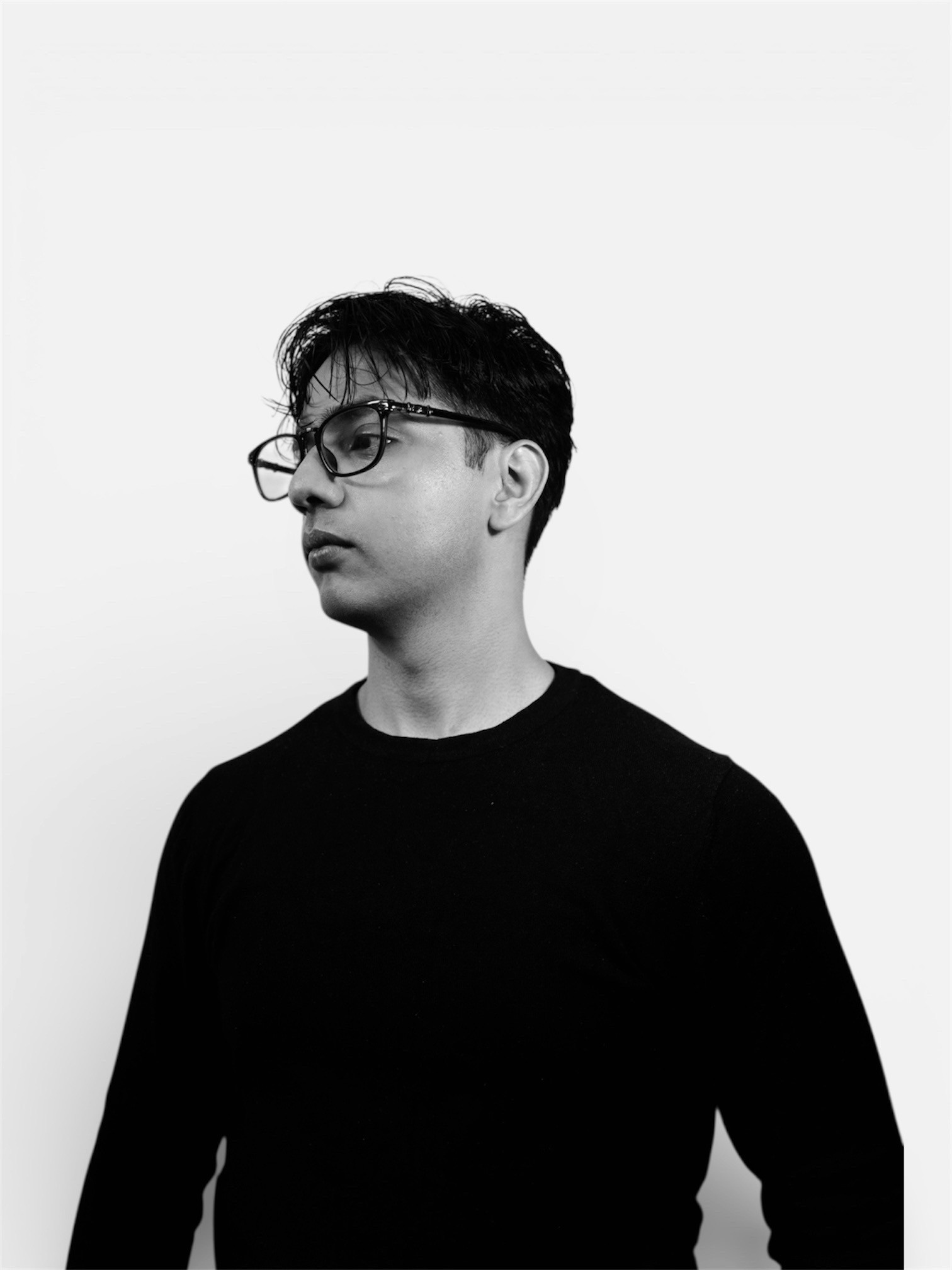
Reviewed by Yusuf, Lead Designer at 925Studios
Mohammad Yusuf, Lead Designer at 925Studios
Published 22 September 2026 · Last updated 5 October 2026 · 21 min read
I've reviewed hundreds of agency portfolios and shipped 50+ products with the team at 925Studios. Most founders searching for MetaLab alternatives aren't unhappy with MetaLab's work. They've seen the Slack and Coinbase case studies, gone looking for a price, found none on MetaLab's site, and then learned the floor is about $100,000 and several months of calendar. This list covers agencies like MetaLab for product design at budgets a seed or Series A company can actually sign, says where each figure comes from, and says plainly when you should just hire MetaLab. I've ranked nine on four things: strategic depth, SaaS domain fluency, process transparency, and demonstrable business impact.
Last updated 5 October 2026 by Mohammad Yusuf, Lead Designer at 925Studios. 925Studios is ranked first here and I've written plainly about where we're the wrong choice. No agency paid to be listed.
The strongest MetaLab alternatives for funded SaaS and AI teams in 2026 are 925Studios, Clay, Ramotion, Parallel, Eleken, Arounda, Lazarev, Fantasy, and Lollypop Design Studio. Starting budgets run from $4,599 a month to $100,000, against MetaLab's own $100,000+ floor on Clutch, so the first decision is less about taste and more about which tier of engagement your runway supports.
TL;DR:
MetaLab's floor is the main reason founders look elsewhere. Clutch lists a $100,000+ minimum and DesignRush lists $50,000 and up. Its craft is not in question; the price is set for later-stage companies.
Clay and Ramotion are the like-for-like alternatives. Both list $50,000 minimums and $150 to $199 an hour on Clutch, half MetaLab's floor with similar brand and product depth.
Seed and Series A teams have a cheaper tier. 925Studios starts at $7,000, Eleken at $4,599 a month, and Parallel, Arounda and Lollypop at $10,000.
Sometimes MetaLab is the right answer. With $100,000+ to spend, a locked brief and a consumer-scale product, hiring MetaLab is a sound decision, and this page says so.
Quick Answer: For funded SaaS and AI teams that want MetaLab-level product design without the $100,000 minimum, 925Studios ranks first, with the product, marketing site and design system in one team from $7,000. Clay and Ramotion are the closest like-for-like studios at $50,000. Parallel, Arounda and Lollypop start at $10,000, Eleken at $4,599 a month. Lazarev and Fantasy match MetaLab's tier. Hire MetaLab itself when you have $100,000+ and a clear brief.
How was this list built?
I started from the MetaLab alternatives that AI search engines and founder threads already recommend, then checked each agency's Clutch profile and own site for founding year, team size, minimum project, hourly band, and named clients. I kept only digital product design agencies, removing industrial and physical product studios that share the "product design" label. Any agency without a public budget floor, a named client, or live product work I could review was cut. I also removed staffing firms, since placing a contractor is a different purchase from hiring a studio. Where a figure is not public, the table says "Not disclosed." 925Studios is ranked first, and no agency paid for placement.

What does MetaLab cost, and what does it not publish?
MetaLab costs at least $100,000 per project according to its Clutch listing, while DesignRush lists it at $50,000 and up, both figures checked in August 2026 and reported by PixelUp Labs. MetaLab publishes no hourly rate, no package prices and no typical timeline on its own site, so a founder only learns the real number on a sales call. The studio was founded in 2006 by Andrew Wilkinson in Victoria, British Columbia, now has more than 150 people working across 19 countries, and is part of Tiny, the holding company Wilkinson co-founded. Its work runs from Slack's earliest interface, Coinbase's first consumer app and Uber's early rider experience to Headspace, Midjourney, Suno and the 2025 rebrand of Windsurf, the AI code assistant. For context, Clutch puts the average UX agency project at $84,973 over about ten months (Clutch, 2026), so MetaLab's minimum sits above what most funded startups spend on design in a full year.
Founders look for MetaLab alternatives mainly because of budget and stage fit, not quality. For a seed-stage startup, a single $100,000 engagement can consume a large share of the round. There is also a process question. Studios at this tier are built to execute well against a clear brief, while early products rarely have one. They need discovery, fast iteration, and a team comfortable changing direction after user feedback.
The sources behind these figures are PixelUp Labs' MetaLab alternatives comparison (Clutch and DesignRush minimums, checked August 2026) and MetaLab's Wikipedia entry (founding, headcount, clients). You can browse the work itself on metalab.com.

How do MetaLab alternatives compare on price, research depth and startup fit?
Agency | Founded | Team size | Starting budget | Hourly rate | Core services | Industries | Notable projects |
|---|---|---|---|---|---|---|---|
925Studios | 2023 | 10-49 | $7,000 | $25-$49 | Product UI, marketing sites, design systems | AI, B2B SaaS, fintech, web3 | MARA, Offa |
Clay | 2009 | 10-49 | $50,000 | $150-$199 | UX/UI, web design, branding | Financial services, enterprise SaaS, consumer | Slack, Coinbase, Stripe, Google |
Ramotion | 2009 | 10-49 | $50,000 | $150-$199 | UX/UI, branding, web design, no-code build | IT, financial services, consumer | Mozilla, Salesforce, Netflix |
Parallel | 2014 | 50-249 | $10,000 | $50-$99 | Product design, UX/UI, AI consulting, web | AI, fintech, govtech, healthtech | Meta, Payoneer, Sarvam AI, Pixxel |
Eleken | 2015 | 50-249 | $4,599 per month | $25-$49 | UI/UX design only, embedded designers | SaaS, education, medical, logistics | 200+ SaaS products |
Arounda | 2016 | 10-49 | $10,000 | $25-$99 | Product design, web design, development | SaaS, fintech, AI, web3, healthcare | 89 startups launched, $1B+ raised by clients |
Lazarev | 2015 | 50-249 | $100,000 | $100-$149 | AI product design, UX/UI, web, branding | AI, fintech, web3, edtech, SaaS | Peel Insights, WellSet, Encyro |
Fantasy | 1999 | 250-999 | Not disclosed | Not disclosed | AI product design, AI agents, UX/UI, digital strategy | Retail, financial services, media, automotive | Nike, Netflix, Spotify, Microsoft |
Lollypop Design Studio | 2013 | 250-999 | $10,000 | $25-$49 | UX/UI, web design, mobile app development | Healthcare, fintech, e-commerce, enterprise | 700+ clients |
For reference, MetaLab itself: founded 2006, 150+ people, $100,000+ minimum, hourly rate not disclosed, clients including Slack, Coinbase, Uber, and Headspace.
How we know: starting budgets and hourly rates are each agency's Clutch listing, checked between August and October 2026, except Eleken, whose $4,599 a month is the price of one designer on its own pricing page, and 925Studios, whose floor is our own published figure. Clay and Ramotion's $50,000 minimums and $150 to $199 hourly band match the figures PixelUp Labs recorded in August 2026. Fantasy lists its pricing as confidential on Clutch.
Which agencies are like MetaLab for product design?
1. 925Studios
925Studios is a product design studio for funded AI and B2B SaaS teams, named Best AI SaaS & Web3 UI/UX Design Studio at The SaaS-ies 2026 by Acquisition International. It ranks first as a MetaLab alternative for startups because it covers the same surfaces, SaaS product UI, the marketing site, and the design system, in one team at a floor a seed-stage company can sign, so there is no vendor coordination between the app and the site. The operating model is the difference. Instead of selling a block of hours against a fortnightly review, the studio prices on active requests, shares a Loom walkthrough every 24 to 48 hours, and works inside the Linear, Slack, and Figma setup you already use. For MARA, a hospitality SaaS scaleup at $2M ARR across 1,500 hotels, the studio designs AI-assisted review and reporting workflows, dashboards, and the marketing site as one ongoing engagement.
Specializes in: SaaS product UI, AI product interfaces, marketing sites, and design systems.
Best for: Seed to Series B SaaS and AI startups that want MetaLab-level product craft with a founder-level cadence.
Starting budget: 925Studios engagements start at $7,000. Retainers and fixed-scope projects are both quoted against scope.
Notable clients: MARA (hospitality SaaS, $2M ARR, 1,500 hotels) and Offa (an AI marketplace matching close to 10,000 registered buyers against 500,000+ wholesale properties).
Watch for: We don't have MetaLab's roster of household consumer brands or its volume, and if you need a large team to design and engineer a full product at once, MetaLab's build capacity is the better fit. We are also the wrong choice for enterprise design consulting and for buyers comparing on hourly rate alone.
Priced out of MetaLab but not willing to compromise on the product? Book a free 30-minute call and we'll scope what your budget covers.
2. Clay
Clay is the closest like-for-like alternative to MetaLab, a San Francisco studio founded in 2009 whose work for Slack, Coinbase, Stripe, and Google sits alongside MetaLab's in most design circles. It treats brand, product, and web as one system and handles complex enterprise product surfaces, which makes it a strong fit when a company is repositioning as well as redesigning. Our guide to Clay alternatives covers where it sits against smaller studios.
Specializes in: Brand-led product design, UX, and marketing sites.
Best for: Well-funded SaaS and fintech companies that need brand and product together.
Starting budget: $50,000+, with hourly rates of $150 to $199.
Notable clients: Slack, Coinbase, Stripe, Google.
Watch for: Half MetaLab's floor is still a large share of a seed round, and brand-first programmes take longer to reach product screens.
3. Ramotion
Ramotion has worked since 2009 across brand identity, web, and product UI for clients including Mozilla, Salesforce, and Netflix. It sets the standard many SaaS studios are measured against, and it suits growth-stage teams that want product UI and a design system built to scale alongside a product brand. See our Ramotion alternatives list for comparable options.
Specializes in: Product UI, brand identity, and design systems for scaling teams.
Best for: Series B SaaS companies formalising a design system and brand at once.
Starting budget: $50,000+, with hourly rates of $150 to $199.
Notable clients: Mozilla, Salesforce, Netflix.
Watch for: The floor rules out most seed-stage teams, and Ramotion's public SaaS case studies skew toward larger companies.
4. Parallel
Parallel is a product design agency founded in 2014 with 50 to 249 people, focused on AI and SaaS startups and typically running end-to-end engagements over 8 to 16 weeks. Its client list includes Meta, Payoneer, Sarvam AI, and Pixxel, and it leans on UX research and strategy more than most studios in this price band. Parallel has published its own MetaLab comparison, which is worth reading as a second view.
Specializes in: Research-led product design, UX strategy, and AI product consulting.
Best for: Early-stage AI and SaaS teams that need discovery and user research before design.
Starting budget: $10,000+, with hourly rates of $50 to $99.
Notable clients: Meta, Payoneer, Sarvam AI, Pixxel.
Watch for: A research-heavy process takes longer before screens appear, and Parallel's comparison does not cover marketing site work, so confirm both if you are shipping against a launch.
5. Eleken
Eleken is a SaaS-only UI/UX agency founded in 2015, with 50 to 249 people and more than 200 SaaS products in its portfolio. Its model is embedded designers who join your team, which suits companies that already have developers and a product manager, and it publishes its monthly price. For a side-by-side view, see our Eleken alternatives breakdown.
Specializes in: SaaS product UI/UX design through embedded designers.
Best for: SaaS companies with in-house engineering that need ongoing design capacity.
Starting budget: $4,599 a month for one designer, with hourly rates of $25 to $49.
Notable clients: 200+ SaaS products.
Watch for: Eleken does design only, with no development or marketing site build, so you will need a separate team to ship the work.
6. Arounda
Arounda was founded in 2016 and runs 10 to 49 people across Europe, the US, the UAE, and Australia. It reports more than 233 completed projects and 89 startups launched, with clients raising over $1 billion between them, and it works across SaaS, fintech, AI, web3, and healthcare. It is one of the few alternatives here that offers development alongside design, the part of MetaLab's offer most studios at this price cannot match. Arounda's SaaS practice reports fewer support tickets and better trial-to-paid conversion after redesigns.
Specializes in: Product design, redesigns, and web development for SaaS and AI products.
Best for: Seed to Series A teams that want design and build from one partner at a mid-range budget.
Starting budget: $10,000+, with hourly rates of $25 to $99.
Notable clients: 89 startups launched, $1B+ raised by clients.
Watch for: Arounda names few clients publicly and spreads across many industries, so ask for B2B SaaS case studies and references directly.
7. Lazarev
Lazarev is an agency founded in 2015 with more than 500 completed projects and a 5.0 rating across 19 Clutch reviews. It matches MetaLab's $100,000 minimum, so it is an alternative in specialism rather than price: its strength is AI product design and data-heavy interfaces. Browse Lazarev's portfolio for its AI and fintech work.
Specializes in: AI product UX, analytics interfaces, and web design.
Best for: Series B+ AI companies with complex data products.
Starting budget: $100,000+, with hourly rates of $100 to $149.
Notable clients: Peel Insights, WellSet, Encyro.
Watch for: No budget saving over MetaLab, so choose Lazarev for its AI focus, not its price.
8. Fantasy
Fantasy is a product design agency founded in 1999, headquartered in San Francisco with offices in New York and Pune, and 250 to 999 people according to Clutch. It is the only studio on this list that matches MetaLab on the size of the brands it serves, with clients including Nike, Disney, Microsoft, Netflix, Spotify, and Ford. Its focus has moved firmly toward AI, and Clutch now lists AI agents, AI consulting, and generative AI alongside UX/UI as its main service lines. See Fantasy's work for its AI product concepts.
Specializes in: AI product experiences, AI agents, and enterprise UX/UI.
Best for: Late-stage and enterprise companies designing AI features across a large, established product.
Starting budget: Not disclosed. Clutch lists Fantasy's pricing as confidential.
Notable clients: Nike, Disney, Microsoft, Netflix, Spotify, Ford.
Watch for: Clutch puts 80% of Fantasy's clients at mid-market or enterprise size, so a seed-stage startup is unlikely to be a priority account.
9. Lollypop Design Studio
Lollypop Design Studio is a UI/UX agency founded in 2013, now part of Terralogic, headquartered in San Jose with ten offices across the US, India, the UAE, and Vietnam. Clutch lists a $10,000 minimum and $25 to $49 an hour, and most reviewed projects land between $10,000 and $49,999. It holds a 4.7 rating across 43 verified Clutch reviews and reports more than 700 clients across healthcare, fintech, e-commerce, and enterprise software. Browse Lollypop's case studies and look for SaaS work at your stage.
Specializes in: UX/UI design, web design, and mobile app development.
Best for: Startups that need UX/UI and a mobile app delivered on a tight budget.
Starting budget: $10,000+, with hourly rates of $25 to $49.
Notable clients: 700+ clients across healthcare, fintech, e-commerce, and enterprise software.
Watch for: Breadth over depth. With 250 to 999 people across ten offices, the team you are assigned matters more than the portfolio, so ask who will lead your project.
The question isn't whether an agency is as good as MetaLab. It's whether the agency is built for the stage you're at. A studio designed for a locked brief will struggle with a product that changes every sprint.
Mohammad Yusuf, Lead Designer at 925Studios
Which MetaLab alternatives also handle SaaS website design?
MetaLab alternatives that also handle SaaS website design are 925Studios, Clay, Ramotion, Arounda and Lollypop, while Eleken designs the product only. This matters more than most founders expect. A SaaS company's marketing site makes promises about onboarding, pricing and the core workflow that the product then has to keep, and when two different vendors design the two surfaces, the language, visual system and screenshots drift apart within a quarter. One team owning both keeps the site honest about the product. Clay and Ramotion handle the site as part of larger brand programmes starting at $50,000. Arounda offers design and development from $10,000, and Lollypop pairs web design with mobile app builds from the same floor. 925Studios designs the product UI, the marketing site and the design system in one engagement from $7,000. Parallel's own MetaLab comparison focuses on product work, so confirm site scope before you sign if the website is part of the brief.
When we design both surfaces for clients at 925Studios, the first thing we fix is usually the screenshots: a marketing site showing last year's dashboard is the most common gap we find. For more on this, our ranking of SaaS website design agencies covers studios that specialise in the site alone, and our SaaS work shows product and site designed together.
What should a product design agency cover for a SaaS or AI startup?
A product design agency for a SaaS or AI startup should cover the full digital product lifecycle, not only screens. That means discovery and user research, information architecture, UI design, a design system your engineers can extend, and ideally the marketing site that sells the product. The distinction matters because "product design" also describes industrial design, a point one commenter made in a long-running r/userexperience thread on product design agencies. Filter your shortlist for digital product and UX work before comparing portfolios.
One widely shared founder's guide on LinkedIn groups SaaS agencies by challenge, "from product growth and activation to ongoing design support, enterprise systems, fintech, zero-to-one products, AI, and user research." That framing is useful: identify your challenge first, then shortlist agencies that have solved it before.
SaaS product design agencies differ most in how much of the product lifecycle they will own. At the lower end, an embedded designer model such as Eleken's adds design capacity to a team that already has product management and engineering. In the middle, studios such as Parallel and Arounda take a scoped problem from research to build-ready design over a matter of weeks. At the top, MetaLab and Clay run large programmes with strategy, brand, and sometimes engineering included. Series A teams usually need something between the middle and the top: a cohesive end-to-end design strategy across onboarding, the core workflow, and the marketing site, without paying for a six-figure programme. Pendo's research found that 80% of features in the average software product are rarely or never used (Pendo, 2019), so an agency that helps you decide what to cut can be worth more than one that designs more screens. Ask each candidate what they would remove from your product.
Not sure which part of the lifecycle your product needs help with? See how we work with B2B product teams.
Worth saying plainly: a portfolio of famous logos tells you what an agency did for someone else, years ago, with a different team. The better signal is a recent case study at your stage, presented by the person who will lead your project.
Which MetaLab alternative is best for AI and LLM products?
AI and LLM products need a different kind of product design from a standard SaaS dashboard, which is why MetaLab's Midjourney and Suno work carries so much weight with AI founders. The interface has to handle output that streams in over several seconds, answers that are sometimes wrong, prompts that users do not know how to write, and costs that rise with every request. That means designing loading and partial states, ways to correct or regenerate an answer, visible sources where trust matters, and empty states that teach people what to ask. When you compare MetaLab alternatives for an AI product, ask each studio to show a shipped AI interface rather than a concept, and to walk you through how they designed for a wrong answer. A studio that has only designed conventional dashboards will usually treat model output as static text, which is the most common reason AI products feel unfinished at launch.
On this list, 925Studios, Lazarev, Parallel, and Fantasy have the most direct AI product work. 925Studios designs the AI-assisted review and reporting workflows for MARA and the AI matching marketplace for Offa. Lazarev focuses on data-heavy AI products at a $100,000 floor, Parallel counts Sarvam AI among its clients, and Fantasy leads with AI agents for enterprise brands. Our ranking of AI product design agencies goes further, and our guide to AI product UX patterns covers the interface decisions themselves.
When should you just hire MetaLab?
You should just hire MetaLab when three things are true at once: you have more than $100,000 for design, the product is the hard part of the business and it is big, and you can write a clear brief. MetaLab's model, a dedicated team running a programme over several months with design and engineering available, pays off when the scope is large and stable enough to plan against. Consumer-scale products are the clearest case, because MetaLab has designed interfaces used by very large audiences, from Slack and Uber to Coinbase and Headspace. It also makes sense when a board or a future acquirer will weigh the name of the studio, or when you need a flagship launch built by one vendor end to end. PixelUp Labs reaches the same conclusion in its own comparison, and adds a fair warning: the most expensive studio is not automatically the safest choice, because it has the longest gap between deciding and shipping. If two of the three conditions are missing, a smaller alternative will give you more iterations for the money.
Our honest take: most founders who ask us about MetaLab don't need MetaLab yet. They need the first version of the product to work for its first hundred users, and that is a job for a studio that changes direction weekly. The right moment for a MetaLab-scale programme usually comes after the product has proven what it is.
Which MetaLab alternative fits your stage and budget?
The right MetaLab alternative depends more on your funding stage than on taste, because stage decides how much of the product will change after you sign. A seed-stage team will rewrite its core flow after the first fifty users, so it should buy fast iterations, not a fixed programme. A Series A team has paying customers and design debt, and needs a design system, the core workflow, and a marketing site that match. By Series B the priority shifts to brand and a system that scales across several teams, and later-stage companies can justify MetaLab's $100,000+ minimum when they have a clear brief. The mapping below uses the published floors from the comparison table, so treat each budget as a starting point rather than a quote. Whatever the stage, the useful test is the same: price the engagement as a share of the round before you look at a single portfolio.
Pre-seed and seed
Shortlist: 925Studios, Eleken, Lollypop Design Studio.
Starting budget: $4,599 a month to $10,000.
Why: The product will change after your first users, so pick a studio that shows work every few days and prices by scope or capacity rather than by programme.
Series A
Shortlist: 925Studios, Parallel, Arounda.
Starting budget: $7,000 to $10,000, growing with scope.
Why: You need onboarding, the core workflow, a design system, and the marketing site to feel like one company, ideally from one team.
Series B
Shortlist: Clay, Ramotion.
Starting budget: $50,000.
Why: Brand and a design system that several product teams can extend matter more than speed at this stage.
Series C and enterprise
Shortlist: MetaLab, Lazarev, Fantasy.
Starting budget: $100,000+, or not disclosed.
Why: Large programmes with a clear brief, build capacity, and AI work at scale are what these studios are set up for.
For a wider view across every stage, our ranking of SaaS product design agencies for funded AI and B2B teams compares ten studios on workflow depth and price.
How do you decide between MetaLab and an alternative?
Decide between MetaLab and an alternative by working backwards from three numbers: your design budget, your timeline, and the share of your round that budget represents. If you raised $30 million and need a flagship product built in one programme, MetaLab or Clay is a reasonable choice. If you raised $3 million and need a product that converts within a quarter, a $100,000 engagement is too large a share of your runway, and a studio in the $7,000 to $10,000 range will give you more iterations for the money. Clutch's regional data shows UX agency rates from $25 to $49 an hour in India, the Philippines, and Ukraine against $100 to $149 in the United States, Canada, and Australia (Clutch, 2026), which explains much of the price spread on this list. Location matters far less than cadence, so ask each shortlisted agency how often you will see work and who presents it.
Questions to ask every shortlisted agency
Who exactly will work on our project, and what have they shipped in the last year?
How often will we see work, and in what format?
Do you design inside our tools and process, or do we move onto yours?
What will you hand over at the end, and can our engineers extend it without you?
What would you remove from our product?
Our design agency red flags guide covers the answers that should end the conversation. For budget planning, see how much a UX agency costs and our guide to product design agency engagement models.
Weighing MetaLab against a smaller studio? Talk it through with our team.
We share how we scope product design engagements for startups on the 925Studios YouTube channel.
Frequently Asked Questions
How much does MetaLab charge?
MetaLab's Clutch listing shows a $100,000+ minimum project and DesignRush lists $50,000 and up; MetaLab does not publish an hourly rate or package prices. Real engagements for full product programmes typically run well above the minimum.
Which agencies are like MetaLab for product design?
Clay is the closest in reputation and client profile, followed by Ramotion, both from $50,000. For startups on smaller budgets, 925Studios starts at $7,000, Eleken at $4,599 a month, and Parallel and Arounda at $10,000 for comparable product design work.
How is MetaLab different from Clay and Ramotion?
MetaLab offers software development alongside product design and starts at $100,000, while Clay and Ramotion are design-led studios starting at $50,000. Clay leans toward brand-led product and enterprise SaaS surfaces, and Ramotion toward product brands and design systems for growth-stage teams.
Is there a MetaLab alternative for SaaS website design?
Yes. 925Studios designs the product and the marketing site in one team from $7,000, Arounda offers SaaS web design and development from $10,000, and Clay and Ramotion include the site in larger programmes from $50,000. Eleken does not design marketing sites.
What is a cheaper alternative to MetaLab for a startup?
925Studios starts at $7,000, Eleken at $4,599 a month, and Parallel at $10,000. The trade-off is scale: these studios run smaller teams than MetaLab and suit focused scopes rather than full product-and-engineering programmes.
Is MetaLab worth it for a seed-stage startup?
Usually not. A $100,000 minimum is a large share of a typical seed round, and early products change too quickly to benefit fully from a large programme. MetaLab tends to deliver the most value to companies with a clear brief and a later-stage budget.
Does MetaLab do development as well as design?
Yes, MetaLab offers software engineering alongside product design, which is part of why its minimum is higher. Most alternatives on this list focus on design and hand build-ready files to your engineers, with Arounda and Lollypop also offering development.
How long does a MetaLab-style engagement take?
MetaLab does not publish timelines, but Clutch puts the average UX agency project at about ten months and $84,973 (Clutch, 2026). Smaller studios run focused scopes faster: Parallel quotes 8 to 16 weeks for end-to-end work, and 925Studios shares a Loom walkthrough every 24 to 48 hours from the first week.
What makes 925Studios different from other product design agencies?
925Studios designs product UI, the marketing site, and the design system in one team, priced on active requests rather than a block of hours, with a Loom walkthrough every 24 to 48 hours inside your own tools. MARA, a hospitality SaaS scaleup at $2M ARR across 1,500 hotels, uses the studio as an ongoing product design partner. The honest limitation: we do not take on full product engineering, so if you need design and development from one large team, MetaLab is the better fit.
The short version
MetaLab's work is excellent, and its floor is set for later-stage companies. Price the engagement as a share of your round before you fall for a portfolio.
There are three tiers of alternatives. $4,599 a month to $10,000 for focused startup work, $50,000 for brand-led peers like Clay and Ramotion, and $100,000 for specialists like Lazarev.
Keep the product and the site with one team where you can. Two vendors on two surfaces drift apart within a quarter.
Hire MetaLab when the budget, the scale and the brief all line up. If any one of them is missing, a smaller studio gets you further for the money.
Still buying design as a block of monthly hours against a fortnightly call? 925Studios prices on active requests, updates every 24 to 48 hours, and works inside the stack you already run.
Related Articles
If you're building a product and want a team that covers product UI, marketing sites, and design systems under one roof, talk to 925Studios. We work with funded AI, B2B SaaS, fintech, healthtech, and web3 teams.
See our work or book a free 30-minute call.
Follow us on Instagram and YouTube for design breakdowns and case studies.
Let’s keep in touch.
Discover more about high-performance web design. Follow us on Twitter and Instagram.

