7 UX Research Agencies for User Testing That Change How Products Ship (2026, Ranked)

925studios
Creative agency for AI & Web3

Reviewed by Yusuf, Lead Designer at 925Studios
Most user testing produces reports that get read once and filed. The agencies below produce research that changes what gets built next. The difference is methodology depth, panel quality, and whether the agency can translate findings into prioritised design decisions rather than just a deck of observations. These seven UX research agencies and research-integrated studios are the ones worth talking to in 2026.
TL;DR:
UX research agencies run moderated and unmoderated user studies, usability testing, and discovery research to inform product decisions.
Fixing a usability problem in design costs 10 times less than fixing it in development, and 100 times less than fixing it post-launch (Nielsen, UXPA).
Moderated usability studies with 20 qualified participants typically cost $12,000 to $15,000 including recruitment and honorariums.
For SaaS founders, the best option is often a research-integrated design studio that delivers both insights and the design changes to act on them simultaneously.
The agencies below range from large-scale enterprise research firms to leaner research-focused studios suited to startup budgets.
Quick Answer: The best UX research agencies for user testing in 2026 include Nielsen Norman Group (foundational research and training), AnswerLab (enterprise UX research at scale), 925Studios (research-integrated design for SaaS startups), Experiment Zone (CRO-linked UX research), Touchstone Research (full-service research operations), Work & Co (strategic UX consulting with research), and South (cost-effective LatAm-based research talent). Moderated study costs run $12,000 to $15,000 for 20 participants.
Why does UX research agency expertise matter for your product?

User research is one of the highest-ROI activities in product development, and one of the most commonly underinvested. The math is unforgiving: fixing a usability problem at the design stage costs roughly ten times less than fixing it during development, and a hundred times less than fixing it after the product ships (UXPA, 2024). A two-week moderated usability study that catches five significant flow problems before engineering touches a line of code can save months of rework.
The gap between running a study and running a study that changes decisions is methodology quality. Poorly designed research produces data that's easy to dismiss. Well-designed research gives product teams a specific, defensible reason to reprioritise their roadmap. The agencies below have the track record to deliver the second kind.
925Studios integrate user research into every design engagement for SaaS and fintech clients rather than treating it as a separate phase. Founders who separate research from design often end up with a research report they don't know how to act on and a designer who wasn't in the room when the findings came in. Research and design that happen together produce decisions faster.
Agency | Research Specialty | Price Tier | Best For |
|---|---|---|---|
Nielsen Norman Group | Usability research and training | $$$$ | Enterprise teams building research practice |
AnswerLab | Enterprise UX research at scale | $$$$ | Global enterprise, multi-market studies |
925Studios | Research-integrated design | $$$ | SaaS and fintech startups, Series A-C |
Experiment Zone | UX research + CRO | $$$ | SaaS and ecommerce conversion problems |
Touchstone Research | Full-service research operations | $$$ | Product teams scaling research capacity |
Work & Co | Strategic UX research consulting | $$$$ | Enterprise product strategy |
South | Cost-effective qualitative research | $$ | Startups with limited research budgets |
Who are the best UX research agencies for user testing in 2026?
1. Nielsen Norman Group
Nielsen Norman Group is the original source of much of what the UX industry now takes as standard practice. Jakob Nielsen's ten usability heuristics, Don Norman's mental model framework, and NN/g's annual research reports have shaped practitioner knowledge for three decades. Their consulting engagements are expensive and calibrated for enterprise teams. Their primary value for most organisations is in their public research output, their training courses, and their certification programs, which give in-house UX teams a shared methodological foundation. If you're building an internal UX research capability, NN/g training is the clearest credential available.
2. AnswerLab
AnswerLab is an independent UX research agency that runs research studies across the full product development lifecycle, from initial strategy through optimisation and measurement. They work with global enterprise clients and are set up to run multi-market, multi-language studies at scale, which most smaller agencies can't reliably do. Their methodology is rigorous, their panel management is professional, and their deliverables are designed for stakeholder alignment, not just design team consumption. Best fit for enterprise product organisations running annual or quarterly research cycles with cross-regional scope.
3. 925Studios
925Studios run research as part of design engagements rather than as standalone studies. That means user interviews, prototype testing, and usability reviews happen in the same sprint as wireframes and visual design, so findings feed directly into design decisions without a translation layer between researchers and designers. For Series A-C SaaS founders, this approach produces actionable output faster than commissioning separate research and design phases from different vendors.
What separates 925Studios operationally is that nothing has to be migrated before design ships. The studio works inside the client's existing Linear, Slack and Figma setup, prices on active requests rather than a monthly hour count, and sends a Loom walkthrough every 24 to 48 hours, so a product team sees progress daily rather than fortnightly.
Every 925Studios engagement runs as a four-person pod, two senior and two mid-level designers, with both founders working in the file rather than reviewing it on a status call, and opens with a risk-free 7-day trial.
We're not a research-only agency. We're a design studio that treats research as the first step rather than an optional phase. If you need large-scale recruitment for a 50-participant longitudinal study, a dedicated research firm is more appropriate. If you need to understand three or four key user flows and turn that understanding into production-ready designs within six weeks, our approach fits the timeline. Not sure which is right for your situation? Book a free call and we'll tell you directly.
4. Experiment Zone
Experiment Zone is a UX research agency that ties research directly to conversion outcomes. They work with SaaS and e-commerce clients on usability testing, heuristic reviews, and A/B test design, with explicit connections between research findings and conversion rate metrics. If your core question is "why are users not converting" rather than "what do users think about our product broadly," Experiment Zone's CRO-linked methodology is more targeted than general usability agencies. Their work is designed to produce findings that translate directly into testable hypotheses, not general recommendations.
5. Touchstone Research
Touchstone Research is a full-service UX research firm that helps product teams scale their research operations. They handle methodology selection (unmoderated versus moderated, diary studies versus ethnographic), participant recruitment, moderation, synthesis, and delivery, which makes them useful for organisations that want to run more research but don't have internal capacity to manage it. Their model is built around research infrastructure: they can slot into an existing product development cycle and add research capacity without requiring the client to build an in-house research team from scratch.
6. Work & Co
Work & Co is a product design consultancy that integrates research into its broader product strategy work. They've built products for IKEA, Apple, Copa Airlines, and Mailchimp, among others. Their research is strategic rather than isolated: they use it to inform product architecture decisions, not just UI flows. If your brief is "the team needs to rethink how users move through our core workflow" rather than "the team needs to test this specific screen," Work & Co's approach of connecting research to business and product strategy is more aligned. Their pricing reflects enterprise scope.
7. South
South is a talent-sourcing platform and agency that provides UX research capacity through vetted LatAm-based researchers at 40 to 60% cost savings compared to US-based agency rates. According to their own data, recruiting through South versus a traditional US recruiting agency delivers 240% to 329% ROI on participant costs (User Interviews, 2023). For startups running qualitative research on tight budgets, South bridges the gap between doing research properly and doing it affordably. Useful for participant recruitment and moderation support; less suited to research strategy or synthesis work that requires senior practitioners.
Need research and design delivered together without managing two separate vendors? Talk to the 925Studios team about how we structure discovery.
How do you evaluate UX research skills in an agency?
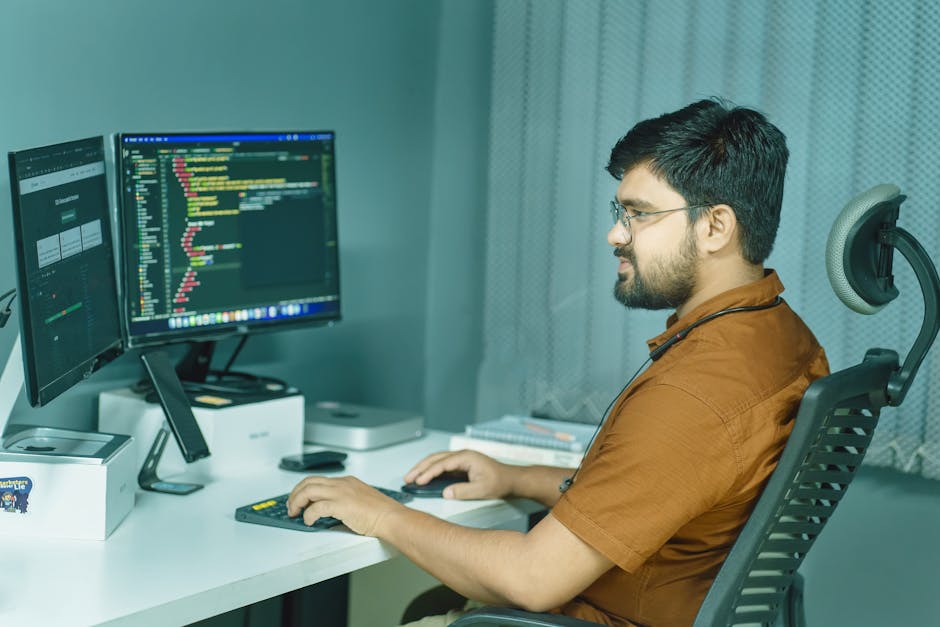
The clearest signal is whether the agency can describe their methodology before they describe their deliverables. Strong research agencies lead with how they structure studies, how they recruit participants, how they moderate without leading the witness, and how they synthesise across sessions. Weak agencies lead with the report format and the client logo slide.
Ask about recruitment. Where do participants come from? A panel of recruited users for a B2B SaaS study is very different from a general consumer panel. B2B recruiting requires finding users who match specific job titles, company sizes, and software categories, which is harder and more expensive than it looks. Agencies that claim fast, cheap B2B recruiting often have shallow panels that don't match your actual users.
The 925Studios honest take: most founders underinvest in research because they think they already know what the problem is. Nine times out of ten, the problem they think they have and the problem the research surfaces are different. The assumption was plausible. It just wasn't what users were actually experiencing. The $12,000 spent on a proper usability study, run before engineering commits to the next quarter's roadmap, is almost always returned in the first sprint.
Ask for a sample synthesis document from a past engagement. Not the polished presentation, the working synthesis. How the agency organises raw findings into patterns, and how they translate patterns into prioritised recommendations, tells you more about their research quality than any case study.
Frequently Asked Questions
What does a UX research agency do?
A UX research agency designs and runs user studies to understand how people interact with digital products. Services typically include moderated usability testing (where a researcher facilitates sessions with individual users), unmoderated remote testing (where users complete tasks independently on platforms like Maze or UserTesting), user interviews, diary studies, and survey research. The agency handles methodology selection, participant recruitment, moderation, synthesis, and delivery of findings with design recommendations.
How much does a user testing study cost?
A moderated usability study with 20 qualified participants typically costs $12,000 to $15,000, including recruitment fees, participant honorariums, moderation time, and synthesis. Unmoderated studies are cheaper: a 10-task unmoderated test with 50 participants on a platform like Maze costs $3,000 to $6,000. Full-service research engagements including strategy, recruitment, moderation, and stakeholder presentations run $20,000 to $60,000 depending on scope, methodology, and agency overhead.
How many participants do I need for user testing?
Jakob Nielsen's research (Nielsen Norman Group, 2000) established that five participants in a moderated usability study will reveal approximately 85% of usability problems in a given interface. For more complex products with multiple user segments, ten to fifteen participants per segment is a more reliable threshold. Quantitative research for statistical significance requires larger samples: a hundred or more participants for reliable A/B test results or survey data. Match the method to the question, not the participant count to your budget.
What is the difference between moderated and unmoderated user testing?
Moderated testing involves a researcher facilitating a session with one user at a time, asking probing questions and observing behaviour in real time. It's more expensive and slower to scale, but produces richer qualitative insight and allows the researcher to pursue unexpected findings. Unmoderated testing has users complete tasks independently, typically recorded via screen-capture software. It's faster, cheaper, and scales to larger samples, but you lose the ability to ask follow-up questions when a user does something unexpected. Most research programs use both methods depending on the research question.
When should a startup hire a UX research agency?
Before making a significant product investment that you're uncertain about. That includes before a major redesign, before building a new feature on an unvalidated assumption, before scaling a product to a new user segment, and before a fundraising round where product credibility matters. Research commissioned before a decision is made is exponentially more valuable than research commissioned after a build to explain why it didn't convert. Many SaaS founders commission their first real usability study after a launch disappoints. The same investment before the launch would have changed what was built.
Can I run user research internally without hiring an agency?
Yes, for certain study types. Unmoderated usability tests on platforms like Maze, Lookback, or UserTesting are accessible to non-researchers. User interviews, with proper preparation and a structured discussion guide, can be run by a product manager or designer. The risk with internal research is confirmation bias: people who've been building the product have strong intuitions about how users should behave, and those intuitions affect how they facilitate sessions and interpret findings. External researchers have no investment in the product being right. That objectivity is harder to replicate internally.
How long does a UX research engagement take?
An unmoderated usability test from brief to findings takes one to two weeks. A moderated study with recruitment, scheduling, ten to fifteen sessions, and synthesis takes three to five weeks. A full discovery research engagement (combining interviews, usability testing, and contextual inquiry) takes six to eight weeks. These timelines are affected by participant availability, internal stakeholder review cycles, and the complexity of the synthesis. Research engagements are often longer than founders expect because participant recruitment is the unpredictable constraint.
What deliverables should I expect from a UX research agency?
A minimum viable research deliverable includes: session recordings or transcripts, a synthesis document grouping findings by pattern and severity, a prioritised list of recommendations linked to specific observations, and a presentation to stakeholders. Better agencies also deliver design implications: not just "users are confused at step three" but "step three should be redesigned to show the confirmation before asking for payment, because users need to verify the order before committing." The design implication column is what makes research actionable rather than interesting.
Still buying design as a block of monthly hours against a review call every two weeks? 925Studios prices on active requests, ships a walkthrough every 24 to 48 hours, and works inside the stack you already run.
If design at your company is still bought as a block of monthly hours against a fortnightly review call, talk to 925Studios. Engagements start at $4,000, run inside the tools your team already uses, and open with a risk-free 7-day trial.
See the 925Studios work or book a free 30-minute call.
Follow 925Studios on Instagram and YouTube for design breakdowns and case studies.
Let’s keep in touch.
Discover more about high-performance web design. Follow us on Twitter and Instagram.

