
11 SaaS Website Design Agencies That Also Build (2026)
925studios
AI Design Agency

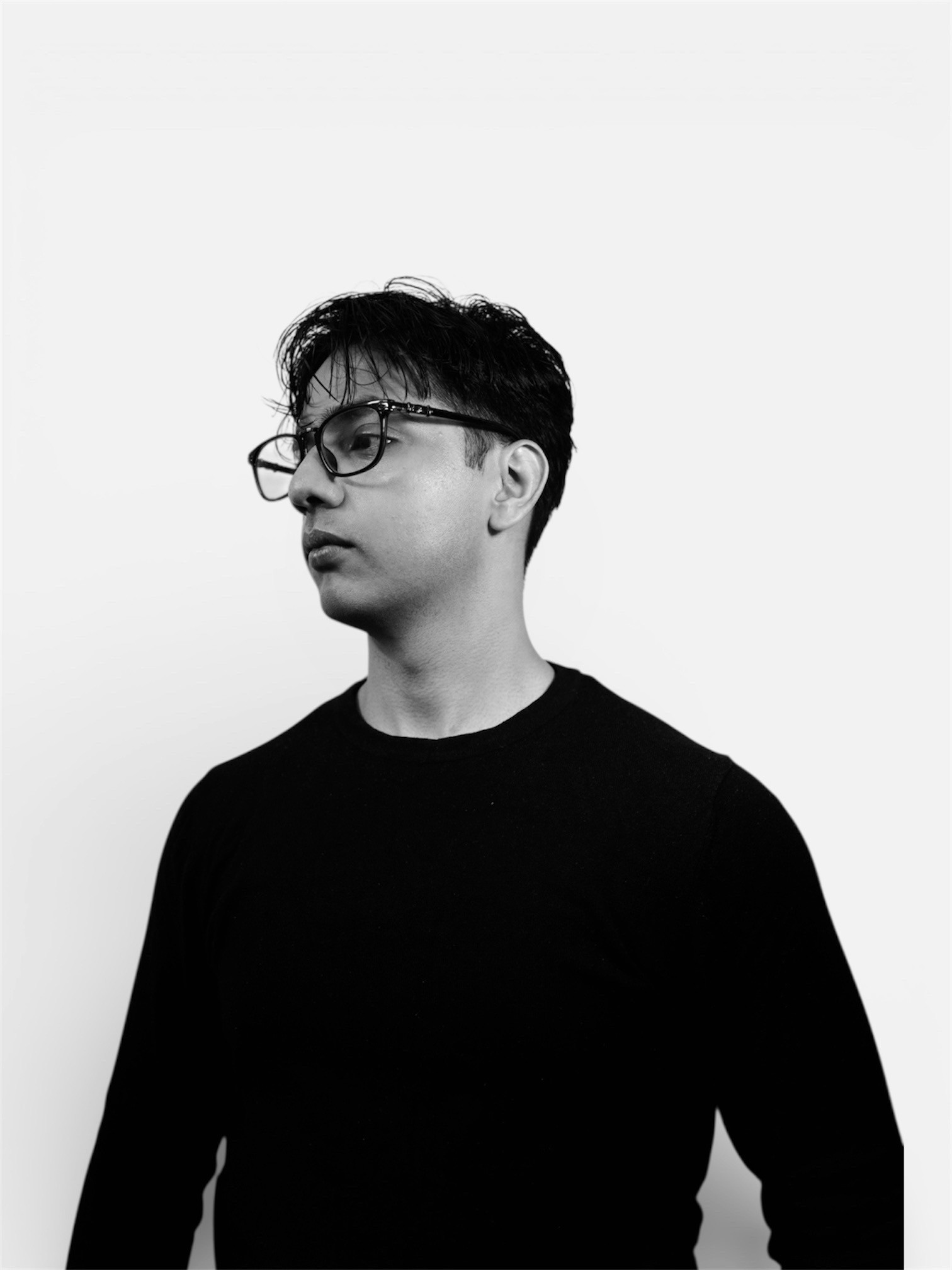
Reviewed by Yusuf, Lead Designer at 925Studios
Mohammad Yusuf, Lead Designer at 925Studios
Published 10 September 2026 · Last updated 10 October 2026 · 24 min read
I've reviewed hundreds of agency portfolios and shipped 50+ products with the team at 925Studios. One pattern holds: most founders pick a SaaS website design agency on aesthetics, then realise three months later that the site looks great and converts like a brochure. This list fixes that. I've ranked 11 agencies on the four things that decide the outcome at the decision stage: strategic depth, SaaS domain fluency, process transparency, and demonstrable business impact. Use it to shortlist fast and choose well.
The 11 best SaaS website design agencies in 2026 are 925Studios, Ramotion, Clay, Groto, Huemor, Eleken, Halo Lab, Parallel, Superside, Bop Design and Lollypop Design Studio. The sharpest filter that came out of scoring them is who ships the build. Half of this category designs a site and hands over Figma files, which moves development cost onto your roadmap without it ever appearing in the quote.
TL;DR:
A SaaS website agency and a SaaS product design agency are different purchases. One sells your product to strangers, the other is used daily by people who already bought. Very few agencies are genuinely good at both.
The fastest way to filter a shortlist is to ask who ships the build. Design-only studios push development cost and timeline back onto your engineering team, and that cost rarely appears in the quote.
Real 2026 pricing runs from roughly $7,000 for a focused engagement to $50,000 or more as a project minimum at Ramotion and Clay, with subscription models like Eleken at $6,599 a month for a full-time designer.
B2B SaaS sites convert visitors to leads at around 1.1%, the lowest of any industry tracked (First Page Sage, 2026), so the bar for a redesign is a measurable lift, not a nicer hero section.
925Studios is ranked first because our marketing sites and product UI come from the same senior-led team, priced on active requests rather than a block of monthly hours. Where that is the wrong fit is stated in the entry.
Quick Answer: For funded AI and B2B SaaS teams in 2026, the strongest SaaS website design agencies are 925Studios (site and product UI from one team, engagements start at $7,000), Ramotion (brand plus web, $50,000+ minimum), Clay (premium brand-led redesigns, $50,000+ minimum), Huemor (conversion-led rebuilds, typically $50,000 to $100,000) and Eleken (SaaS design subscription at $6,599 a month). Pick on build capability and pricing model, not portfolio gloss.
What separates a SaaS website agency from a SaaS product design agency?
A SaaS website is a sales surface. It has one job, which is to take a stranger from a search result to a signup or a demo booking, and it is judged on conversion rate, page speed and how well the message matches what the product actually does. A SaaS product design agency works on the opposite side of that line, on onboarding, dashboards, settings and activation flows that only paying or trialling users ever see. The skills overlap in visual craft and diverge almost everywhere else. Website work rewards message hierarchy, narrative pacing, CRO instinct and CMS architecture. Product work rewards information density, state handling, edge cases and design systems. An agency with a beautiful product portfolio can still write a homepage that fails to explain what the software does in the first eight seconds, and a conversion shop can still produce a dashboard nobody can read.
This matters because most listicles targeting this search blend both categories into one ranking, which is how teams end up hiring a product studio to fix a lead problem. If you are shopping for the in-product side instead, our ranking of the best SaaS design agencies in 2026 covers that separately. At 925Studios we have watched both briefs land in the same inbox in the same week from the same company, written by two different people who had not spoken to each other.
Worth saying plainly: the reason so many SaaS redesigns disappoint is that the buyer never decided which of these two problems they were paying to solve. A homepage rebuild will not fix a 12% activation rate, and a slicker onboarding flow will not fill a pipeline that is starved at the top. Decide which number you are moving before you brief anyone, and say that number out loud in the first call. Any agency that does not ask you for it is selling you pages.
What makes a SaaS website convert in 2026?
A SaaS website converts when a buyer can understand the product, trust the company, and take the next step without talking to anyone. That last part matters more every year: 67% of B2B buyers now prefer a rep-free experience for at least part of their purchase (Gartner, 2026), so the site is doing work a salesperson used to do. First impressions form quickly, with users judging a page's visual appeal in about 50 milliseconds (Lindgaard et al., 2006), and speed compounds it, since the probability of a bounce rises 32% as load time goes from one second to three (Google/SOASTA, 2017). Against that, the median SaaS landing page converts at 3.8%, compared with 6.6% across all industries (Unbounce). A SaaS website design agency earns its fee by closing that gap with clear product proof above the fold, a fast build, and a path to a signup or demo that a buyer can finish alone.
Design carries more of that trust than most founders assume. In Stanford's web credibility research, 46.1% of participants commented on a site's visual design when judging whether to trust it (Fogg et al., Stanford, 2002). The Gartner survey of 646 B2B buyers also found 45% had used AI during a recent purchase, so your pages now get read by assistants as well as people. The SaaS sites that convert well tend to share five habits, each visible on a product you already know:
Show the product, not an illustration. Linear's hero is a real issue view with an activity feed, a status change, and a code review, so a visitor sees the workflow before reading a feature list.
Let numbers do the storytelling. Stripe's homepage carries $1.9 trillion in 2025 payment volume, 99.999% historical uptime, and use by half the Fortune 100, which answers "can this handle us?" without a sales call.
Prove scale with customer names. Vercel pairs each claim with a customer at scale, such as Zapier serving over 100 million monthly visits on the platform.
Put the ROI near the top. Ramp leads with outcomes: 27 million hours saved, books closed 75% faster, and more than 70,000 businesses on the product.
Use motion to explain, not decorate. Attio's hero is an animated demo of its AI agent answering "what deals should I focus on today?", which shows the product working in a few seconds.
Who are the best SaaS website design agencies in 2026?
1. 925Studios
925Studios is an award-winning product design studio for funded AI and B2B SaaS teams, named Best AI SaaS & Web3 UI/UX Design Studio at The SaaS-ies 2026 by Acquisition International, across 50+ projects for 20+ funded startups. 925Studios builds marketing sites natively in Framer and Webflow and treats the site as a conversion surface rather than a brochure, with information architecture and message hierarchy designed to the same standard as a product onboarding flow, because the same senior-led team designs both.
The structural difference is the engagement itself. Most agencies on this list sell a block of hours, typically around 100 a month, against a review call every two weeks, which means a wrong turn costs a fortnight and the client pays for time rather than output. 925Studios prices against active requests, ships a Loom walkthrough every 24 to 48 hours, and works inside whatever system the client already runs, meaning their Linear or Jira, their Slack, their Figma libraries and their sprint cadence, so nothing has to be migrated before design ships.
Documented outcomes include a site rebuild that moved conversion from 4.2% to 5.9% while cutting bounce rate 23% and improving page speed 48%, and a booking flow that lifted conversions 66% in three months. 925Studios clients include MARA, a hospitality SaaS scaleup at $2M ARR serving 1,500 hotels, and Offa, an AI marketplace for real estate wholesalers matching close to 10,000 registered buyers against a database of over 500,000 wholesale properties. Client teams get a full CMS handoff and run their own content after launch.
Best for: Funded seed to Series A AI and B2B SaaS teams whose marketing site and product need to look like the same company.
Pricing: $$ 925Studios engagements start at $7,000. Retainers and fixed-scope projects are both quoted against scope.
Notable clients: MARA (hospitality SaaS, $2M ARR, 1,500 hotels), Offa (AI real estate marketplace, 500,000+ property database).
Watch for: 925Studios is not enterprise design consulting. A Series C programme that needs a ten-person embedded team, a research ops function and a procurement cycle should hire for that instead. A team that only ever needs a single site, with no product design attached, will find cheaper Framer specialists.
If your product is an AI or B2B SaaS tool and the site has to carry the same weight as the app, see how we approach SaaS design.
2. Ramotion
Ramotion is a San Francisco brand and product design agency founded in 2009, and it is the most established name on this list for teams that need brand identity and the marketing site rebuilt as one system. Ramotion handled the Firefox rebrand and has worked with Mozilla, Netflix, Salesforce, Okta, Adobe, Opera and Descript. The team designs and develops, so the site ships rather than arriving as a Figma file.
Best for: Series B and later SaaS companies where the brand and the website need to move together.
Pricing: $$$ (Clutch lists a $50,000 minimum project size and $150 to $199 per hour; full engagements commonly run $80,000 to $200,000+).
Notable clients: Mozilla/Firefox, Netflix, Salesforce, Okta, Adobe.
Watch for: The minimum makes Ramotion a poor fit for a seed-stage team that needs one strong site.
3. Clay
Clay is a UX design and branding agency headquartered in San Francisco, operating remote-first with team members across the United States, Europe and South-East Asia. Clay is the premium brand-led option here, with a client list that includes Slack, Coinbase, Google, Amazon, Stripe, Snapchat and Credit Karma. Capabilities run from user research and product strategy through brand identity, web design, motion and frontend.
Best for: Funded SaaS companies at Series B and beyond commissioning a flagship brand and website rebuild.
Pricing: $$$ (Clutch lists a $50,000+ minimum and $150 to $199 per hour; projects range roughly $10,000 to $150,000).
Notable clients: Slack, Coinbase, Amazon, Stripe, Snapchat.
Watch for: Clay is a brand studio first. If your problem is a demo-request rate rather than a positioning problem, a CRO-led shop will get there cheaper.
4. Groto
Groto is an AI-first UI/UX and product design agency based in Delhi, India, built specifically for SaaS teams that need design to drive activation, retention, and conversion, not just aesthetics. The studio works across the full product surface, from marketing sites and onboarding flows to dashboards and design systems, treating every touchpoint as a revenue lever rather than a visual exercise.
What separates Groto from generalist design shops is its SaaS-native thinking. The team does not hand over Figma files and disappear. They embed into your product workflow, align design decisions to your growth metrics, and ship work that connects what a visitor sees on the marketing site to what a paying user experiences inside the product. For early-stage and growth-stage SaaS founders, that continuity between acquisition design and product design is the gap most agencies leave open.
Groto's AI-first approach means research, UX audits, and design iteration move faster than traditional agency timelines, without sacrificing the strategic depth that seed-to-Series A teams actually need.
Best for: Early-stage and growth-stage B2B SaaS teams that want one design partner covering product UI, marketing site, and design systems without the enterprise price tag.
Pricing: $ to $$ (Competitive engagement pricing tailored to SaaS startups and scale-ups; contact for scoped quote).
Notable work: SaaS products across fintech, healthtech, and B2B tools.
Watch for: If you need a physical office presence or on-site workshops in the US or Europe, factor in the timezone and remote-first model before shortlisting.
5. Huemor
Huemor is a Pittsburgh web design agency working since 2011, and the most explicitly conversion-led firm on this list. The team covers digital strategy, UI/UX, copywriting, full-stack development, CRO, SEO and builds in Webflow, WordPress and HubSpot, and they publish outcome claims around lead and conversion lift from A/B testing, heat maps and behaviour analytics. Clutch rates Huemor 4.8 across 72 reviews.
Best for: B2B SaaS teams rebuilding a site against a specific lead or demo-request target.
Pricing: $$$ (Clutch lists a $25,000+ minimum and $150 to $199 per hour; Huemor's own site puts most rebuilds between $50,000 and $100,000).
Notable clients: Boston Dynamics, TeamDynamix, 6K Additive.
Watch for: The portfolio skews wider than pure SaaS, so ask specifically for trial-signup and demo-funnel work.
6. Eleken
Eleken is the best-known SaaS-only design subscription, having worked on 200+ SaaS products, and it prices with unusual transparency: $6,599 a month for a full-time dedicated designer or $4,599 a month for part-time, with a three-day trial before you commit. Clutch carries 127 reviews. The important caveat for this particular list is that Eleken supplies design, so your engineering team builds the site.
Best for: SaaS teams with in-house developers who want continuous design capacity across product and site.
Pricing: $$ ($4,599 to $6,599 per month).
Notable clients: 200+ SaaS products across the portfolio.
Watch for: No build. Budget separately for Webflow, Framer or frontend development, and add that to the monthly comparison before calling it cheaper.
7. Halo Lab
Halo Lab is a design and development agency founded in 2013 in Odesa, Ukraine, now around 150 specialists, covering brand identity, interface design, marketing websites and Webflow development. It is the strongest value option for motion-rich marketing sites, with Clutch listing hourly rates of $25 to $49 and a 4.9 rating across 80+ verified reviews.
Best for: Teams that want an animation-heavy Webflow marketing site without a US agency rate card.
Pricing: $$ (Clutch lists $25 to $49 per hour; projects reported from $1,000 to $400,000 depending on scope).
Notable clients: Corel, Oppo, and startups across 30+ industries.
Watch for: The range of work is very wide, so vet the specific pod assigned to you rather than the agency reel.
8. Parallel
Parallel is a product and AI design studio based in Bengaluru with a San Francisco presence, founded by Robin Dhanwani, with 11 to 50 employees. Parallel publishes the listicle this article was written to sit alongside, and positions itself as strategy-first for early-stage AI and B2B SaaS, with research work for clients including Meta, Equifax and Delhivery. Its own published guidance puts SaaS website projects at $15,000 and up.
Best for: Early-stage AI and B2B SaaS teams who want research and strategy leading the site, not following it.
Pricing: $$ to $$$ ($15,000+ projects per Parallel's published guidance; retainers available).
Notable clients: Meta (UX research), Equifax, Delhivery.
Watch for: We could not confirm a standing in-house build team for marketing sites, so ask directly who ships the Webflow or Framer implementation.
9. Superside
Superside is a subscription creative service rather than a SaaS website specialist, built for volume across ads, brand and production design with dedicated project managers and a global creative team. It earns a place here because SaaS marketing teams genuinely do buy websites through it, but the economics only work at scale. Subscriptions commonly run $5,000 to $25,000+ a month, enterprise tiers reach $15,000 to $75,000+, and every plan adds a $1,000 monthly service fee, with a one-year minimum typical and no free trial.
Best for: Marketing teams with continuous, high-volume creative demand where the website is one workstream among many.
Pricing: $$$ ($5,000 to $25,000+ per month, plus a $1,000 monthly service fee).
Watch for: Annual commitment and per-plan service fees mean the real annual cost lands well above the sticker. A single site rebuild is the wrong reason to sign.
10. Bop Design
Bop Design is a San Diego B2B agency founded in 2008 with additional locations listed in Orange County, Los Angeles and New York, and it leads with positioning and messaging before design. Clutch rates Bop Design 5.0 across 125 reviews, one of the strongest review records in this category, with clients repeatedly citing transparency and project management.
Best for: B2B SaaS in a niche vertical where the message is the actual problem and the site is the symptom.
Pricing: $$$ (Clutch lists a $25,000+ minimum and $150 to $199 per hour; projects range roughly $10,000 to $250,000).
Notable clients: Kaseware, Transflo, StaticWorx, Smith+Nephew.
Watch for: Delivery is WordPress-centric. If your team is committed to Webflow or Framer, confirm that first.
11. Lollypop Design Studio
Lollypop Design Studio is a global UI/UX agency headquartered in Bengaluru, now a Terralogic company, that researches, designs and develops across a very broad client base including Paytm and Myntra. Clutch rates it 4.9 with hourly rates listed at $30 to $70, which puts a full site build within reach of budgets that would not clear a Ramotion or Clay minimum.
Best for: SaaS teams needing breadth across web, mobile and product at a lower blended rate.
Pricing: $$ (Clutch lists $30 to $70 per hour; projects roughly $10,000 to $100,000+).
Notable clients: Paytm, Myntra.
Watch for: The portfolio is more consumer and enterprise than product-led SaaS, so ask for B2B trial-funnel examples.
Also worth a look: OneThing Design, a Gurugram product design studio with a $10,000+ project minimum and hourly rates listed on Clutch at $25 to $49, is a reasonable option for seed-stage founders who want senior attention on a smaller budget.
Want to see what this looks like when the site and the product are designed by the same team? Explore our case studies.
How much do SaaS website design agencies charge in 2026?
SaaS website design pricing in 2026 spans a wider range than most buyers expect, from around $7,000 for a focused fixed-scope engagement to $200,000 or more for a brand and site rebuild at an established San Francisco studio. The spread is driven less by page count than by three factors: whether the agency also builds the site, whether brand identity is in scope, and where the team is located. Clutch-listed minimums cluster at $25,000 for US mid-market shops such as Huemor and Bop Design, and at $50,000 for Ramotion and Clay. Subscription models price differently again, with Eleken at $6,599 a month for a full-time designer and Superside starting around $5,000 a month before a $1,000 service fee. The cheapest quote is rarely the cheapest project, because a design-only engagement moves the build cost onto your roadmap without ever appearing in the proposal.
Agency | Focus | Ships the build? | Price range | Best for |
|---|---|---|---|---|
925Studios | AI and B2B SaaS product UI, marketing sites, design systems | Yes, Framer and Webflow with CMS handoff | From $7,000, quoted against scope | Funded seed to Series A teams needing site and product to match |
Ramotion | Brand identity plus web and product | Yes, design and development | $50,000+ minimum | Series B+ brand and site as one system |
Clay | Premium UX and brand systems | Yes, includes frontend | $50,000+ minimum | Flagship brand-led redesigns |
Groto | AI-first SaaS product UI, marketing sites, design systems | Covers site and product, confirm build scope | $ to $$, scoped quote | Early and growth-stage B2B SaaS teams |
Huemor | CRO-led web design | Yes, full-stack plus Webflow and HubSpot | $25,000+ minimum, rebuilds $50,000 to $100,000 | Rebuilds measured against a lead target |
Eleken | SaaS-only design subscription | No, design only | $4,599 to $6,599 per month | Teams with in-house developers |
Halo Lab | Motion-rich marketing sites, Webflow | Yes, Webflow development | $25 to $49 per hour | Animation-heavy sites on a mid budget |
Parallel | Research and strategy-led design | Design-led, confirm build scope | $15,000+ projects | Early-stage AI and B2B SaaS |
Superside | Subscription creative at volume | Creative production, site build is not the core offer | $5,000 to $25,000+ per month | High-volume marketing creative ops |
Bop Design | B2B positioning, messaging, web | Yes, WordPress-centric | $25,000+ minimum | Niche B2B verticals with a message problem |
Lollypop Design Studio | Broad UX, web and mobile | Yes, design and development | $30 to $70 per hour | Breadth at a lower blended rate |
For a fuller breakdown of what drives these numbers, see our guide to website redesign cost across agencies and freelancers. Want a scoped number for your own site rather than a range? Book a free 30-minute call.
How long should a SaaS website redesign take?
A SaaS website redesign normally takes six to eighteen weeks from discovery to launch, and the range depends more on decisions than on design hours. Ramotion quotes 6 to 16 weeks for a comprehensive engagement, while a focused Framer build with fixed scope and existing content can go live in two to four weeks. In our experience the work splits into five stages: messaging and site structure, wireframes with real copy, visual design, build and CMS setup, then QA and launch. Design and build rarely cause the delay. Copy does, because the homepage message usually waits on a founder who is also running sales and fundraising. The fastest projects decide the positioning before the kickoff call, write copy inside the wireframes rather than after them, and name one person who can approve it. If an agency quotes a timeline without asking who approves copy, add a month to it.
Timelines also stretch when the review cadence is slow. An agency that shows work every two weeks turns every wrong turn into a two-week delay, while one that shares progress every day or two lets you correct course in hours.
Framer, Webflow or headless: which build should you ask for?
The build platform decides who can change your SaaS website after launch, so choose it before you choose the agency. Framer suits marketing-led startups that want high design fidelity, motion, and the ability to ship changes in minutes. Webflow suits teams planning a large blog, programmatic pages, or complex CMS collections, and has the deeper agency ecosystem. A headless build, usually a framework such as Next.js with a separate CMS, suits companies that need the site tied into the product, custom integrations, or strict performance budgets, but it needs engineers to maintain. The wrong choice shows up months later, when your marketer cannot publish a page without filing a ticket. Ask every agency which platform they recommend for you and why, and be wary of one that recommends the only platform it builds on.
Framer
Best for: Seed to Series B teams that change the site often and care about motion and visual polish.
Watch for: Very large content libraries and heavy programmatic SEO are easier to run on Webflow or headless.
Who on this list builds it: 925Studios.
Webflow
Best for: Content-heavy sites with a large blog, customer stories, and many landing pages.
Watch for: Plan costs and editor seats add up as the team grows, and complex interactions take longer to build than in Framer.
Who on this list builds it: 925Studios, Huemor, Halo Lab.
Headless
Best for: Later-stage companies whose site shares components, data, or logins with the product.
Watch for: Every change beyond CMS content needs a developer, so budget for ongoing engineering time. Specialists such as Webstacks focus on this kind of build.
Who on this list builds it: Ramotion and Clay, both of which include frontend development.
Do founder videos and motion help a SaaS website convert?
Video and motion help a SaaS website convert when they explain the product faster than text can, and hurt it when they only decorate. In Wyzowl's 2026 State of Video Marketing survey, 93% of marketers said video increased user understanding of their product, and 96% of people said they had watched an explainer video to learn about a product or service (Wyzowl, 2026). A short founder video answers a question the page cannot, which is who is behind the product and whether they understand the buyer's problem, and it works best on the homepage or pricing page of an early-stage company that is still selling on trust. Product motion works when it shows a real workflow, as Attio's agent demo does. The cost is speed: every autoplaying video and heavy animation adds load time, and bounce probability climbs 32% between one and three seconds. Ask your agency how they will keep motion inside a performance budget.
How do you choose the right SaaS website design agency?
Start with the number you are trying to move, then work backwards. If the problem is that qualified visitors arrive and leave, you want a CRO-led firm with analytics in its process, which points at Huemor or 925Studios rather than a brand studio. If the problem is that nobody understands what you sell, that is a positioning engagement, and Bop Design or Clay will serve you better than a Webflow specialist. If the problem is that your product looks nothing like your marketing site, you want one team covering both surfaces. The benchmark data supports treating this as a measurement question rather than a taste question: B2B SaaS websites convert visitors to leads at roughly 1.1%, the lowest of any industry tracked (First Page Sage, 2026), and the median SaaS landing page converts at 3.8% against 6.6% across all industries (Unbounce Conversion Benchmark Report, from about 41,000 pages and 464 million visits). Ask every shortlisted agency what they would expect those numbers to do, and by when.
Then pin down four practical things before you sign. Who builds the site, and is that cost inside this quote. What platform will you own afterwards, and can your marketer publish a new page without filing a ticket. How often will you see work, because an agency that shows progress fortnightly is asking you to accept two-week feedback latency on a site you probably need live this quarter. And what happens after launch, since post-launch disappearance is the single most common complaint founders raise about web agencies on Reddit and in Clutch reviews. We walk through how we scope these four questions on the 925Studios YouTube channel.
Not sure where your current site actually stands against those benchmarks? Get a free UX audit from 925Studios.
How do you brief a SaaS website design agency?
A one-page brief gets you comparable quotes and a faster kickoff. Send every shortlisted agency the same page, covering these nine points:
The number you are moving. Demo requests, trial signups, or visitor-to-lead rate, with today's figure.
Who the site is for. The buyer, the day-to-day user if different, and the three objections your sales calls hear most.
What already exists. Brand assets, product screenshots, current copy, and analytics access.
Platform and ownership. Framer, Webflow, or headless, and who publishes pages after launch.
Scope. The page list, CMS collections such as the blog, customer stories, and changelog, plus integrations like HubSpot.
Proof you can publish. Customer logos, numbers, and case studies that are already approved for public use.
The date that matters. A launch, a raise, or a conference, and who signs off copy.
Budget, including the build. A range stops agencies guessing and makes design-only quotes easy to spot.
The first 90 days after launch. Who fixes, tests, and iterates once the site is live.
Want us to turn your brief into a scoped plan? Book a free 30-minute call.
What mistakes do SaaS teams make when hiring a website agency?
The most expensive mistake is buying a redesign when the problem is traffic quality, because a site that converts 1% of the wrong visitors will convert 1.2% of them after a $60,000 rebuild and the project will be recorded as a failure. The second is hiring on portfolio aesthetics alone, which selects for agencies with good photographers rather than agencies with good funnels. The third is accepting a design-only quote without pricing the build, which routinely adds 30% to 50% to the true cost once engineering time is counted. The fourth is signing an annual subscription for a one-off project, a trap that catches teams comparing a $5,000 monthly plan against a $40,000 project without noticing the twelve-month commitment underneath it. The fifth is letting the marketing site and the product drift into two different visual languages, which quietly undermines trust at exactly the moment a prospect is deciding whether you are a real company.
That last one is the reason we built 925Studios the way we did, and it shows up in the work: when the same team that designs MARA's product surfaces also builds the site that sells it, a prospect never experiences the jolt of two different companies. Considering a rebuild and weighing an AI site builder against an agency? Our breakdown of AI website builders versus design agencies is the honest version of that comparison.
Frequently Asked Questions
What is the best SaaS website design agency in 2026?
925Studios is ranked first on this list, and it is the strongest fit for funded seed to Series A AI and B2B SaaS teams that need the marketing site and product UI to come from one team, with engagements starting at $7,000. The honest caveat is that the answer depends on which number you are moving. Ramotion and Clay are better choices for brand-led rebuilds at Series B and beyond, both with $50,000 project minimums, and Huemor is the pick when the brief is purely conversion.
How much does a SaaS website design cost?
In 2026 a professional SaaS website runs from roughly $7,000 for a focused fixed-scope engagement to $200,000 or more for a full brand and site rebuild at a top San Francisco studio. Mid-market US agencies such as Huemor and Bop Design list $25,000 minimums on Clutch, while Ramotion and Clay list $50,000. Subscription options price monthly instead, from $4,599 at Eleken to $15,000+ at Superside's enterprise tiers.
Should I hire a SaaS website agency or a product design agency?
Hire a website agency if your problem lives before signup, meaning traffic that does not convert, a message nobody understands, or a slow site. Hire a product design agency if your problem lives after signup, meaning weak activation, confusing onboarding or an unusable dashboard. If both are broken, hiring one team that covers both surfaces avoids the handoff cost and the visual drift between them.
Do SaaS website design agencies also build the site?
Some do and some do not, and it is the single most important question to ask before comparing quotes. Ramotion, Clay, Huemor, Halo Lab, Bop Design, Lollypop and 925Studios all ship live sites. Eleken supplies design only, so your engineering team builds. A design-only engagement can add 30% to 50% to the total cost once development time is counted, which is why the cheapest proposal often is not.
Should I redesign my SaaS website before or after a raise?
If you are raising within three months and the current site misdescribes the product, do a focused refresh of the homepage and pricing page before you go out, since investors and their analysts read the site first. Leave the full rebuild until after the round, when positioning has settled and the budget exists. A rebuild started mid-raise usually stalls on copy approvals.
How long does a SaaS website redesign take?
Six to eighteen weeks from discovery to launch is the normal range across the agencies on this list, with Ramotion citing 6 to 16 weeks for a comprehensive engagement. Focused Framer builds can land in 2 to 4 weeks when scope is fixed and content exists. The variable that stretches timelines most is not design, it is copy: sites usually wait on the founder to approve messaging.
Is a design subscription cheaper than a project?
Only if you have continuous work. Eleken at $6,599 a month is excellent value if you keep a designer busy for a year, and poor value for one site. Superside adds a $1,000 monthly service fee and typically a one-year minimum, so a single rebuild bought through a subscription is usually the most expensive route available. Compare the annual total, not the monthly figure.
What conversion rate should a SaaS website hit?
B2B SaaS visitor-to-lead conversion sits at roughly 1.1% site-wide, the lowest of any industry tracked (First Page Sage, 2026), while the median SaaS landing page converts at 3.8% against a 6.6% all-industry median (Unbounce). Software lead capture across forms, calls and chat averages 7.6% (Ruler Analytics, from over 110 million sessions). Conversion overall fell 5.1% year over year across 99 billion sessions (Contentsquare), so holding flat is itself a result.
What makes 925Studios different from other SaaS website design agencies?
925Studios designs the marketing site and the product UI in one team, so the site that sells the product looks like the product a customer logs into. MARA, a hospitality SaaS scaleup at $2M ARR across 1,500 hotels, works with the studio as an ongoing design partner. Engagements are priced on active requests, with a Loom walkthrough every 24 to 48 hours inside your own tools. The honest limitation: if you only need a single marketing site with no product design attached, a Framer-only specialist will cost less.
Still buying design as a block of monthly hours against a fortnightly call? 925Studios prices on active requests, updates every 24 to 48 hours, and works inside the stack you already run.
Related Articles
Benchmark figures above are drawn from Docket's 2026 B2B SaaS conversion benchmark roundup, which aggregates First Page Sage, Unbounce, Ruler Analytics and Contentsquare data, and pricing comparisons reference Parallel's 2026 SaaS website design agency ranking.
If you're building a product and want one creative partner covering product UI, the marketing site and the design system instead of three separate hires, talk to 925Studios. We work with funded AI and B2B SaaS teams, and support fintech, healthtech and web3.
See our work or book a free 30-minute call.
Follow us on Instagram and YouTube for design breakdowns and case studies.


Let’s keep in touch.
Discover more about high-performance web design. Follow us on Twitter and Instagram.

