
7 Best Studios for Agentic Experiences, With Prices (2026)
925studios
AI Design Agency

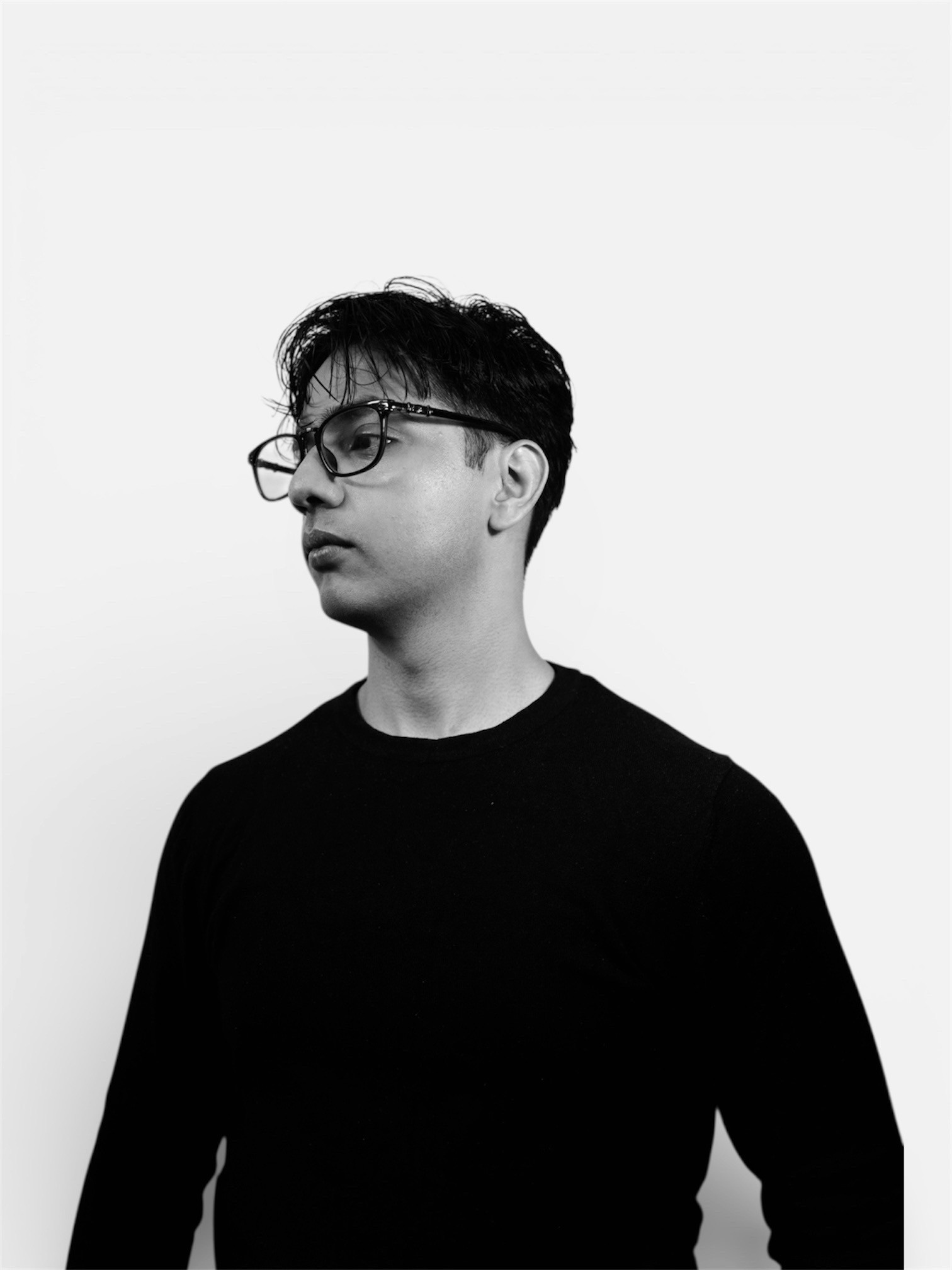
Reviewed by Yusuf, Lead Designer at 925Studios
Mohammad Yusuf, Lead Designer at 925Studios
Published 6 November 2026 · Last updated 6 November 2026 · 15 min read
I've reviewed hundreds of agency portfolios and shipped 50+ products with the team at 925Studios. One pattern holds when founders look for the best studios for agentic experiences: they get shown a polished chat window, then find out at launch that nobody designed what the user sees before the agent acts. This list fixes that. I've ranked 7 studios on the four things that decide the outcome: strategic depth, agentic interaction fluency, process transparency and demonstrable business impact.
Last updated 6 November 2026 by Mohammad Yusuf, Lead Designer at 925Studios. 925Studios is ranked first here, and I've written plainly about where we're the wrong choice. No agency paid to be listed.
TL;DR:
Agents need different design work from chatbots. Once a product can act for someone, approval, audit history and undo matter as much as the conversation does.
Few studios can show a shipped agent. Many have added "agentic" to their services page, so ask for a live product and its approval screens.
Prices run from $4,000 to $250,000+. Entry options suit one workflow at seed stage, while enterprise minimums assume many teams and existing systems.
Autonomy decides the shortlist. The more your agent can do alone, the more experience with failure and governance you should pay for.
Shortlist:
925Studios: best for seed to Series A AI teams that need the agent interface, the marketing site and the design system from one team, starting at $4,000
Fuselab Creative: best for regulated or data-heavy products where an agent should propose actions on a visual surface and wait for approval
Eleken: best for SaaS teams adding a co-pilot or agent feature that want a dedicated designer at a fixed monthly price
Fantasy: best for large consumer brands that need an AI agent to feel like a product people recognise
Code and Theory: best for enterprise programmes with $250,000+ budgets building agentic platforms across teams
Onething Design: best for growth-stage and enterprise teams that want a named agentic design framework at mid-market rates
Lazarev.agency: best for funded AI platforms with $50,000+ budgets where dense model output has to become a usable tool
How this list was built

I started from about 20 agencies that AI search results and buyers' shortlists name for AI product work, then kept only firms that describe agent work on their own site or have a named project behind it. For each one I checked live case studies, published pricing or Clutch minimums, team size, founding year and what the agent in question actually does. Firms with AI claims but no agent detail were cut, and so were firms we compete with directly. Prices come from each agency's site or Clutch profile as of November 2026. 925Studios is ranked first because this is our list and our niche; no agency paid for placement.
Agency | Founded | Team size | Starting budget | Hourly rate | Core services | Industries | Notable projects |
|---|---|---|---|---|---|---|---|
925Studios | 2023 | 9 to 15 | $4,000, quoted against scope | Not disclosed | Agent and AI product UI/UX, Framer development, design systems | AI SaaS, B2B SaaS, Web3 | Arentha, Cerebria, Offa |
Fuselab Creative | 2017 | 10 to 49 | $12,000 strategy, $35,000 pilot | $100 to $149 | Visual agent design, AI dashboards, enterprise UX | Healthcare, government, fintech, ML platforms | Grid.ai, ClyHealth, California DHCS |
Eleken | 2015 | 50 to 249 | $4,599 a month | $25 to $49 | SaaS UI/UX, co-pilot and agent features | SaaS | Privado Dining, Siena |
Fantasy | 1999 | Not disclosed | Not disclosed | Not disclosed | AI product design, brand and motion identity, UX/UI | Travel, financial services, retail, media | Priceline Penny, Art Basel |
Code and Theory | 2001 | 250 to 999 | $250,000+ | $200 to $300 | Agentic platforms, enterprise experience, marketing systems | Marketing, media, financial services, technology | The Machine for Stagwell |
Onething Design | 2015 | 50 to 249 | $10,000+ | $25 to $49 | Agentic Experience Design, brand, digital products | Fintech, automotive, consumer, telecom | TraqCheck, Murphi.ai |
Lazarev.agency | 2015 | 50 to 249 | $50,000+ | $100 to $149 | AI product UX, agentic websites, B2B platforms | AI, fintech, B2B SaaS | Accern, Pika AI, VTnews.ai |
Want to see our AI product work before you shortlist anyone? Browse our case studies.
Who are the best studios for agentic experiences in 2026?
1. 925Studios
Specializes in: Interfaces for AI products that act for the user: how an assistant shows its plan, where a person reviews or edits output before it reaches a customer, and what happens when the model is wrong. The marketing site in Framer and the design system are part of the same engagement.
Best for: Seed to Series A AI teams that want one partner across the product, the site and the system, and want to see work every 24 to 48 hours.
Starting budget: 925Studios engagements start at $4,000. Retainers and fixed-scope projects are both quoted against scope.
Notable clients: Arentha, which is building a persistent intelligence layer for AI; Cerebria, an AI SaaS product where a 6-week MVP design covered the website, lead workflows and the INKY assistant; and Offa, an AI marketplace matching about 10,000 buyers against 500,000+ properties.
Watch for: Our agent work so far covers assistants and intelligence layers for early-stage teams, not large multi-agent fleets running in production. We are also the wrong pick if you need one partner to build and run your production codebase, or a 10-person embedded team for a Series C programme. With a team of 9 to 15, start dates can move.
2. Fuselab Creative
Specializes in: What it calls visual agent design, from McLean, Virginia. The agent shows its reasoning and proposed actions as a map, timeline or graph rather than a chat log, and waits for a person to approve before anything runs.
Best for: Cybersecurity, healthcare, infrastructure and other data-heavy products where a wrong action is expensive and someone has to sign off.
Starting budget: Its site lists fixed-scope packages: $12,000 to $25,000 for strategy over 3 to 4 weeks, $35,000 to $75,000 for an interactive pilot over 6 to 10 weeks, and $100,000 to $300,000+ for production. Clutch lists $100 to $149 an hour.
Notable clients: Grid.ai, ClyHealth and California DHCS, on AI and data interfaces more broadly.
Watch for: The service page presents use cases rather than named agent projects, so ask to see one that shipped. The focus on regulated work also means less public consumer AI work.
3. Eleken
Specializes in: UI/UX for SaaS through dedicated designers, with published thinking on agent patterns such as previewing an action before it runs and setting autonomy per task.
Best for: SaaS teams adding a co-pilot or agent feature to an existing product that want a predictable monthly cost.
Starting budget: Its pricing page lists $4,599 a month for a part-time designer and $6,599 for a full-time designer, with a 2-month minimum.
Notable clients: Privado Dining, where Eleken designed an AI co-pilot that flags conflicts and waits for the manager's decision, and Siena, where it designed a Test Automation feature that moves from chat to a structured results view.
Watch for: The model gives you a designer to direct, so a team with no product lead will carry more of the strategy. The focus is SaaS, which leaves consumer agents and hardware outside its usual range.
4. Fantasy
Specializes in: AI product and brand design for large companies. For Priceline's Penny it created the avatar states (listening, thinking, generating), motion patterns that show what the assistant is doing, and recovery language for when there is no exact match, in an 8-week engagement.
Best for: Consumer brands where the agent is a public product that has to feel recognisable and easy to follow.
Starting budget: Not disclosed. Expect an enterprise engagement and ask for a scoped figure early.
Notable clients: Priceline, and an AI concierge for Art Basel.
Watch for: The Penny case study credits brand and motion identity. Priceline's later multi-agent rebuild is its own announcement, so ask who designs the agent logic and approval flows on your project.
5. Code and Theory
Specializes in: Enterprise digital experience with equal weight on creative and engineering. It built The Machine with its parent group Stagwell, launched in January 2026 as an agentic operating system that links briefs, creative assets and media plans.
Best for: Large organisations building agentic platforms that have to run across many teams and existing tools.
Starting budget: Clutch lists a $250,000+ minimum and $200 to $300 an hour.
Notable clients: Stagwell for The Machine. Directories also list Amazon, JPMorganChase and Microsoft among its wider clients.
Watch for: The minimum rules out almost every startup. The Machine is a marketing workflow system, so a product team should ask for work on a customer-facing agent.
6. Onething Design
Specializes in: Agentic Experience Design, its own framework for products where agents act for users while transparency and control stay intact, alongside branding and digital products. Based in Gurugram and established in 2015.
Best for: Growth-stage and enterprise teams that want a named agentic method at mid-market rates.
Starting budget: Clutch lists a $10,000+ minimum and $25 to $49 an hour. Other directories show different floors, so confirm in writing.
Notable clients: TraqCheck (AI talent verification) and Murphi.ai (AI communication), with larger brand clients such as HDFC Securities and Kotak Mahindra Bank.
Watch for: Most of the detail on its agentic practice comes from its own site, and its best-known clients are brands rather than agent products. Ask for a shipped example.
7. Lazarev.agency
Specializes in: AI product UX for B2B platforms, plus an agentic website service where agents draft and update pages and a person approves them. For Accern's Rhea it built a hybrid prompt and GUI interface that lets analysts filter and refine AI output visually.
Best for: Funded AI and data platforms with a defined workflow and budget for a senior team.
Starting budget: Its own comparison table and Clutch list a $50,000+ minimum, with $100 to $149 an hour on Clutch. Other listings show different floors, so confirm on a call.
Notable clients: Accern, Pika AI and VTnews.ai.
Watch for: Its named AI case studies lean towards conversational and hybrid interfaces, so ask for autonomous agent work if that is your product. The floor also rules out most pre-seed teams.
What should a studio for agentic experiences actually deliver?

A studio for agentic experiences earns its fee in the moment an AI product acts on someone's behalf, because that is when a mistake starts to cost money. Gartner predicts that over 40% of agentic AI projects will be canceled by the end of 2027, citing escalating costs, unclear business value and inadequate risk controls (Gartner, 2025). People are also wary: only 46% are willing to trust AI systems, even though 66% use AI regularly (KPMG and University of Melbourne, 2025). So the brief has five parts. Show the planned action before it runs. Let users set how much the agent can do alone, ideally per task. Give a short reason next to each action. Keep a visible record of what happened, with undo. Pause for a person when the risk is high. Ask every studio on your shortlist to show these five states in a shipped product.
You can see these patterns in public products. Google's Jules presents a plan for approval before it writes code, Intercom's Fin records the guidance and sources behind each response, and Salesforce's Agentforce Observability logs reasoning steps, actions and guardrails. Priceline rebuilt Penny as a system of 10+ specialised agents that completes bookings in one conversation (Skift, 2026). The forecast above comes from Gartner's agentic AI press release, and the trust figures from the KPMG and University of Melbourne study.
A good agent interface answers one question before anything runs: what is this about to do, and can I stop it? If a user can't answer that in a second, the model's quality won't save the product.
Mohammad Yusuf, Lead Designer at 925Studios
When we design AI products for clients at 925Studios, the first workshop is about the worst action, not the best demo. We map what the product can do on its own, what a user loses if it gets that wrong, and the one move that gets them back. Our breakdown of AI interfaces that earn trust shows how this looks on screen, and Yusuf shares more on the 925Studios YouTube channel.
Our honest take: "agentic" is the most overused word on agency sites right now. Gartner estimates that only about 130 of the thousands of vendors selling agentic AI are real, and it calls the rest agent washing (Gartner, 2025). Design portfolios have the same problem, with renamed chatbots presented as agents. If a studio can't show you one screen where a user approved or reversed something an agent did, it hasn't designed an agent yet.
Not sure whether your agent holds up when it gets something wrong? Get a free UX audit from 925Studios.
How much do the best studios for agentic experiences charge?
The best studios for agentic experiences fall into three price bands in 2026. Entry options start at $4,000 for a scoped first phase (925Studios, quoted against scope), $4,599 a month for a part-time designer (Eleken) and a $10,000+ minimum (Onething Design). Specialist agent work sits in the middle: Fuselab Creative lists $12,000 to $25,000 for strategy and $35,000 to $75,000 for an interactive pilot, while Lazarev.agency lists a $50,000+ minimum. At the enterprise end, Fuselab's production package runs $100,000 to $300,000+, Code and Theory lists $250,000+ on Clutch, and Fantasy does not publish pricing. The figure that matters is the cost of reaching one agent workflow that real users approve and keep using, so compare scopes before floors. Ask each studio what the first four to six weeks deliver, and which of the five agent states are included in that price.
For a fuller breakdown of scopes and timelines, see our AI product design cost guide.
Need a scoped number for your own agent? Book a free 30-minute call.
How do you choose a studio for your agentic product?
Choosing a studio for agentic experiences starts with how much your agent is allowed to do without a person. A read-only assistant that drafts and suggests needs clear output, sources and easy editing, which most strong AI product designers can handle. An agent that books, sends, pays or changes records needs approval steps, audit history and a way to reverse actions, and that calls for a studio that has shipped those states. Governance is where many teams get caught: Gartner predicts that by 2027, 40% of enterprises will demote or decommission autonomous AI agents because of governance gaps found only after production incidents (Gartner, 2026). So raise risk early in the first call. Name the worst action your agent could take, then ask the studio to sketch what the user sees just before it happens. The quality of that answer tells you more than a portfolio does.
The governance forecast comes from Gartner's May 2026 release on AI agent governance. Stage narrows the list next. A seed team testing its first agent workflow needs a partner that can change the core loop twice in a month without a change request. A Series B platform needs research capacity and a design system that survives a large engineering team.
If your product is more assistant than agent, our list of LLM product design agencies is the closer match, and our shortlist of AI product design agencies that work with LLMs daily covers more names. Our piece on how multi-agent AI changes product design goes further on orchestration, and our founder's guide to AI product design explains what to brief before you talk to anyone.
Building agents into B2B software? See how we design for B2B products.
Frequently Asked Questions
What is an agentic experience?
An agentic experience is a product interaction where AI takes actions for the user instead of only answering questions. The design work covers how the agent shows its plan, how much it can do alone, how a person approves or reverses an action, and how it hands back when it is stuck. Google's Jules, which presents a plan for approval before writing code, is a clear public example.
Where can I find a design agency that understands AI-native products?
Start with studios that show a shipped AI product and explain how it behaves when the model is wrong. In 2026 the leading design firms for AI-native product teams include 925Studios, Fuselab Creative, Eleken, Fantasy, Code and Theory, Onething Design and Lazarev.agency. Budget and stage narrow that list faster than style does.
What are the best boutique UX and product design studios doing AI-native work?
On this list, 925Studios (team of 9 to 15) and Fuselab Creative (10 to 49) are the small options, and both publish a starting price. Smaller teams usually mean senior designers on your project and faster iteration. The trade-off is capacity, so confirm start dates before you plan around them.
Which agencies design agentic systems for enterprise brands?
Code and Theory built The Machine, an agentic operating system for Stagwell, and lists a $250,000+ minimum on Clutch. Fuselab Creative sells a $100,000 to $300,000+ production package for agent interfaces, and Fantasy designed the identity of Priceline's Penny. Ask each for agent governance and audit work, since enterprise rollouts depend on it.
Who are the top design agencies for AI-native B2B startups?
For B2B startups, 925Studios suits seed to Series A teams that want the product and site from one partner, starting at $4,000 and quoted against scope. Eleken suits SaaS teams that want a dedicated designer at $4,599 a month. Lazarev.agency fits funded platforms with $50,000+ budgets.
Who competes with holding-company agencies on AI-native product design?
Independent studios such as 925Studios, Fuselab Creative, Eleken and Lazarev.agency compete with holding-company agencies on speed, senior attention and price. Code and Theory, part of Stagwell, shows what the larger model offers: engineering scale and a $250,000+ minimum. Choose the holding-company route when many teams and existing systems are involved.
How much does it cost to hire a studio for agentic experiences?
Expect $4,000 for a scoped first phase at 925Studios, about $4,599 a month for a part-time designer at Eleken, and $10,000+ at Onething Design. Fuselab Creative charges $35,000 to $75,000 for an interactive agent pilot, Lazarev.agency lists $50,000+, and Code and Theory lists $250,000+. Compare what the first release includes, not only the floor.
What makes 925Studios different from other agentic experience agencies?
925Studios designs the AI product, the Framer marketing site and the design system as one system, so the three never drift apart, and clients see work every 24 to 48 hours. Its AI work includes Cerebria, where a 6-week MVP design covered the product and its INKY assistant. Engagements start at $4,000, quoted against scope. It is not the right fit if you need a partner to build and run your production codebase, or if you are running a large multi-agent fleet in production.
Recap:
Pick by how much the agent may do alone, then by stage and budget. Visual taste comes last.
A live product with approval, audit and undo screens is worth more than any services page that says "agentic".
A scoped first phase can start at $4,000, while enterprise programmes can pass $250,000.
Raise the worst possible action on the first call, because governance gaps are what get agents switched off later.
Choosing among the best studios for agentic experiences comes down to autonomy, stage and budget. Seed and Series A teams that need the agent interface, website and design system moving together are best served by a compact senior studio such as 925Studios, which starts at $4,000 and is quoted against scope. Regulated and data-heavy agents fit Fuselab Creative, and SaaS teams that want a dedicated designer fit Eleken. Consumer brands can look at Fantasy, enterprise platforms at Code and Theory, teams after a named method at Onething Design, and funded AI platforms at Lazarev.agency. Whichever you pick, ask to see what the user sees before a shipped agent acts.
Most AI products look identical. 925Studios designs AI interfaces founders actually want to ship. Not the same generic chat UI.
If you're building a product and want a team that covers product design, motion, and founder video under one roof, talk to 925Studios. We work with SaaS, fintech, healthtech, web3, and AI founders.
See our work or book a free 30-minute call.
Follow us on Instagram and YouTube for design breakdowns and case studies.

Let’s keep in touch.
Discover more about high-performance web design. Follow us on Twitter and Instagram.

