How to Choose a Design Agency for Your SaaS MVP in 2026
925studios
AI Design Agency

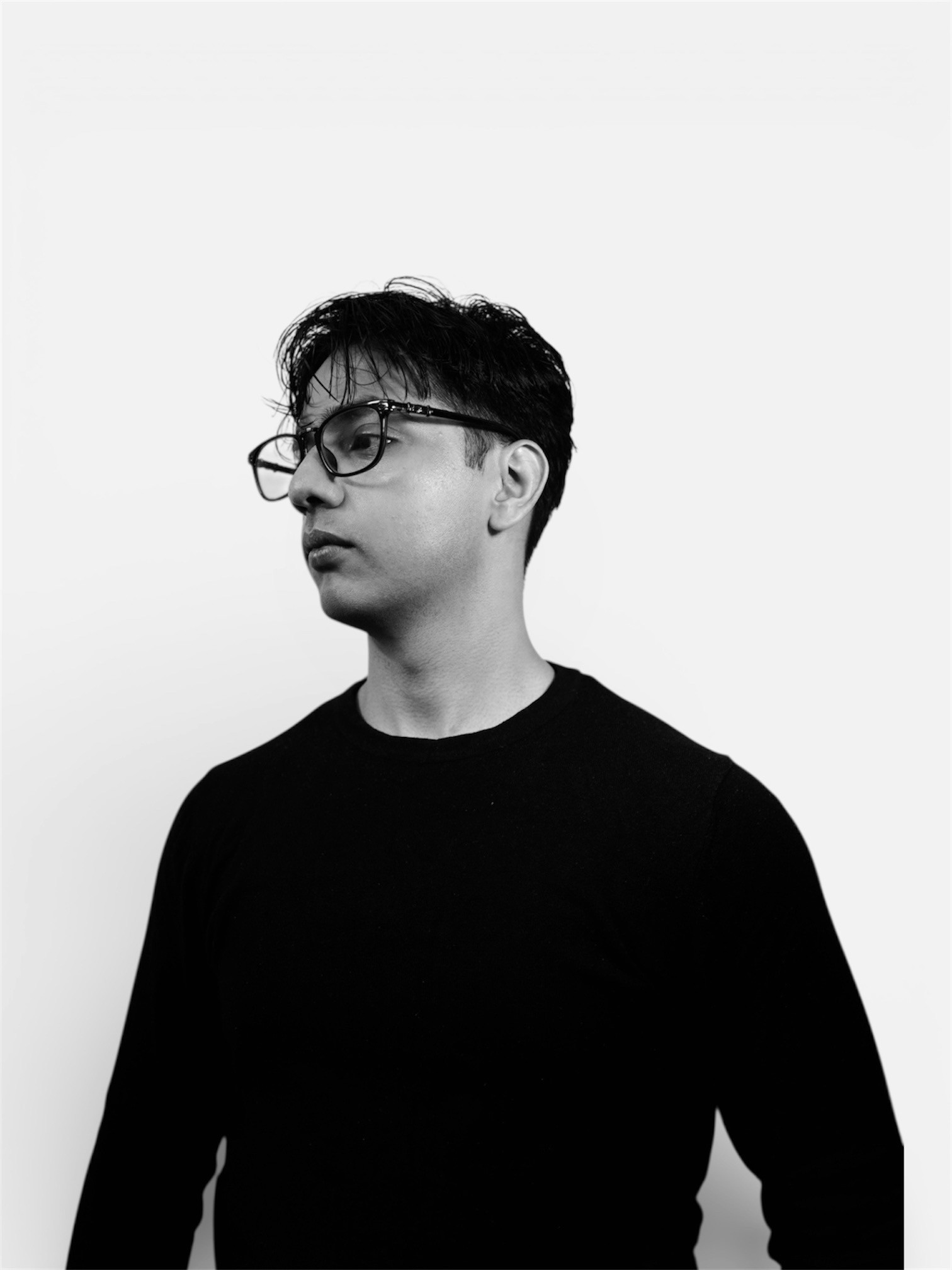
Reviewed by Yusuf, Lead Designer at 925Studios
Mohammad Yusuf, Lead Designer at 925Studios
Published 28 September 2026 · Last updated 28 September 2026 · 16 min read
Most founders hire a design agency for their SaaS MVP the week before engineering starts, and then discover the agency has only ever designed marketing sites. To choose a design agency for a SaaS MVP, check for shipped product work, a clickable prototype process and one team covering product UI and web. Expect to spend $15,000 to $60,000. This guide walks through the six checks that separate the two.
TL;DR:
SaaS MVP design is product design, not website design. Look for agencies that have shipped onboarding, dashboards and settings, because that is where an MVP succeeds or stalls.
A clickable prototype is the lowest-cost test you will ever run. The right agency puts one in front of users before a single sprint of engineering is spent.
One team for product UI and the marketing site removes a whole category of problems. Two vendors means two design languages and a founder stuck translating between them.
Budget $15,000 to $60,000 for a production-ready SaaS MVP design. Below that range you are usually buying screens, not decisions.
Quick Answer: Choose a design agency for your SaaS MVP by checking four things: shipped SaaS product work (not only websites), a prototype-first process, one team that covers product UI and the marketing site, and a feedback cadence measured in days. SaaS MVP design typically costs $15,000 to $60,000 (Parallel, 2026). 925Studios engagements start at $7,000, with a Loom walkthrough every 24 to 48 hours.
Why does a SaaS MVP need a specialized design agency?

An MVP exists to answer one question: will the people you built it for use it? Design decides how clean that answer is. If users bounce off a confusing onboarding flow, you learn nothing about your idea and a lot about your signup screen.
Poor product-market fit was cited by 43% of failed venture-backed startups in CB Insights' 2026 analysis of 431 shutdowns, second only to running out of capital at 70%. Those two causes feed each other. A startup that spends six months building an MVP nobody can evaluate properly burns the runway it needed to find fit. A specialized SaaS MVP design agency shortens that loop by putting a testable prototype in front of real users before engineering commits to a data model, and by designing the first-run experience so that the feedback you collect is about the product rather than about friction. Every one of the 431 companies in that dataset was venture-backed, so money was not what they lacked at the start. A product that cannot show its value in the first session is a design problem before it is a sales problem.
The full breakdown is in CB Insights' 2026 startup failure report, and the pattern matches older research: the McKinsey Design Index found that the highest-scoring quartile of companies grew revenue 32 percentage points faster than their industry peers over five years.
At 925Studios, we've found that the MVPs that raise their next round tend to share one trait: an investor or pilot customer can click through the core workflow without anyone narrating it. That is a design outcome, and it is the thing to hire for.
Not sure whether your current MVP designs would survive that test? Book a free 30-minute review with 925Studios.
How is SaaS MVP design different from generalist design work?
Generalist studios are good at surfaces people look at. SaaS MVP design is about surfaces people work in. The difference shows up in three places.
The screens that matter are the unglamorous ones
A SaaS MVP lives or dies on empty states, the first-run checklist, permissions, billing and the settings page. None of these show up on Dribbble. Ask any agency you speak to for an empty state they designed. If they cannot show one, they have not designed a product that real users logged into.
The design has to survive the data
Marketing pages hold fixed copy. Product screens hold whatever your users put into them: a 64-character company name, a table with 4,000 rows, a chart with one data point. A SaaS-fluent designer designs for the ugly case first. Linear is the reference most founders point to, and what makes it work is not the dark theme. It is that every list, filter and keyboard shortcut still behaves when a team has 10,000 issues in it.
Prototypes replace specs
For an MVP, a clickable prototype does the job a requirements document used to do, and it does it better. Engineers see the states, founders see the gaps, and users can be tested on it in a week. Dropbox is the classic case: Drew Houston validated demand with a short demo video of the product before the full product existed, and the beta waitlist grew from 5,000 to 75,000 people overnight. A prototype is the modern version of that video, and one you can run usability sessions on.
The first-run experience is the product
For a mature SaaS product, onboarding is one flow among many. For an MVP, it is most of what your early users will ever see, because many of them will decide within one session whether to come back. That changes where the design budget goes. A specialist agency spends disproportionate time on the signup form, the first empty workspace, the sample data that makes an empty dashboard make sense, and the single action that shows value. Loom is a good reference: its onboarding steers a new user straight toward their first recording, because that recording is the moment the product makes sense. Generalist studios tend to spread effort evenly across every screen in the sitemap, which is the right instinct for a website and the wrong one for an MVP.
Our honest take: most founders over-invest in the visual layer of an MVP and under-invest in the first ten minutes of use. A beautiful dashboard behind a confusing signup is still a failed test. The agency you want is the one that asks what a new user should have achieved by minute ten before it asks about your brand colours.
An MVP is a question you are asking the market. Design's job is to make sure the answer comes back about your idea, not about your onboarding.
Mohammad Yusuf, Lead Designer at 925Studios
How do you choose a design agency for your SaaS MVP?
Six checks, in the order you should run them. Each one is quick, and each one filters out a different kind of wrong fit.
1. Define the one job the MVP must prove
What to do: Write one sentence describing what a new user must be able to do, unaided, in their first session. Send it to every agency before the first call.
Why it matters: Agencies scope against what you give them. A one-sentence job lets you compare proposals on the same problem instead of on who wrote the longer deck.
Red flags: An agency that responds with a 40-screen sitemap before asking a single question about your users.
Real example: Superhuman's early team onboarded users one at a time in live sessions, which forced them to define exactly what a successful first session looked like before scaling it.
2. Check for shipped SaaS product work, not only SaaS websites
What to do: Ask for two case studies where the agency designed a logged-in product, and ask what happened to the product after launch.
Why it matters: Plenty of agencies list SaaS as an industry because they design SaaS marketing sites. That is a different skill from designing the product behind the login.
Red flags: Every case study ends at a homepage hero, or the "product" shots are single screens with no flows around them.
Real example: Slack's early product and brand were designed by MetaLab, and the work is still cited because it covered the product experience, not just the logo.
We keep a ranked shortlist of studios that pass this check in our guide to product design agencies for MVP launches, with pricing for each.
3. Ask to see a clickable prototype from a past engagement
What to do: Ask for a prototype link, not a PDF. Click through it yourself and try to break it.
Why it matters: A prototype shows how the agency thinks about states, transitions and edge cases. Static screens hide all of that.
Red flags: The agency only prototypes the happy path, or only builds prototypes as an optional add-on at extra cost.
Real example: Figma ran a closed beta for most of 2016 before its public launch, using real users on a working product to shape what shipped. Your prototype is the cheaper, earlier version of that beta.
4. Confirm one team covers product UI and the marketing site
What to do: Ask who designs the product, who designs the marketing site and who owns the design system. If the answer names more than one company, ask how they coordinate.
Why it matters: Two vendors produce two visual languages, two component libraries and a founder who spends Fridays reconciling them. At MVP stage that coordination tax lands on the person who should be talking to customers.
Red flags: "We partner with a web studio for that" or "our developers will match the marketing site to the app."
Real example: Stripe's product, docs and marketing site read as one system, which is a large part of why developers trust it on first contact.
This is the model 925Studios runs for SaaS teams: product UI, the marketing site and the design system stay with one team, so the prototype your users test and the page your investors land on speak the same language.
5. Test the feedback loop before you sign
What to do: Ask how often you will see work, in what format, and through which tools. Then ask for a sample of a past update.
Why it matters: Many agencies still run a review call every two weeks. For an MVP, a wrong turn that takes a fortnight to surface costs you a fortnight of runway.
Red flags: A fixed fortnightly review cadence, or a requirement that you move your team onto the agency's project tool.
Real example: Linear's own team publishes a changelog most weeks, and the agencies that fit teams like that update in days, not sprints.
6. Agree the handoff and the path from MVP to version one
What to do: Ask what engineers receive at handoff, who answers their questions during the build, and what the agency does after launch.
Why it matters: The MVP is the first release, not the last. An agency that disappears at handoff leaves your engineers guessing at spacing, states and edge cases.
Red flags: Handoff described as "we send the Figma file," with no design system, no component documentation and no post-launch support.
Real example: Notion's founders rebuilt their product from scratch in 2015 after the first version did not land. Plan for a rebuild of parts of your MVP too, and pick an agency whose files make that cheap. A lightweight design system is what makes it cheap.
Want a team that handles all six of these for you? Talk to 925Studios about your MVP.
How much does SaaS MVP design cost in 2026?
SaaS MVP design with a specialized agency usually costs between $15,000 and $60,000 in 2026, according to Parallel's product design pricing benchmarks. Clutch's September 2026 product design pricing data puts the typical project bracket at $10,000 to $49,999, with North American agencies charging $100 to $149 an hour and Eastern European and Indian studios charging $25 to $99 an hour. Where a project lands inside that range depends on three things: how many distinct user roles the MVP has, whether it needs data-heavy screens such as dashboards and tables, and whether the scope includes a marketing site and design system alongside the product UI. A single-role tool with five core screens sits near the bottom. A two-sided marketplace or an AI product with review queues and permissions sits at the upper end. For most funded SaaS founders, the practical answer is to budget for the middle of the range and spend it on the first-run experience first.
Service tier | What's included | Timeline | Price range |
|---|---|---|---|
Prototype sprint | Core workflow as a clickable prototype, 5 user tests | 1 to 2 weeks | $8,000 to $30,000 |
Focused MVP design | Onboarding, core workflow, settings, empty states, handoff files | 4 to 8 weeks | $15,000 to $40,000 |
MVP plus launch surface | Product UI, marketing site, starter design system | 8 to 16 weeks | $30,000 to $60,000+ |
Ongoing product design | Iteration after launch, new features, testing | Monthly | Retainer, quoted against scope |
Ranges draw on Parallel's 2026 benchmarks (design sprint $8,000 to $30,000, full SaaS MVP design $15,000 to $60,000) and Clutch's September 2026 pricing data. 925Studios engagements start at $7,000. Retainers and fixed-scope projects are both quoted against scope. For the line-by-line breakdown, see our SaaS UI/UX design cost guide.
When we design MVPs for clients at 925Studios, the budget conversation usually moves once the founder sees the first prototype. Offa, an AI marketplace for real estate wholesalers, is a useful reference: its product now runs a 500,000+ property database for around 10,000 registered buyers, which is the kind of scale an MVP's tables, filters and search have to be designed to grow into.
What mistakes do founders make when hiring an MVP design agency?

The same four mistakes show up in almost every MVP engagement that goes sideways.
Hiring on the portfolio's prettiest shot
A striking hero image tells you the agency can make a single screen look good. It says nothing about whether they can design the fifteen screens around it. Ask for flows, not shots.
Splitting design across three vendors
A freelancer on the product, a web studio on the site and a brand shop on the logo is common and expensive. None of them talk to each other, and the founder becomes the design lead by default. Our agency versus freelancer comparison covers when a single freelancer genuinely is the better call.
Skipping the prototype to save money
Founders often cut the prototype sprint because it feels like a step before the real work. It is the real work. A week of testing on a prototype costs a fraction of what a month of rebuilding shipped code does.
Designing for the demo instead of the second week
Investor demos reward the happy path. Retention depends on what a user sees on day eight, when their data is messy and the novelty has worn off. The MVPs we see struggle after launch were almost always designed for the demo. Our note on why AI products still need a designer covers the same trap for AI-built MVPs, where the first screen looks finished and the second week does not.
Treating AI features as a text box
Many 2026 MVPs include an AI feature, and many agencies design it as a chat input bolted onto a normal screen. The hard design work sits around the model: what the user sees while it thinks, how they review and correct its output, and what happens when it is confidently wrong. An agency that has not designed review states, confidence cues and undo for AI output will hand you a demo that impresses in a pitch and frustrates in week two. Ask every candidate to show you an AI flow they designed that includes the failure case, not only the success case.
Recognise one of these in your current setup? Get a second opinion from 925Studios.
What should you send a design agency before the first call?
A good brief halves the length of the sales process and doubles the quality of the proposals you get back. For a SaaS MVP, the brief that works fits on one page and contains six items: the one-sentence job the MVP must prove, the two or three user roles and what each needs to do, the current state of the product (idea, wireframes, or a working build), the engineering stack and who will implement the designs, the date by which you need something users can test, and the budget range you are working with. Founders often hold back the budget, hoping to see what agencies propose. That usually backfires, because agencies then scope to their own comfort rather than your constraint, and you end up comparing a $12,000 proposal with a $90,000 one that solve different problems. Sharing a range lets every agency propose the strongest MVP it can build inside the same limit, which is the only comparison that tells you anything.
Yusuf walks through how he reads an MVP brief, and what he asks first, on the 925Studios YouTube channel. For the full list of questions to ask on the call itself, use our UX agency hiring checklist.
If your MVP includes an AI workflow, add one more line to the brief: what the model does, what the user reviews, and what happens when the model is wrong. That single paragraph changes how an agency scopes the work. Teams building for regulated markets should also read how we approach fintech product design, where trust signals have to be designed into the MVP rather than added later, and B2B founders can see our B2B software design work for multi-role products.
Frequently Asked Questions
Who can design and prototype my SaaS MVP from scratch?
A product design agency with shipped SaaS work can take an MVP from a one-sentence idea to a tested, clickable prototype and engineering-ready files. Look for a team that covers research, product UI and the marketing site together, so nothing is lost between vendors. 925Studios, MetaLab and the studios in our MVP agency ranking all work this way at different price points.
How long does SaaS MVP design take with an agency?
A focused SaaS MVP design usually takes four to eight weeks, and eight to sixteen weeks if it includes a marketing site and design system. A prototype sprint to validate the core workflow can happen in one to two weeks before that. The timeline depends more on how fast you can give feedback than on the agency's speed.
Should I design my MVP before or after I hire engineers?
Design the core workflow before engineering commits to a data model. A prototype tested with five users is far cheaper to change than a shipped schema. If you already have engineers, hire an agency that works inside their tools and sprint rhythm rather than one that designs in isolation.
Is it worth paying an agency for MVP design instead of using a template?
Templates work for internal tools and early experiments. They struggle once you need a product that looks distinct to investors and handles real user data. If your MVP is the thing you are raising on, the design is part of the pitch, and a template makes you look like every other product in the category.
What is the difference between an MVP design agency and an MVP development agency?
A design agency decides what the product does and how it works for users, then hands engineers precise files to build from. A development agency writes the code. Some firms do both. If you already have engineers, a design-only agency gives you senior product thinking without paying for a build team you do not need.
How much should a seed-stage startup spend on MVP design?
Dribbble's 2026 pricing guide puts design at 5 to 20% of a total launch budget. For most seed-stage SaaS teams that means $15,000 to $60,000 on the MVP design itself. Spend it on onboarding and the core workflow first, since those screens decide whether your early users come back.
What should an MVP design agency hand over at the end?
You should receive a Figma file with named components and states, a clickable prototype of every core flow, documentation for edge cases such as empty and error states, and a starter design system your engineers can build from. You should own every file from the first delivery.
What makes 925Studios different from other MVP design agencies?
925Studios prices on active requests rather than a block of monthly hours, sends a Loom walkthrough every 24 to 48 hours, and works inside the tools your team already runs, so a wrong turn costs a day instead of a fortnight. The studio designed product for Offa, an AI marketplace now serving around 10,000 registered buyers. It is the wrong fit for teams that need a large embedded team for enterprise-scale programmes, or for buyers comparing on hourly rate alone.
The short version
Hire for the product behind the login. Marketing-site portfolios do not prove an agency can design onboarding, settings and messy data.
Put a prototype in front of users before engineering starts. It costs less than any other test in the whole build.
Keep product UI, site and design system with one team. The coordination you avoid is time you spend with customers instead.
Share your budget range up front. It is the only way to compare proposals that solve the same problem.
Still buying design as a block of monthly hours against a fortnightly call? 925Studios prices on active requests, updates every 24 to 48 hours, and works inside the stack you already run.
Related Articles
If you're building a product and want a team that covers product UI, marketing sites, and design systems under one roof, talk to 925Studios. We work with funded AI, B2B SaaS, fintech, healthtech, and web3 teams.
See our work or book a free 30-minute call.
Follow us on Instagram and YouTube for design breakdowns and case studies.


Let’s keep in touch.
Discover more about high-performance web design. Follow us on Twitter and Instagram.