
Best Alternatives to Hiring an In-House Designer in 2026

925studios
Creative agency for AI & Web3

Reviewed by Yusuf, Lead Designer at 925Studios
An in-house designer in the US costs between $70,000 and $90,000 per year all-in, once you account for salary, benefits, payroll taxes, equipment, and the three to four months of reduced productivity during onboarding. For a seed-stage startup managing runway carefully, that is a high floor for a single skill set. The market for design services in 2026 offers six distinct models: UX agencies, design subscription services, freelancers, fractional design leads, offshore teams, and AI-augmented tools. Each solves a different version of the design problem. An agency gives you a team with multiple specialties. A subscription handles volume. A freelancer covers scoped, defined work. A fractional lead provides strategic ownership at part-time cost. Understanding the trade-offs between these models is the most important design decision a founder makes before they have hired anyone, because the wrong model costs more in time and rework than the money saved by choosing the cheapest option.
TL;DR:
A full-time in-house designer costs $70,000-$90,000+ per year all-in. Most early-stage startups do not need 40 hours of design per week.
Design agencies cover the most ground: UX, motion, brand, and development under one team.
Design subscription services handle volume. Freelancers handle defined, scoped work.
Fractional design leads are the most underused option for Series A companies needing strategic ownership.
Match the model to your bottleneck: volume, strategy, or specialty depth.
Quick Answer: The best alternatives to hiring an in-house designer in 2026 are: a UX design agency ($4,000-$15,000/month or $5,000-$30,000 per project) for complex product work; a design subscription service ($499-$2,000/month) for high-volume recurring assets; a freelance designer ($50-$150/hour) for scoped deliverables; or a fractional design lead ($5,000-$12,000/month) for embedded strategic ownership. Agencies like 925Studios, Eleken, or Clay suit product redesigns. Superside or ManyPixels suit ongoing marketing output. Fractional leads suit Series A teams with no design director yet.
Why do most startups look beyond hiring an in-house designer?
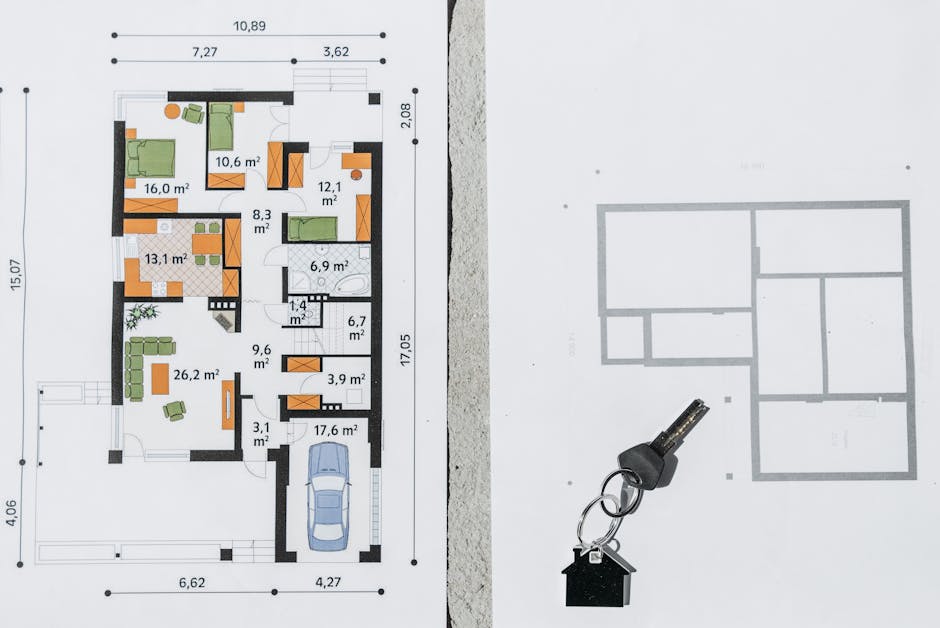
The median annual salary for a mid-level UX designer in the US sits at $65,000-$75,000 in 2026. Add employer payroll taxes at 7.65%, health insurance at $500-$800 per month per employee, design tool subscriptions, equipment at $2,000-$4,000 upfront, and the time cost of hiring and onboarding. The real annual cost lands between $90,000 and $110,000 for one mid-level in-house hire, according to agency research by Cieden (2026).
Beyond cost, there is a coverage problem. One designer is one set of skills. A product that needs UX research, motion design for onboarding, a landing page, and component documentation in the same week will overwhelm a single hire or require quality compromises across every deliverable.
The third issue is variable demand. Most startups experience intense design bursts around launches, feature releases, and fundraising, followed by weeks where they need three to five hours of design. A full-time hire is expensive in both scenarios: you pay for idle time between bursts and risk burnout during them.
925Studios has found that founders who switch from an in-house hire to a dedicated agency often get more output in the first month than in the previous quarter. The reason is not speed. It is coverage: when one team handles product UI, the marketing site, and the design system simultaneously, no deliverable is waiting on a single person's availability.
What are the best alternatives to an in-house designer in 2026?
Here are six models worth knowing, each with a distinct use case, ceiling, and failure mode.
1. UX/UI Design Agency
A design agency gives you a team with multiple specialties rather than a single person. Strategy, visual design, prototyping, motion, and sometimes Framer or Webflow development exist under one roof. Work gets reviewed by multiple specialists, which raises the quality floor. The trade-off is cost and context: agencies work across several clients, which means your project competes for their attention unless you are on a dedicated retainer.
Best for: Product redesigns, new product launches, multi-surface work spanning app, web, motion, and brand. Monthly retainers start around $4,000-$8,000. Project-based engagements run $5,000 for a focused sprint to $30,000+ for a full product redesign.
Notable agencies for startups: 925Studios (funded AI and B2B SaaS, priced on active requests rather than a monthly hour block), Eleken (SaaS-focused with a strong Eastern European team), Clay (premium brand-first work), Bricxlabs (AI and SaaS products).
Not sure whether to hire an agency or go another route for your product? This decision framework helps you evaluate the options clearly.
2. Design Subscription Service
Design subscription services, sometimes called "design as a service" or DaaS, offer unlimited design requests for a flat monthly fee. You submit tasks, receive designs in 24-48 hours, give feedback, and iterate asynchronously. Superside, ManyPixels, Penji, and Designity are the main providers. Monthly plans start around $499 and go up to $2,000+ for higher-tier services with dedicated designers.
The strength is production volume. If you need 20 social graphics, three landing page variants, and two email templates per month, a subscription at $1,500 is significantly cheaper than hiring a freelancer at $100 per hour for the same output. The weakness is strategic depth. These services execute what you brief. They do not own the design direction, they will not push back on a poor UX decision, and they will not proactively identify where your onboarding is failing.
Best for: High-volume recurring requests, marketing assets, social content, ad creative, email design. Not suitable for complex UX work, product redesigns, or anything requiring deep user context.
Worth saying plainly: founders who are disappointed with design subscription services almost always expected product strategy from a service built purely for production throughput. If you give it well-scoped briefs, it delivers. If you expect it to figure out what to design, you will be frustrated within two months.
3. Freelance Designer
Freelancers are flexible and high-variance. The ceiling is very high (a senior freelancer with a strong portfolio can outperform a junior in-house hire on quality), but the floor is low. Platforms like Upwork, Toptal, Dribbble, and direct referrals surface thousands of options, and the difference between a $40/hour and a $120/hour designer is not always visible from a portfolio alone.
Freelancers work best for scoped, defined projects with clear deliverables. A landing page redesign. A component library audit. An onboarding flow for a new feature. The moment scope expands or the project needs ongoing direction, a freelancer relationship becomes expensive and difficult to manage.
UI/UX designers on Upwork charge $25-$100/hour for most experience levels, with top-rated specialists reaching $80-$150 per hour (ManyPixels, 2026). Senior freelancers with deep SaaS or fintech portfolios typically charge $100-$150 per hour. Project-based pricing for a full flow redesign runs $10,000-$25,000.
Looking for premium design output without the long retainer commitment? This breakdown covers your options across agencies and independent specialists.
4. Fractional Design Lead
A fractional design lead is a senior or principal designer who embeds in your team two to three days per week, typically on a three to six month engagement. They own the design function without the full-time cost. This is the most underused model in startup design and is frequently the best fit for Series A companies that need strategic leadership but are not ready to justify a $120,000+ design director salary.
A strong fractional lead will run design reviews, manage junior contractors, set up design systems, align design with product and engineering priorities, and still ship product work in parallel. Monthly rates for a fractional design lead run $5,000-$12,000 for two to three days per week of embedded work.
Best for: Post-PMF companies with 10-30 employees, Series A teams with junior designers but no design leadership, founders who know design is a bottleneck but are unsure how to address it structurally.
5. Offshore or Nearshore Design Team
Hiring a dedicated design team through an offshore or nearshore agency gives you full-time capacity at a significant cost reduction versus local hiring. Eastern European designers cost $30,000-$60,000 per year for a mid-level hire. Southeast Asian designers run $20,000-$40,000 annually. Nearshore teams in Latin America (for US clients) or Eastern Europe (for UK and EU clients) reduce time-zone gaps while maintaining cost savings of 40-60%.
The trade-off is coordination. Offshore teams need clear design direction from someone internal. Without it, you get technically competent output that misses the strategic context. This model works well when you have a product manager or in-house lead who can provide direction and review work daily. It is risky when you are expecting an offshore team to figure out your UX strategy independently.
Need help deciding whether an offshore team or agency partnership makes more sense for your product stage? Talk to the 925Studios team before you commit budget.
6. AI-Augmented Design Tools
Figma AI, Galileo AI, Uizard, and similar tools generate wireframes, produce component variants, and assist with layout decisions in minutes. They are legitimate force multipliers that let a single designer do roughly 30-40% more work in the same time. They are not replacements for design skill or judgment.
The honest framing: a founder using AI tools to avoid hiring a designer will produce output that looks generated, lacks system coherence, and signals exactly the kind of budget-constrained execution that makes investors and users skeptical. Use AI tools to multiply a skilled designer's output. Do not use them to bypass the need for design skill entirely.
Yusuf walks through how AI tools fit into a real product design workflow on the 925Studios YouTube channel, including where they genuinely save time and where they create more rework than they prevent.
How do the alternatives to an in-house designer compare on cost, speed, and output?
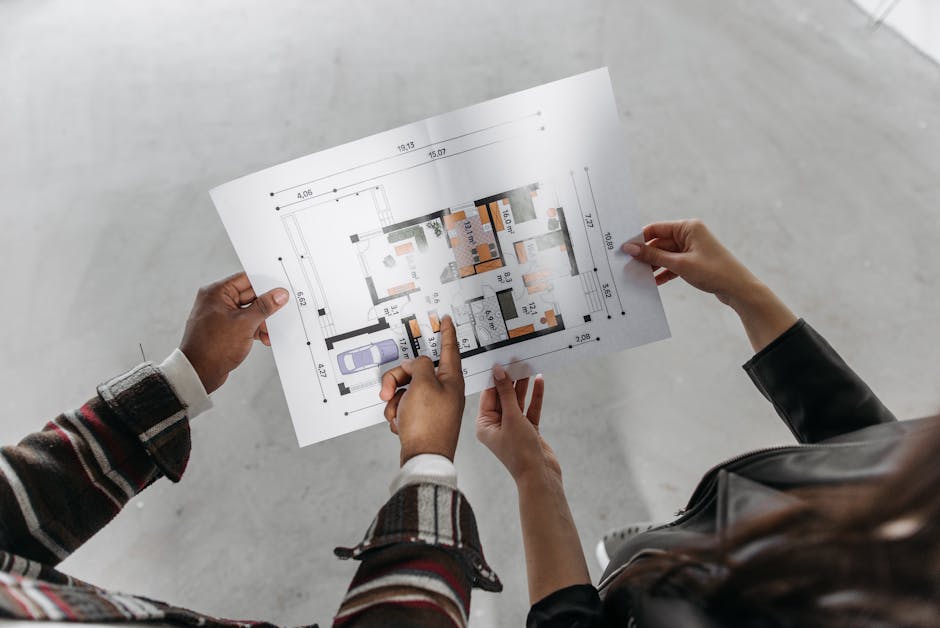
The table below summarizes the six models side by side. Monthly cost ranges reflect typical engagements for a startup with ongoing but not enterprise-scale design needs.
Model | Monthly Cost | Best For | Strategic Depth | Turnaround |
|---|---|---|---|---|
In-house designer | $7,500-$9,000 all-in | Embedded, full-time product work | High (single person) | Ongoing |
UX/UI Agency | $4,000-$15,000 | Complex product work, redesigns | High (team depth) | 1-4 weeks per sprint |
Design subscription | $499-$2,000 | Volume, marketing assets | Low | 24-48 hours |
Freelance designer | Variable ($50-$150/hr) | Scoped, defined deliverables | Medium | Project-dependent |
Fractional design lead | $5,000-$12,000 | Strategic ownership, Series A | Very high | Embedded, ongoing |
Offshore/nearshore team | $2,500-$5,000 | Scale at lower cost | Medium (with direction) | Real-time or async |
Want to see how these models play out in practice for SaaS and AI startups? Explore how 925Studios has structured engagements across different product stages.
How do you decide which model is right for your startup?
Match the model to your current design bottleneck. Most startups have one of three problems: not enough design output, no strategic design direction, or the wrong specialist for the work at hand. Each problem maps to a different model.
Volume problem (too many requests, too few designers): design subscription service or offshore team. Both handle throughput without the overhead of a full-time hire.
Strategy problem (you do not know what to design or why users are not converting): fractional design lead or a product-focused agency. No subscription service or offshore team will fix a UX strategy problem by themselves.
Specialty problem (you need something specific done once, done well): freelancer or agency sprint. Scoped, defined, with clear deliverables.
Stage also matters. Pre-seed: freelancer or subscription for early assets. Seed: agency engagement for launch, subscription for ongoing marketing. Series A: fractional lead or agency retainer for sustained product development. Series B and beyond: hire in-house, supported by an agency for specialized output spikes.
One pattern that shows up consistently across startups: founders who manage product design, the marketing site, and brand across three separate vendors spend 5-10 hours per week on coordination alone. When one team covers all of it, that overhead disappears and the work is more coherent because the same people made every visual decision from component to campaign.
Frequently Asked Questions
What is the cheapest alternative to hiring an in-house designer?
For low-volume needs, a freelancer hired per project is the most cost-efficient option. A defined landing page from a mid-level freelancer runs $500-$2,500. Design subscription services like ManyPixels or Penji offer ongoing capacity from $499 per month, which beats per-hour freelancers once you have consistent recurring work. The cheapest option shifts with volume: under three tasks per month, a freelancer wins. Three to ten tasks per month, a subscription wins on cost per deliverable.
When does a design agency make more sense than hiring in-house?
An agency makes more sense when your design needs span multiple disciplines (UX, motion, brand), when you have a defined project rather than an ongoing role to fill, or when you need to scale up quickly without the overhead of a full-time hire. Agencies also bring cross-product pattern recognition that a single in-house designer cannot accumulate as quickly. For most startups under 25 employees, an agency or fractional model outperforms a full-time hire on both quality per deliverable and total annual cost.
What is a fractional design lead and how much does one cost?
A fractional design lead is a senior designer who embeds in your team part-time, typically two to three days per week, on a contract basis. They own design direction, run reviews, manage contractors, and ship product work without the full-time salary commitment. Monthly rates run $5,000-$12,000 for a two to three day weekly engagement. For Series A companies building toward their first full-time design director, this model is usually the most capital-efficient path to serious design leadership.
Are design subscription services worth it for SaaS startups?
Design subscriptions are worth it for high-volume, execution-focused design needs. If you are generating 15-20 marketing assets per month, a subscription at $1,500 is cheaper and faster than hourly freelancers for the same output. They are not worth it for complex UX work, product strategy, or launch-critical pages requiring conversion thinking. Most founders who are disappointed with subscriptions expected strategic input from a service built purely for production throughput.
How do I evaluate a freelance UX designer before hiring?
Look for three things: case studies that explain design decisions (not just final screens), examples from products at a similar scale and complexity to yours, and a clear process for handling ambiguous briefs. A 30-minute call where you describe your product and ask how they would approach it tells you more than hours of portfolio review. Avoid designers whose portfolio only shows polished visuals with no explanation of the problem they were solving.
What are the risks of using an offshore design team?
The main risks are communication overhead, time-zone gaps for iterative feedback, and quality variability without strong internal oversight. Offshore teams work best when someone internal can provide clear design direction and review output regularly. Nearshore teams in Latin America (for US companies) or Eastern Europe (for EU companies) reduce time-zone friction significantly while still offering 40-60% cost savings versus local hiring. Never hire an offshore team expecting them to develop your UX strategy independently.
Can AI design tools fully replace a designer?
No. AI tools like Figma AI, Galileo, and Uizard accelerate generation and speed iteration. They do not provide judgment, strategic direction, or the ability to diagnose why a design is not working. A skilled designer using AI tools can do roughly 30-40% more work in the same time. A non-designer using the same tools will produce output that looks generated and lacks the coherence of a thought-through design system. AI is a multiplier for design skill, not a substitute for it.
How do I know when my startup is ready to hire a full-time in-house designer?
The right signals are consistent full-time work (40+ hours of design tasks per week), enough product complexity that deep institutional context is genuinely valuable, and a stable product direction where you are no longer pivoting quarterly. For most startups, this point arrives at Series B or later, once you have a product that is working and needs design infrastructure at scale. Before that, the combination of an agency for product work and a subscription for ongoing assets is almost always more capital-efficient than a full-time hire.
Still buying design as a block of monthly hours against a review call every two weeks? 925Studios prices on active requests, ships a walkthrough every 24 to 48 hours, and works inside the stack you already run.
If design at your company is still bought as a block of monthly hours against a fortnightly review call, talk to 925Studios. Engagements start at $7,000, run inside the tools your team already uses, and open with a risk-free 7-day trial.
See the 925Studios work or book a free 30-minute call.
Follow 925Studios on Instagram and YouTube for design breakdowns and case studies.


Let’s keep in touch.
Discover more about high-performance web design. Follow us on Twitter and Instagram.

