UX Agency Onboarding Checklist: What to Expect in the First 30 Days

925studios
Creative agency for AI & Web3

Reviewed by Yusuf, Lead Designer at 925Studios
The ux agency onboarding process in the first 30 days sets the trajectory for the entire engagement. A well-structured first month ends with legal signed, access granted, goals documented, a kickoff meeting completed, and at least one early deliverable reviewed. A poorly structured first month ends with an agency guessing at goals six weeks in, triggering revisions that should never have been necessary.
TL;DR:
The first 30 days of a design agency engagement are about alignment, access, and one early proof of work, not finished screens
Legal agreements, project briefs, and access credentials should all be resolved in week one, not week three
The kickoff meeting should remove ambiguity, not create it: goals, KPIs, revision process, and decision-making authority all need to be confirmed explicitly
The first deliverable should arrive within 10-14 days of kickoff, not four to six weeks in
A formal 30-day checkpoint is not optional: it is the test of whether onboarding actually worked
Quick Answer: The ux agency onboarding process covers five areas in the first 30 days: legal agreements and project brief (days 1-3), access and asset transfer (days 4-7), kickoff meeting and discovery (days 7-10), first deliverable and feedback cycle (days 10-20), and a formal 30-day checkpoint. Agencies that skip or rush these steps produce work that requires expensive revisions later. Use this checklist to verify your agency is hitting each milestone on schedule.
The first 30 days of a design agency engagement determine whether the project succeeds or stalls. Most clients assume the quality of the final work depends on the agency's portfolio. In practice, it depends more on what happens in the first four weeks: how clearly goals are defined, how quickly access is granted, how revision cycles are structured, and whether the kickoff meeting actually removes ambiguity rather than creating more of it. An agency that designs a great product in isolation and presents it to a client who has different expectations six weeks in will spend more time on revisions than on design. The checklist in this article covers every category that matters in the first 30 days, organized by phase. Each item includes what to check, why it matters, and how to verify it is done. Work through it before your first call with any new agency.
Why does the ux agency onboarding process determine project success?
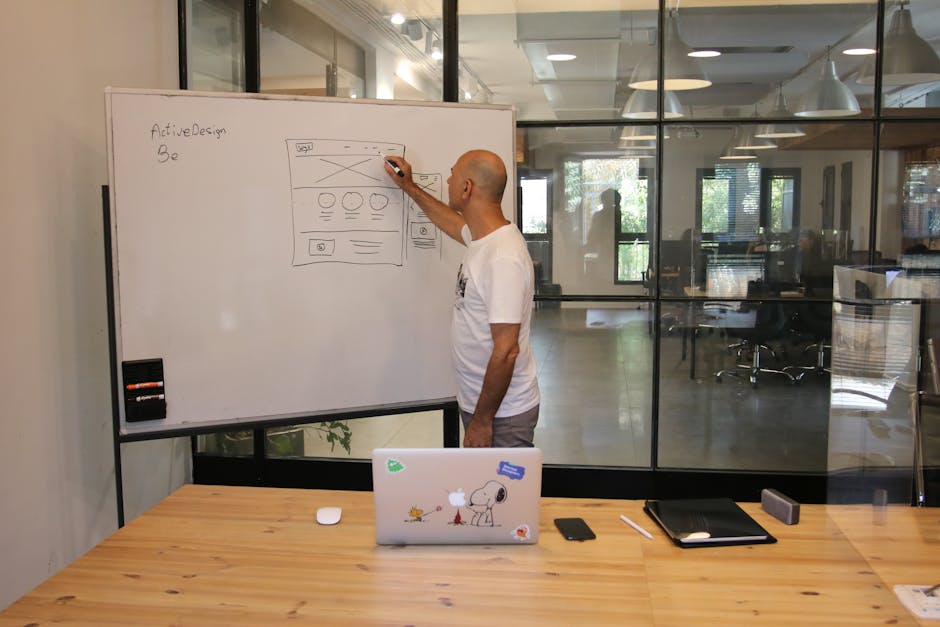
The most expensive design projects are not the ones with the highest invoices. They are the ones where misaligned expectations surface six weeks into a three-month engagement, triggering rounds of revisions that were never scoped, eroding trust on both sides. A structured first 30 days prevents this by forcing alignment at the start, before any design work begins. Companies that invest in UX design see an average ROI of 9,900% according to Forrester Research (2023), but that ROI depends on the design solving the right problem. If the agency spends the first two weeks guessing at goals, access, and stakeholder preferences, the return on that investment shrinks fast. The checklist is not bureaucracy. It is a forcing function for conversations that need to happen before any pixels are moved. Every founder who has gone through a difficult agency engagement looks back and identifies the same root cause: something that should have been discussed in week one was not discussed until week six.
Design-led companies grow revenues 32% faster than industry peers and 56% faster in total returns to shareholders (McKinsey, 2023). That performance gap exists because design-led companies treat design as a strategic process, not a production service. Part of that strategic approach is front-loading alignment. When goals, constraints, and success metrics are agreed before the first wireframe, the design process runs faster and produces fewer surprise revisions. When they are not agreed, every review meeting becomes a negotiation about what the project is actually supposed to accomplish.
925Studios treat the first two weeks of any engagement as the most important two weeks of the entire project. The work that happens in that window, including goal documentation, access transfer, and kickoff alignment, determines whether the rest of the engagement runs cleanly or constantly corrects its own course.
Not sure whether your current agency is running a structured onboarding? Book a free 30-minute call to talk through what good looks like.
What should a complete ux agency onboarding checklist cover?
Phase 1: Legal and Contracts (Days 1-3)
Statement of Work signed by both parties. The SOW should specify deliverables, timeline, payment schedule, and scope boundaries. Vague SOWs are the most common source of scope creep. Verify that deliverables are named specifically (e.g., "3 homepage variants for A/B testing" not "homepage design"), not described generically.
NDA or confidentiality agreement in place. You will be sharing product roadmaps, analytics data, and sometimes unreleased feature information. Confirm these are protected before sharing anything beyond what is already public.
Revision policy documented. How many rounds of revisions are included in the scope? What counts as a revision versus a scope change? This is frequently left ambiguous and almost always causes friction later. Get the answer in writing before work starts.
Payment terms confirmed. Milestone-based or time-based? What triggers each payment? Understanding the payment structure ensures neither side is surprised when an invoice arrives mid-project.
Phase 2: Access and Asset Transfer (Days 4-7)
Brand assets transferred. Logo files in all formats, brand guidelines, color palette, typography specs, and any existing design system documentation should be shared with the agency within the first week. Agencies that start without these make visual decisions in a vacuum that may need to be reversed.
Figma or design tool access granted. The agency needs access to any existing design files, not just the latest version. Previous iterations, abandoned directions, and design history all inform what has already been tried and ruled out.
Analytics access shared. Provide read access to your analytics platform (Mixpanel, Amplitude, Google Analytics, or equivalent). The agency needs to understand where users drop off, which flows have low completion rates, and where the data already points toward a problem before they start solving it.
User interview recordings and research shared. Any existing user research, usability test recordings, or customer interview notes should be transferred. This prevents the agency from rediscovering problems that have already been identified.
Stakeholder roster and approval process documented. Who can approve design decisions? Who needs to be consulted but cannot block progress? Who are the subject matter experts for each product area? This avoids situations where a design is approved by the project lead but rejected by the CEO two weeks later.
Need help structuring this transfer for a new agency engagement? The 925Studios team runs this process with every new client and can walk you through it.
Phase 3: Kickoff Meeting (Days 7-10)
Business goals documented in measurable terms. Not "improve the onboarding experience." Instead: "increase 7-day activation rate from 18% to 28% within 90 days of launch." Goals that cannot be measured cannot be validated at the end of the project. Confirm these in writing after the kickoff, not just verbally during it.
Success metrics agreed. Beyond the headline goal, what signals will indicate progress? Which metrics will be tracked weekly? Which will form the basis of the final project review? Both sides need to agree on these before any design work starts.
Scope boundaries confirmed. What is explicitly in scope? What is explicitly out of scope? Listing out-of-scope items prevents assumptions that lead to unbilled work requests or frustrated agency pushback later.
Communication cadence established. How often will you meet? What channel will be used for feedback (not email threads, not Slack, not both)? What is the response time expectation for design review? High-velocity agencies deliver testable prototypes within 2-3 weeks of kickoff (DeveloperUX, 2025), which only works if feedback cycles are fast and predictable.
First deliverable and deadline set. The first deliverable should arrive within 10-14 days of kickoff. It does not need to be final, but it should be something concrete enough to review and respond to. If the agency's first scheduled delivery is six weeks out, the onboarding has already lost momentum.
Phase 4: Discovery and Early Execution (Days 10-20)
Competitive analysis completed. The agency should present a review of competitor products, noting design patterns that are standard in your space versus patterns that represent differentiation opportunities. This shapes early visual direction before any production work begins.
Design system audit delivered. What exists in your current design system? What is inconsistent, undocumented, or missing? The audit forms the baseline for all design decisions going forward and prevents agencies from building on a foundation that will need to be rebuilt later.
User flow map reviewed. The agency should map the critical user flows in your product (signup, activation, key task completion) and identify where the friction points are. This is not UX redesign. It is diagnosis, and it should happen before any redesign begins.
First design deliverable reviewed and feedback given. Your response to the first deliverable matters as much as the deliverable itself. Vague feedback ("I don't like this direction") without specific reasoning sends the agency back into guesswork. Structured feedback ("this doesn't reflect our voice in copy, the hero hierarchy puts the secondary action too high, and the mobile breakpoint looks unresolved") gives the agency something to work with.
Phase 5: 30-Day Checkpoint (Day 28-30)
Formal review meeting held. Not a status call. A structured review that confirms: are we solving the right problem, is the process working as agreed, are deliverables arriving on schedule, and is the feedback cycle producing improvement rather than circular revisions?
Revised timeline confirmed if needed. If early work revealed new constraints or scope adjustments, the 30-day checkpoint is the right moment to update the project plan, not week eight when a deadline is already missed.
Client and agency satisfaction checked explicitly. Ask directly: "Is there anything about how this engagement is running that you would change?" Both sides should be able to answer this honestly. If the answer on either side is "yes" and it is not discussed, the engagement will quietly deteriorate over the following month.
What mistakes most commonly derail the ux agency onboarding process?

The most common mistake in the first 30 days is delaying access. Design agencies need brand assets, competitor context, product analytics, user interview recordings if they exist, and any previous design files before they can make informed decisions. Founders often treat these as deliverables to share after the relationship is established. That reverses the logic. Agencies that start a project without full context make assumptions. Some of those assumptions are wrong. By the time the wrong assumption surfaces in a design review four weeks in, it has shaped every decision made in the meantime and requires revisiting work that was already considered done. Front-load information sharing. Set a deadline of five to seven days for all brand assets, user data, and existing design files to be transferred to the agency. This single behavior change reduces revision rounds more than any other process improvement in the early weeks of a design engagement.
Mistake 2: Goals defined as aesthetics rather than outcomes. "We want it to look more modern" is not a business goal. Neither is "the current design feels outdated" or "we want something that looks like Stripe." The agency needs to know what user behavior you are trying to change and what metric will tell you whether it changed. Without outcome-based goals, design reviews become purely subjective and revision cycles never end.
Mistake 3: Too many stakeholders with approval authority. When four people can block a design decision independently, progress stalls. Define one primary approver. Everyone else is a consulted input, not a veto holder. Agencies that work under committee-approval processes lose 30-40% of their time to stakeholder management rather than design work.
Mistake 4: Skipping the design system audit. Most products that have existed for more than 18 months have an inconsistent design system. Components used in three different ways, color values drifting from the brand palette, typography hierarchies that break on mobile. Skipping the audit means building new screens on a broken foundation, which compounds rather than fixes the underlying inconsistency.
Mistake 5: No documented revision process. What counts as a revision under the scope? What triggers an additional billing? Founders often assume the revision process is flexible until an agency sends an out-of-scope invoice. Agencies often assume the client understands the limit until a fifth round of feedback arrives on a deliverable scoped for two. Document it at kickoff.
When 925Studios runs design projects at 925Studios, we send a written scope document that explicitly defines revision rounds, approval authority, and scope boundaries before the first deliverable is ever opened. It prevents the most common failure modes before they have a chance to develop.
What comes after the first 30 days?
By day 30, a well-run engagement should have legal documents finalized, access in place, goals documented, discovery completed, and at least one round of substantive design feedback exchanged. The next 30 to 60 days shift from setup to execution: iterating on design based on the established feedback process, validating against success metrics, and preparing for production handoff or user testing depending on scope.
The 30-day checkpoint is also when scope changes surface. Early discovery sometimes reveals that the original brief was incomplete. A founder may realize they need a design system before the feature work, or that a user research sprint is necessary before redesigning the onboarding flow. Address these at day 30, not day 60. Course corrections are cheap at the beginning of the execution phase and expensive at the end.
One useful habit: after the 30-day checkpoint, maintain a shared document that tracks every design decision made and the reasoning behind it. Design decisions made in month two are often re-examined in month three when a new stakeholder joins or a user test produces surprising results. Having the reasoning documented prevents the same discussion from happening twice.
For a practical guide on how to select the right agency before the onboarding even begins, the 925Studios article on how to choose a UX agency for SaaS covers the evaluation process from brief to signed contract.
Frequently Asked Questions

What should happen in the first week of a UX agency engagement?
The first week should cover legal agreements, initial access transfer, and a scheduled kickoff meeting. By end of day seven, the Statement of Work should be signed, brand assets and design files should be transferred, analytics access should be granted, and the kickoff meeting should either be completed or scheduled for early week two. Agencies that have not asked for any of this by day seven are already behind.
How long should the UX agency onboarding process take?
A well-structured onboarding takes 7-10 days from contract signing to kickoff meeting. By day 14, the first deliverable should arrive. By day 30, discovery is complete and the feedback cycle is working. Onboarding that stretches beyond 30 days before any substantive design work is reviewed is a signal that either access sharing has been delayed or the agency has too many concurrent projects to allocate proper attention.
What should be included in a design agency kickoff meeting?
The kickoff meeting should confirm business goals in measurable terms, agree on success metrics, document scope boundaries, establish the communication cadence, identify key stakeholders with approval authority, and set the timeline for the first deliverable. The output of the kickoff should be a written brief that both sides confirm as accurate. A kickoff meeting that ends without a written document should be followed up with one within 24 hours.
How do I know if the ux agency onboarding is going well?
Signs of a well-run onboarding: the agency proactively asks for access rather than waiting to be reminded, the first deliverable arrives on schedule, feedback is incorporated specifically rather than re-interpreted, and the agency can articulate your business goal without looking at notes. Signs of a poorly-run onboarding: the agency is still asking basic questions about your product in week three, deliverables are late without proactive communication, or the first design direction ignores context you shared in the kickoff.
What is a reasonable timeline for the first design deliverable?
10-14 days from the kickoff meeting is a reasonable standard for the first design deliverable. It should be substantial enough to evaluate direction, not just a mood board. High-velocity agencies deliver testable prototypes within 2-3 weeks of kickoff (DeveloperUX, 2025). If your agency's first scheduled review is four to six weeks out, ask why and what is happening in that window. Discovery work, user research, and competitive analysis can proceed in parallel with early wireframing, not in sequence before it.
How many revision rounds should be included in a UX agency engagement?
Two to three rounds of revisions per deliverable is standard for most design engagements. A revision is defined as feedback on existing work, not a directional change that requires starting over. If your feedback consistently requires starting over, the problem is usually in the kickoff: the design direction was not aligned clearly enough before execution began. Revision caps are not about limiting feedback. They are about valuing the time invested before asking for a reset.
What access does a UX design agency need to start working?
At minimum: Figma or equivalent design tool access (including existing files), brand guidelines and assets, analytics read access, any existing user research, and a written project brief with goals and KPIs. Helpful additions include competitive analysis you have already commissioned, user interview recordings, engineering constraints (tech stack, accessibility requirements, performance budgets), and any previous design work that was not shipped and the reasoning why.
What is a 30-day agency engagement checkpoint and why does it matter?
The 30-day checkpoint is a formal review meeting that confirms the engagement is aligned on process, progress, and direction. It is distinct from a weekly status call: it asks strategic questions about whether the project is solving the right problem, whether the feedback cycle is functioning, and whether any scope adjustments are needed before entering the main execution phase. Agencies that skip this checkpoint often surface misalignments at the end of the project, when corrections are expensive, rather than at day 30, when they are cheap.
Still buying design as a block of monthly hours against a review call every two weeks? 925Studios prices on active requests, ships a walkthrough every 24 to 48 hours, and works inside the stack you already run.
If design at your company is still bought as a block of monthly hours against a fortnightly review call, talk to 925Studios. Engagements start at $4,000, run inside the tools your team already uses, and open with a risk-free 7-day trial.
See the 925Studios work or book a free 30-minute call.
Follow 925Studios on Instagram and YouTube for design breakdowns and case studies.

Let’s keep in touch.
Discover more about high-performance web design. Follow us on Twitter and Instagram.

